
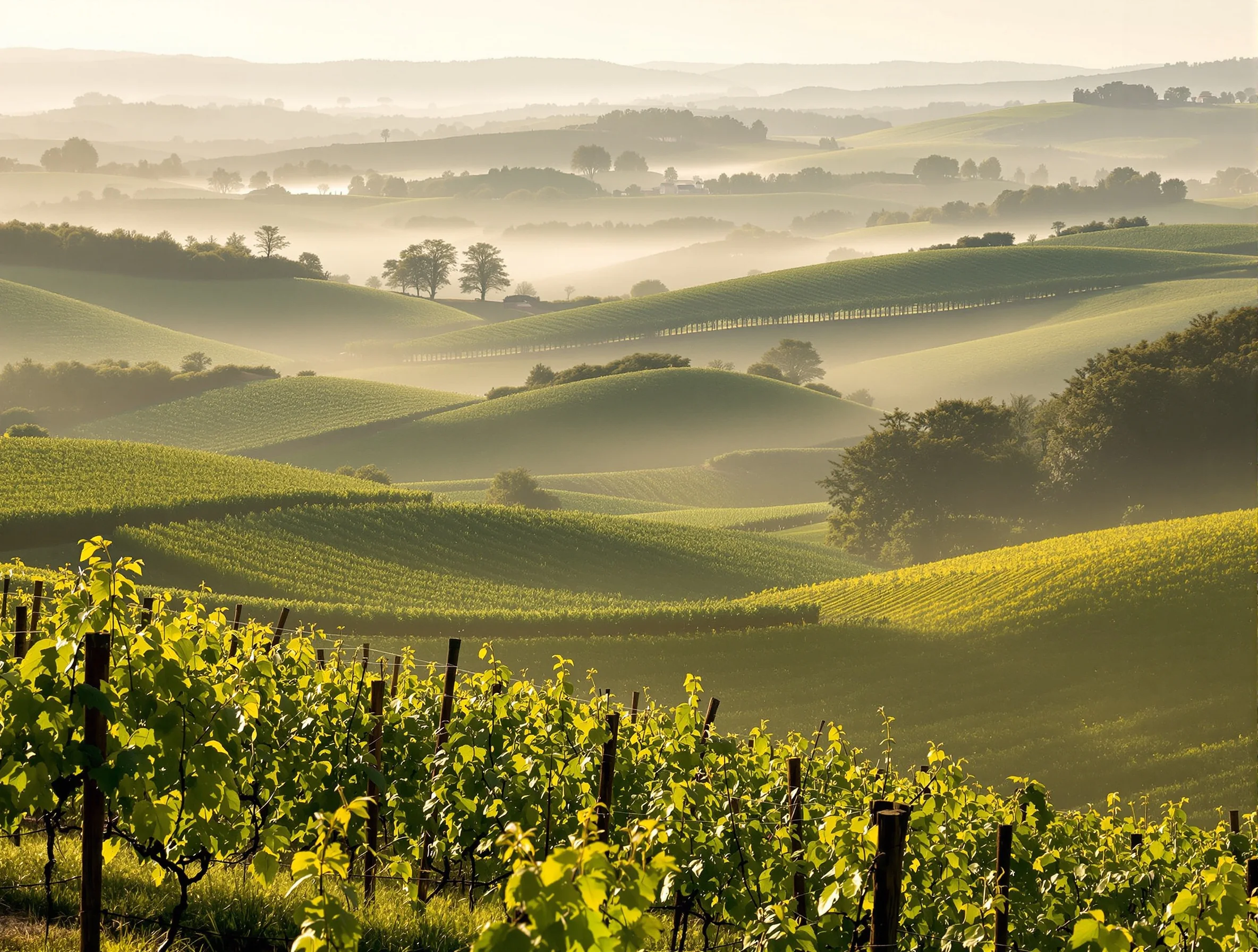

At a glance. Sauvignon Blanc comes from France, the Loire and Bordeaux. Recognisable, fresh and acidic, it offers grapefruit, lime, gooseberry, cut grass, blackcurrant leaf and passion fruit. French benchmarks Sancerre and Pouilly-Fumé are restrained and mineral. In Bordeaux, Sémillon blends create fresh or oak-aged whites. Abroad, expressive New Zealand Sauvignon is most famous. Drink young, 7–10 °C, with goat's cheese, oysters, fish and salads.
Origins
The name combines French sauvage, wild, and blanc, white; one theory links it to a wild-looking vine. It has been known in the Loire and Bordeaux since at least the 18th century.
It has a famous child: in 1997, University of California geneticists found Cabernet Sauvignon to be a natural Sauvignon Blanc–Cabernet Franc cross, explaining the second part of the name of Bordeaux’s principal red grape.
Two places brought fame: Sancerre, fashionable in mid-20th-century Paris bistros, and Marlborough, where 1980s New Zealand winemakers made intensely tropical Sauvignon. It has since become one of the world's favourite whites.
Flavour
An aromatic grape, easy for beginners to recognise. Two compound groups explain it:
| Compounds | Origin | Aromas |
|---|---|---|
| Pyrazines | More in cool climates and underripe grapes | Cut grass, green pepper, asparagus, nettle |
| Thiols | Riper grapes and certain cellar practices | Grapefruit, passion fruit, gooseberry, blackcurrant leaf, boxwood |
Together, a green-and-citrus profile. Cool places give herbs and citrus; warmth gives tropical fruit and peach.
High acidity, moderate 12–13.5% alcohol, light body. Most is unoaked to preserve freshness. Exceptions include Graves, Pessac-Léognan and California's Fumé Blanc.
Sauvignon in France
| Region | Wines | Style | French price |
|---|---|---|---|
| Central Loire | Sancerre, Pouilly-Fumé | Benchmark, citrus, chalk, flint, restrained | €15–40 |
| Central Loire | Menetou-Salon, Quincy, Reuilly | Similar, cheaper | €12–20 |
| Touraine | Touraine Sauvignon | Fresh, fruity, everyday | €8–12 |
| Bordeaux | Entre-deux-Mers, Bordeaux Blanc | Fresh Sémillon blend | €7–15 |
| Bordeaux | Graves, Pessac-Léognan | Sémillon blend, often oak, ageworthy | €20–100 and above |
| Bordeaux | Sauternes, Barsac | Sweet, noble rot | €15–300 |
| Burgundy | Saint-Bris | Burgundy's only Sauvignon appellation, near Chablis | €10–15 |
| Southwest | Bergerac, Côtes de Gascogne | Fruity, inexpensive | €6–12 |
Sancerre and Pouilly-Fumé
Around 200 km south of Paris, these appellations face each other across the Loire: Sancerre on the left around a hilltop village, Pouilly-Fumé on the right. Similar limestone, marl and silex, flint, give a smoky note.
Lemon, grapefruit, gooseberry, white flowers, chalk and wet stone: precise rather than loud, excellent with food. Read “Sancerre and Vouvray”.
Do not confuse Loire Sauvignon Pouilly-Fumé and Burgundy Chardonnay Pouilly-Fuissé.
White Bordeaux
Sauvignon almost always blends with Sémillon, sometimes a little Muscadelle:
- Sauvignon brings freshness, acidity and aroma;
- Sémillon brings body, softness, wax, honey and ageing potential.
Entre-deux-Mers and Bordeaux Blanc are fresh, affordable everyday wines. Graves and Pessac-Léognan, often barrel-aged, offer citrus, honey and toast, ageing 10–20 years. The same blend with noble rot makes sweet Sauternes. Read “Sauternes”.
France versus New Zealand
| Loire, Sancerre | New Zealand, Marlborough | |
|---|---|---|
| Aromas | Citrus, chalk, flint, gentle herbs | Passion fruit, grapefruit, gooseberry, grass, green pepper |
| Intensity | Restrained | Very expressive |
| Acidity | High | High |
| Sensation | Mineral, stony | Juicy, tropical |
| Food | Goat's cheese, fish, oysters | Thai food, salads, sashimi |
Many start with New Zealand and move to France when seeking greater subtlety.
Sauvignon versus Chardonnay
Sauvignon is aromatic and light, grapefruit, grass and gooseberry, almost always unoaked. Chardonnay is quieter aromatically, broader in texture, apple, peach, cream and often oak. Choose Sauvignon for freshness and herbs, Chardonnay for roundness and softness. Read “Chardonnay”.
Food pairings
| Dish | Why |
|---|---|
| Goat's cheese, Crottin de Chavignol, Sainte-Maure | Loire classic, matching tang |
| Oysters, mussels, seafood | Freshness and minerality |
| Grilled fish, ceviche | Citrus like lemon juice |
| Herb salads, green vegetables | Matching herbal notes |
| Asparagus | One of the few wines that works |
| Thai, Vietnamese food | Lime, coriander and lemongrass echoes |
| Sushi, sashimi | Without hot sauce |
Heavy meat, cream sauces and sweet desserts make this light acidic wine seem sharp and are poor matches.
Serving
- Temperature: 7–10 °C; aged white Pessac-Léognan, 10–12 °C.
- Glass: standard white, not too broad, concentrating aroma.
- When: most within the first one to three years, while aromas are fresh; top Sancerre, Pouilly-Fumé and white Pessac can age five to fifteen.
Choosing Sauvignon
- Expressive aroma: New Zealand, Touraine Sauvignon, Côtes de Gascogne.
- Subtlety and minerality: Sancerre, Pouilly-Fumé, Menetou-Salon.
- Body and ageing: Pessac-Léognan or Graves.
- Vintage: recent, except top wines.
- Label: Loire wines usually name place rather than Sauvignon.
Winemaking
The task is preserving delicate fresh aromas:
- Harvest early in the morning or at night, keeping grapes cool so heat does not dissipate fragrance.
- Exclude oxygen, chilled juice under inert gas to prevent oxidation and browning.
- Sometimes leave juice on skins for hours, extracting more aroma.
- Ferment slowly at 12–18 °C in steel, preserving fruit.
- Bottle quickly, the following spring, reaching buyers fresh.
Ageworthy Graves and Pessac follow another path: barrel fermentation and ageing, lees and Sémillon. Some immediate aroma is traded for body, complexity and longevity.
Around the world
| Country | Style |
|---|---|
| New Zealand, Marlborough | Most expressive, passion fruit, gooseberry, grass, pepper |
| Chile, Casablanca, San Antonio | Fresh lime and herbs, affordable |
| South Africa | Between France and New Zealand, fruit and minerality |
| Austria, Styria | Restrained, mineral, steep slopes |
| Italy, Friuli, Alto Adige | Fresh herbs and flowers |
| USA, California | Often oaked, Fumé Blanc |
Explore neighbouring styles: Chile or South Africa after New Zealand, Styria after Sancerre.
Sauvignon and goat's cheese: Chavignol
Chavignol, two kilometres from Sancerre, makes Crottin de Chavignol, a small round goat's cheese around 60 g, firmer and sharper with age. Goats grazed the same vineyard hills, and locals paired cheese and wine for centuries. Cheese tang and fresh wine acidity reinforce each other; minerality highlights aged Crottin's nuttiness. Perhaps France's best-known regional pairing. Try young Crottin with young Sancerre, and almost-hard aged cheese with flint-grown Sancerre.
Home tasting
Compare three wines in one evening:
- Touraine Sauvignon or Côtes de Gascogne, simple fruity France.
- Sancerre or Pouilly-Fumé, restrained Loire classics.
- Marlborough Sauvignon, expressive New Zealand.
Serve at 8 °C with goat's cheese, shrimp and herb salad. Aromas immediately reveal the differences and your preferred style.
Prices
In France, Touraine Sauvignon costs €8–12, Sancerre and Pouilly-Fumé €15–30, top flint-grown Sancerre €30–60, white Pessac from €25. Abroad, prices are often one and a half to twice as high.
Why the “catty” aroma?
English wine literature sometimes compares young Sauvignon to a cat's litter tray, puzzling newcomers. The sharp note is boxwood and blackcurrant leaf, from thiols. Small amounts give freshness and recognisability; excess becomes harsh. French uses gentler buis, boxwood. Good winemakers balance it among citrus and fruit.
In restaurants
Sauvignon Blanc is one of the most reliable white wines you can choose from a restaurant list when you are unsure what to order. Sancerre or Touraine Sauvignon nearly always suit fish, seafood, salads and Asian cooking. Many bistros serve Sancerre by the glass, affordable and versatile. With meat menus, switch to red; with dessert, sweet Sauternes or Vouvray.
Why summer?
Usually lighter than many whites at 12–13% alcohol, with almost no residual sugar, it is often chosen in summer and hot weather because it refreshes without tiring the palate. Serve water alongside and hold the stem rather than warming the bowl.
Common mistakes
- Keeping simple Sauvignon for years. Aromas fade.
- Serving too cold. At 4 °C, little aroma remains.
- Confusing Pouilly-Fumé and Pouilly-Fuissé.
- Pairing it with steak. Fish and cheese are better.
- Looking for Sauvignon on Sancerre. The label names place.
Frequently asked questions
What is Sauvignon Blanc?
A French white grape from the Loire and Bordeaux, making fresh acidic wines with grapefruit and herbs.
What does it taste like?
Grapefruit, lime, gooseberry, cut grass, blackcurrant leaf; passion fruit and peach in warmth.
Where are France's best examples?
Sancerre and Pouilly-Fumé in the Central Loire, white Pessac-Léognan in Bordeaux.
How does France differ from New Zealand?
France is subtler and more mineral; New Zealand more expressive, tropical and grassy.
What goes with it?
Goat's cheese, oysters, fish, herb salads, asparagus and Thai food.
What serving temperature?
7–10 °C.
Is it related to Cabernet Sauvignon?
Yes, Cabernet Sauvignon naturally crosses Sauvignon Blanc and Cabernet Franc.
How does it differ from Chardonnay?
More aromatic, lighter, almost unoaked; Chardonnay quieter in aroma, broader and often barrel-aged.
Sauvignon in its homeland
Our Loire wine tour includes Sancerre and Pouilly-Fumé hills, Chavignol goat's cheese and estate tastings; Bordeaux tours can add white Pessac-Léognan and Entre-deux-Mers. → Loire château wine tour · Bordeaux wine tour · Sancerre and Vouvray