
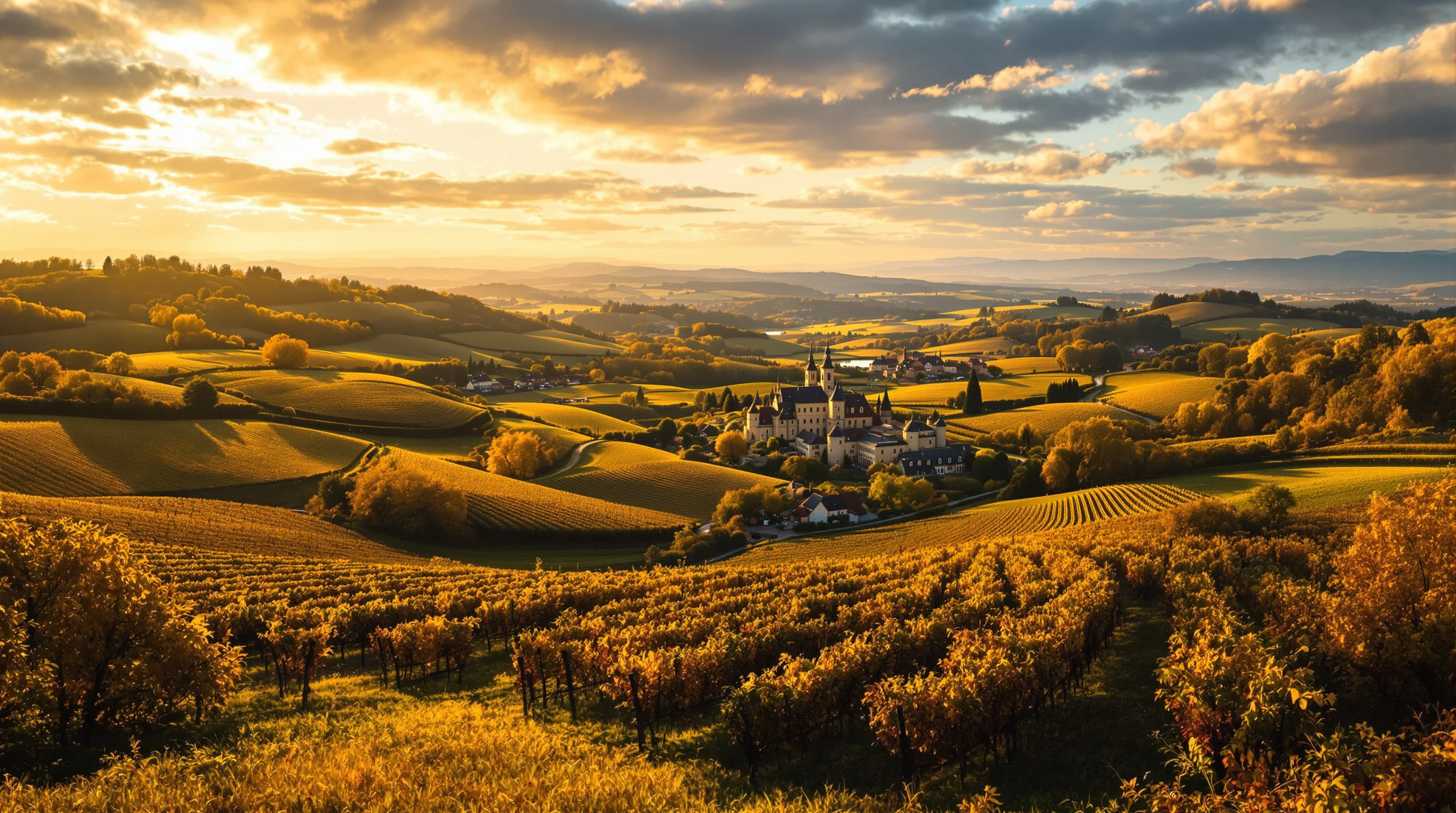

At a glance. Chardonnay, native to Burgundy, is the world's best-known white grape. Almost neutral itself, its taste depends strongly on climate and winemaker. Cool and unoaked means lemon, green apple and chalk, as in Chablis. Warm and barrel-aged means peach, pineapple, butter, vanilla and nuts, as in Meursault and many New World wines. The finest examples are Burgundian: Chablis, Meursault, Puligny-Montrachet, Chassagne-Montrachet, Corton-Charlemagne and Pouilly-Fuissé. It also makes Champagne blanc de blancs. Serve at 10–13 °C with fish, poultry, cheese and creamy sauces.
Chardonnay's origins
Born in Burgundy, it is a natural cross of Pinot and almost forgotten Gouais Blanc, identified genetically. Its name matches Chardonnay village in southern Burgundy's Mâconnais; one theory derives the grape's name from it.
For centuries, Burgundy and Champagne dominated. In the later 20th century, California, Australia, Chile, South Africa, New Zealand and Italy planted thousands of hectares. Now almost every wine country grows it. By the 1990s, fatigue sparked ABC, “Anything But Chardonnay”. Fresher, less oaky wines restored its popularity.
What does Chardonnay taste like?
The “winemaker's grape” has little assertive natural aroma but expresses place and style beautifully. Three factors shape flavour.
1. Climate
| Climate | Where | Flavour |
|---|---|---|
| Cool | Chablis, Champagne, Jura | Lemon, green apple, pear, chalk, high acidity |
| Moderate | Côte de Beaune, Mâconnais | White peach, apple, flowers, nuts |
| Warm | Southern France, California, Australia | Pineapple, mango, melon, banana, softer acidity |
2. Oak
- Unoaked, stainless steel: fresh, fruity and pure, like most Chablis and Mâcon.
- Barrel-aged: vanilla, toast, coconut, hazelnut, clove and fuller texture, like Meursault and Puligny.
- New oak proportion: fine Burgundy may use plenty without shouting; cheap oak-chip wines sometimes smell like furniture.
3. Malolactic fermentation and lees
After the main fermentation, many Chardonnays undergo malolactic fermentation, which converts sharp malic acid to softer lactic acid, bringing butter and cream. Ageing on lees, dead yeast, with bâtonnage, regular stirring, adds brioche, nuts and an oily texture.
The same grape thus spans incisive Chablis to buttery Meursault.
Chardonnay in France
| Region | Wines | Style | French price |
|---|---|---|---|
| Chablis | Petit Chablis, Chablis, Premier and Grand Cru | Fresh, mineral, usually unoaked | €15–80 |
| Côte de Beaune | Meursault, Puligny-Montrachet, Chassagne-Montrachet, Corton-Charlemagne, Montrachet | Great world whites, oaked | €40–500 and above |
| Côte Chalonnaise | Rully, Montagny | Fresh, affordable | €15–30 |
| Mâconnais | Mâcon-Villages, Saint-Véran, Pouilly-Fuissé | Fruity, sunny | €10–40 |
| Champagne | Blanc de blancs | Sparkling | €35–80 |
| Burgundy, Jura, Loire | Blanc de blancs Crémant | Sparkling, cheaper than Champagne | €10–18 |
| Jura | Côtes du Jura Chardonnay | Fresh or oxidative sous voile, nutty | €15–40 |
| Languedoc | IGP Pays d'Oc Chardonnay | Warm, fruity, inexpensive | €6–12 |
French labels rarely say Chardonnay, preferring Chablis, Meursault or Pouilly-Fuissé. Cheap southern and New World wines emphasise grape names. Many people therefore do not realise Chablis is Chardonnay.
Chablis versus Chardonnay
Chablis is Chardonnay: all white Chablis uses this grape. The difference is place and style:
- Chablis: cool northern Burgundy, Kimmeridgian limestone with fossil shells; lemon, apple, minerality, usually unoaked.
- Chardonnay on a label: a grape without a particular place, any country or style, fresh or buttery.
Read “Chablis”.
Chardonnay versus Sauvignon Blanc
| Chardonnay | Sauvignon Blanc | |
|---|---|---|
| Aromas | Apple, pear, peach, cream, nuts | Grapefruit, gooseberry, cut grass, elderflower |
| Texture | Light to oily | Light, crisp |
| Oak | Common | Rare |
| French examples | Chablis, Meursault | Sancerre, Pouilly-Fumé |
| Appeal | Round white-wine lovers | Freshness and herb lovers |
Read “Sancerre and Vouvray”.
Burgundy's great Chardonnays
The short Côte de Beaune hillside south of Beaune may make the world's finest whites:
- Meursault, the butteriest: hazelnut, toast and cream. Premiers Crus include Perrières, Charmes and Genevrières.
- Puligny-Montrachet, finest and most mineral: white flowers and citrus.
- Chassagne-Montrachet, between them, fruit, flowers and more breadth.
- Montrachet, Bienvenues-Bâtard-Montrachet and Chevalier-Montrachet, Grands Crus between two villages; Montrachet is among the world's dearest whites.
- Corton-Charlemagne, a powerful, long-lived hilltop Grand Cru, named for Charlemagne according to legend.
Southern Mâconnais is sunnier. Pouilly-Fuissé, with Premiers Crus since 2020, and Saint-Véran give juicy fruit and Burgundy's best value. Do not confuse Pouilly-Fuissé with Loire Sauvignon Pouilly-Fumé.
Food pairings
| Style | Food |
|---|---|
| Fresh unoaked, Chablis, Mâcon | Oysters, seafood, grilled fish, goat's cheese, sushi |
| Middleweight, Rully, Saint-Véran, Pouilly-Fuissé | Chicken, creamy fish, risotto, mushroom pasta |
| Oaked, Meursault, Puligny | Lobster, scallops, creamy veal, mushroom chicken, Comté |
| Warm and fruity, southern, New World | Grilled chicken, pork, corn, pumpkin, mild cheeses |
| Sparkling, blanc de blancs | Apéritif, oysters, caviar |
Oaked Chardonnay works poorly with spicy or sweet food: oak and alcohol heighten burning. But buttery Chardonnay with rich cream sauce is a great wine pairing.
Serving
- Temperature: fresh 8–10 °C; oaked and aged 12–13 °C. Icy Meursault loses aroma.
- Glass: standard white for fresh styles, broad Burgundy glass for aged wines.
- Decanting: optional, though young great Burgundy may need thirty minutes of air.
- Ageing: Chablis and Mâcon within two to five years; Côte de Beaune Premier and Grand Cru five to fifteen years after harvest.
Choosing Chardonnay
- Style: fresh means Chablis, Petit Chablis, Mâcon or Montagny; rounded means Meursault, Pouilly-Fuissé or southern Chardonnay.
- Read place, not grape: Burgundy names villages.
- Start with good Bourgogne Blanc, €15–25, the same grape as great wines.
- Want oak? Check the back label: “élevé en fût de chêne” means barrel-aged.
- Do not overpay for Grand Cru initially: a good estate's Premier Cru can be more interesting.
Read “Choosing wine in a shop” and “Grand Cru and Premier Cru”.
Chardonnay around the world
| Country | Style |
|---|---|
| California | Classic buttery ripe fruit, oak and vanilla; also fresh coastal styles |
| Australia | From heavy 1990s oak to fresh, elegant cool-climate wines |
| Chile, Argentina | Fruity, affordable; best from cool valleys by the ocean and in the Andes foothills |
| New Zealand | Fresh, bright acidity |
| Italy | Fresh Alto Adige, sparkling Franciacorta |
| South Africa | Between Burgundy and California, fruit and freshness |
Burgundy is restrained: less ripe fruit and sweetness, more acidity, minerality and length. It develops over dinner and years, rather than chasing a loud first impression.
Ageing Chardonnay
In its youth, Chardonnay is all about fruit, flowers and a sense of freshness in the glass. After five to ten years, good Burgundy develops hazelnut, honey, mushrooms and dried herbs, turning golden. The best Meursault and Puligny live 15–20 years.
There is a risk: since the mid-1990s, some white Burgundy has suffered premature oxidation, or premox. Wines expected to last fifteen years became dark and lost freshness after six to eight years, resembling sherry. Causes remain uncertain, including corks and cellar changes. Producers improved matters, but avoid waiting too long and open an early bottle from a case to check.
A home tasting
Compare three wines in one evening:
- Chablis, fresh and unoaked.
- Mâcon-Villages or Saint-Véran, sunny and fruity.
- Meursault or barrel-aged Bourgogne Blanc, oaky and creamy.
Add California or Australia if desired. Serve fish, creamy chicken and Comté. Differences surprise even those who “dislike Chardonnay”.
Chardonnay and cheese
White Burgundy is particularly good with cheese. Fresh Chablis suits goat's cheese and young Comté; Pouilly-Fuissé Brie and Camembert; aged Meursault 24-month Comté, Beaufort and Gruyère, matching nutty notes. Local Cîteaux, made by monks at the abbey near Nuits-Saint-Georges, is a classic Burgundian cheese to pair with white wine. Powerful Époisses overwhelms Chardonnay; choose marc or red instead. Read “French cheeses”.
Common mistakes
- Thinking Chardonnay always oaky and buttery. Chablis is Chardonnay too.
- Confusing Pouilly-Fuissé and Pouilly-Fumé.
- Serving icy Meursault.
- Choosing it for spicy food.
- Looking for Chardonnay on Burgundy labels. Look for villages.
Frequently asked questions
What sort of wine is Chardonnay?
White, fresh and mineral like Chablis or rounded with butter and vanilla like Meursault.
Where does it come from?
Burgundy, a natural Pinot–Gouais Blanc cross.
What does it taste like?
Apple, pear and lemon in cool climates; peach, pineapple, butter and vanilla in warmth and oak.
Is Chablis Chardonnay?
Yes, exclusively; cool northern Burgundy and its fresh style distinguish it.
How does it differ from Sauvignon Blanc?
Chardonnay: apple, peach, cream, often oak. Sauvignon: grapefruit, grass, gooseberry, almost always unoaked.
What goes with it?
Fresh styles with fish and seafood; oaked with lobster, chicken and veal in cream sauce.
What serving temperature?
Fresh 8–10 °C, barrel-aged 12–13 °C.
Which are France's best?
Burgundy's Chablis, Meursault, Puligny-Montrachet, Chassagne-Montrachet, Corton-Charlemagne, Montrachet and Pouilly-Fuissé.
Chardonnay at home in Burgundy
Our wine tour follows the Côte de Beaune from Corton to Chassagne-Montrachet, tasting Chardonnay in Meursault and Puligny cellars and comparing with Chablis. → Burgundy wine tour · Discover Burgundy wines on tour · Chablis