
At a glance. Sancerre is a village and appellation in the eastern Loire, a benchmark for Sauvignon Blanc: dry and fresh, with citrus, gooseberry and flinty notes. Across the river is its “twin”, Pouilly-Fumé. Vouvray, near Tours in the heart of château country, belongs to Chenin Blanc: one appellation produces dry, sweet and sparkling wines. Serve Sancerre with goat's cheese and fish; Vouvray with pork, poultry, Asian food or desserts, depending on sweetness. The key words on a Vouvray label are sec, demi-sec and moelleux.
Sancerre and Vouvray on the map
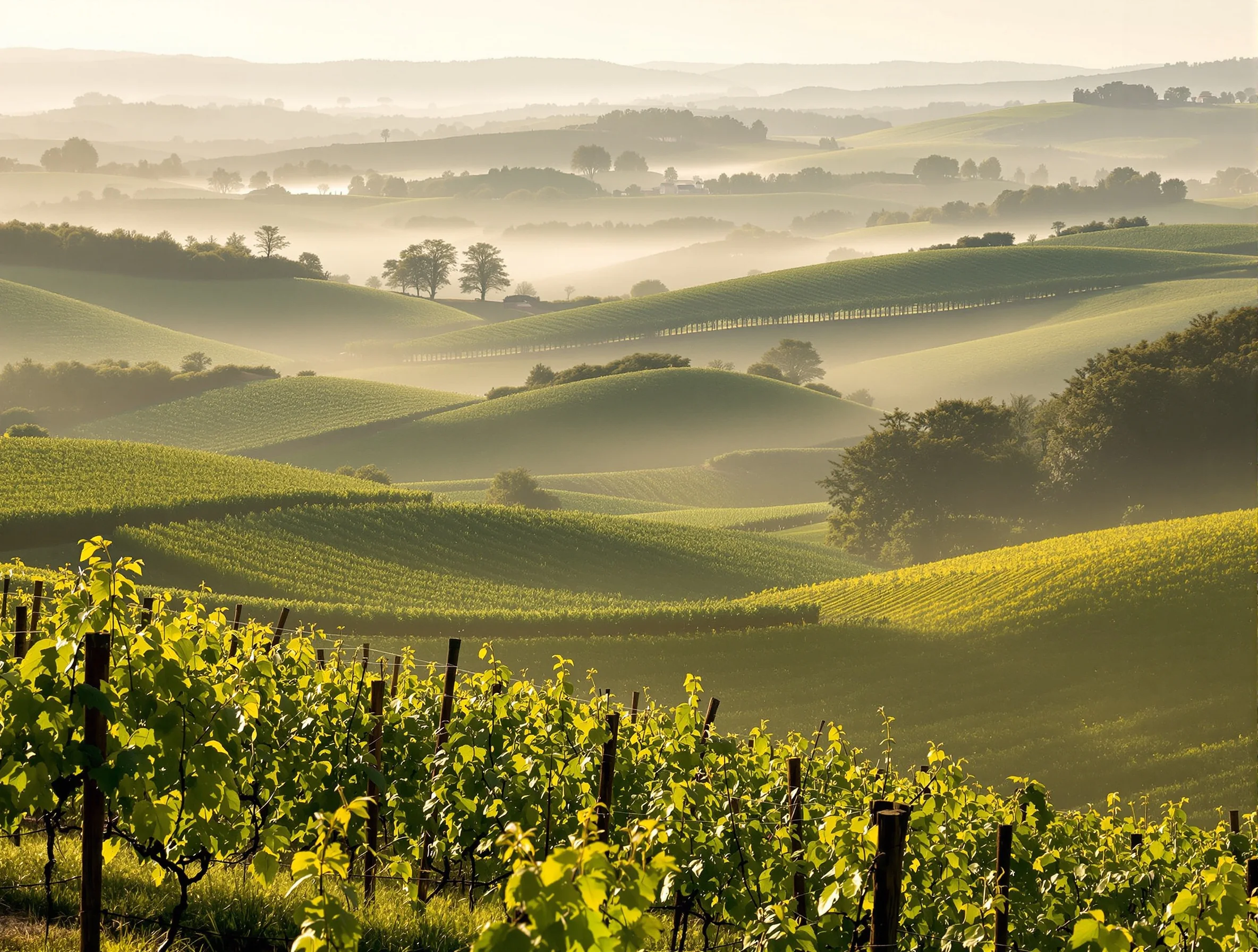
The Loire is France's longest river, with vineyards stretching for hundreds of kilometres. Sancerre lies in the east, closer to Burgundy than the ocean: a continental climate and hills above the river. Vouvray is in Touraine, 10 km from Tours, among the châteaux.
| Sancerre | Vouvray | |
|---|---|---|
| Location | Central Loire, near Bourges | Touraine, near Tours |
| White grape | Sauvignon Blanc | Chenin Blanc |
| Style | Dry | Dry to sweet, still and sparkling |
| Soils | Limestone, marl, flint, silex | Tuffeau, soft limestone, and clay with flint |
| Also | Pinot Noir reds and rosés | White only |
| Neighbour | Pouilly-Fumé | Montlouis-sur-Loire |
Sancerre
Sancerre is a hilltop village and 14 neighbouring communes. There are three soil types, often named on labels:
- Terres blanches, white earth: limestone and marl, giving fuller, softer wines;
- Caillottes: stony limestone, producing fresh, aromatic wines to drink young;
- Silex, flint: the famous smoky, flinty note and long ageing potential.
Flavour: lemon, grapefruit, gooseberry, green herbs, sometimes elderflower; high acidity, little or no oak. Good Sancerre is not “catty” or grassy like inexpensive New Zealand Sauvignon; it is more restrained and mineral.
Red Sancerre is light, fresh Pinot Noir; less common, but worth attention. There is also rosé.
Pouilly-Fumé
Across the Loire lies Pouilly-Fumé. The same Sauvignon, similar soils. “Fumé” is linked to flint's smoky note or morning mist over the vineyards. Do not confuse it with Pouilly-Fuissé, Chardonnay from Burgundy.
Sancerre and goat's cheese
The Loire's most famous pairing: Crottin de Chavignol, a small goat's cheese from Chavignol village, two kilometres from Sancerre. The wine's acidity matches the cheese's tang, while freshness cuts through richness.
Vouvray
Vouvray covers eight communes on the Loire's right bank near Tours. The hillsides are honeycombed with tuffeau cellars, carved into the soft white limestone also used for the Loire châteaux. They stay cool year-round, ideal for ageing wine.
The only grape is Chenin Blanc. Its high acidity remains even in sweet wines, allowing Vouvray to live for decades.
Understanding Vouvray's sweetness
| Label | Sweetness | Flavour | Pairing |
|---|---|---|---|
| Sec | Dry | Apple, quince, honey, chalk | Fish, poultry, goat's cheese |
| Demi-sec | Off-dry | Pear, honey, quince, gentle sweetness | Pork, chicken in cream, Asian food |
| Moelleux | Sweet | Apricot, honey, candied fruit | Foie gras, blue cheese, fruit tarts |
| Liquoreux, in the best years | Very sweet | Honey, dried fruit | Desserts, cheese |
| Pétillant / Mousseux | Sparkling | Apple, brioche | Apéritif |
Sweetness varies by vintage: warmer years bring more sweet wines, cooler years more dry and sparkling. If the label says nothing about sweetness, ask the seller.
Sparkling Vouvray uses the traditional method, like Champagne, at a fraction of the price. Read about other French sparkling wines in “What is brut?”.
Montlouis-sur-Loire
Opposite Vouvray, across the Loire, Montlouis-sur-Loire offers the same Chenin and similar styles, often cheaper and made by younger winemakers.
Food pairings
| Dish | Wine |
|---|---|
| Goat's cheese, Crottin or Sainte-Maure | Sancerre |
| Oysters, mussels | Sancerre, Pouilly-Fumé |
| Grilled fish, pike with beurre blanc | Sancerre, dry Vouvray |
| Pork with apples, Tours rillettes | Vouvray demi-sec |
| Chicken in cream sauce | Vouvray sec or demi-sec |
| Thai and Chinese cooking | Vouvray demi-sec |
| Foie gras, Roquefort | Vouvray moelleux |
| Tarte Tatin | Vouvray moelleux |
More in “Wine with fish and meat”.
Serving
- Sancerre: 8–10 °C, young, within two to five years; the best flint-grown wines live longer.
- Vouvray sec: 8–10 °C; demi-sec and moelleux, 8–10 °C, with possible ageing of 10–30 years.
- Sparkling: 6–8 °C.
Prices
| Wine | Guide price in France |
|---|---|
| Sancerre | €15–30 |
| Flint-grown Sancerre from top producers | €30–60 |
| Pouilly-Fumé | €15–40 |
| Vouvray sec or demi-sec | €10–25 |
| Aged Vouvray moelleux | €20–60 |
| Sparkling Vouvray | €10–20 |
Visiting
- Sancerre: climb to the hilltop village for views of the vineyards and Loire. Chavignol has cheese dairies and wineries.
- Vouvray: tuffeau cellars line the riverside road; many offer tastings without appointments in season.
- Tours to Vouvray takes 15 minutes; to Sancerre, around two and a half hours.
Sauvignon Blanc: why Sancerre is a benchmark
Sauvignon Blanc grows worldwide: New Zealand, Chile, South Africa and California. But for many sommeliers, Sancerre and Pouilly-Fumé remain the benchmarks. Climate and soil explain why. The Central Loire is cool, allowing grapes to ripen slowly and preserve acidity rather than accumulating sugar and tropical aromas. Limestone and flint bring minerality, a sensation resembling wet stone or gunflint.
New Zealand Sauvignon is vivid and recognisable, with passion fruit, gooseberry and cut grass. Sancerre is more restrained: citrus, white flowers, gentle herbs and chalk. Less outspoken, it works better with food. If you like the New Zealand style, try caillottes-grown Sancerre; for greater depth, choose flint-grown Sancerre or Pouilly-Fumé from a good producer.
Historians debate whether Sauvignon Blanc originated in the Loire or Bordeaux. In Sancerre, large-scale planting followed late-19th-century phylloxera, when old red varieties were replaced with whites.
Chenin Blanc: France's most versatile white grape
Chenin Blanc can do everything: dry, off-dry, sweet and sparkling wines, all from one hillside. Native to the Loire, it has been known there since the 9th century. Its secret is high natural acidity: even very sweet wines stay fresh without becoming cloying. That is why old Vouvray moelleux can drink youthfully after 30–50 years.
Beyond Vouvray and Montlouis, Chenin grows in Savennières, producing powerful dry wines among France's best whites; Coteaux du Layon, Bonnezeaux and Quarts de Chaume, for sweet wines; and Anjou and Saumur. Outside France, South Africa grows plenty, calling it Steen.
Chenin flavours: quince, apple, pear, honey, chamomile, lanolin, the smell of wool, and chalk. With age: wax, dried fruit and truffle.
Tuffeau cellars
The hills around Vouvray are riddled with caves. Tuffeau, soft white limestone, was quarried for centuries to build Tours's châteaux, churches and houses. Quarries ran horizontally into the slopes, leaving kilometres of underground galleries. Winemakers turned them into cellars: around 12 °C year-round and high humidity, ideal for ageing wine and bottles of sparkling.
Many Loire residents still live in troglodyte houses, cut into rock: the façade outside, rooms within the hillside. Some are hotels and restaurants where you can dine in a cave. A tuffeau cellar visit is one of France's most memorable tastings.
Choosing Sancerre or Vouvray in a shop
- Sancerre: look at the producer; many leading estates are family-run. A named lieu-dit or soil, silex or caillottes, usually indicates a higher-level wine.
- Vouvray: look for sec, demi-sec or moelleux; without a mention, it is usually dry or off-dry, but ask.
- Vintage: choose Sancerre young, one to three years old; Vouvray sec up to five to eight years; moelleux can be older.
- Price: good Sancerre below €12 is rare in France.
More advice in “How to choose wine in a shop”.
Sancerre: a hilltop village
Sancerre stands atop a hill around 300 metres above the Loire. From the top, you see rolling vineyards, the river and Pouilly on the opposite bank. The old town has narrow streets, wine shops and the Tour des Fiefs, a medieval castle remnant you can climb. During the Wars of Religion, Sancerre was a Protestant stronghold and endured a long siege in 1573: townspeople ate leather straps rather than surrender.
At Chavignol, below the hill, are Crottin dairies and dozens of wineries. Many families have made wine here for generations; the same surname often appears on several estates' labels, belonging to cousins and brothers. Villages host summer wine fairs and a late-summer harvest festival.
Paris to Sancerre takes around two and a half hours by car, a convenient stop towards Burgundy: Sancerre to Chablis is about two hours.
Vouvray: the riverside road
Vouvray lies 10 km upstream from Tours. The road passes cave-pierced cliffs, with “dégustation” signs at many cellar entrances. Large houses and small family estates work here. A good approach is cycling the Loire à Vélo route, stopping at two or three cellars.
Vouvray's wine fair takes place on August's last weekend, followed by autumn harvest festivals. Nearby Amboise, Clos Lucé and Chenonceau make wine and châteaux easy to combine. Read “Amboise”.
The Loire on one map
Sancerre and Vouvray are just two points in a vast valley. Here are the Loire's wines from east to west:
| Area | Main wines | Grapes |
|---|---|---|
| Centre | Sancerre, Pouilly-Fumé, Menetou-Salon, Quincy | Sauvignon Blanc |
| Touraine | Vouvray, Montlouis, Chinon, Bourgueil | Chenin Blanc, Cabernet Franc |
| Anjou and Saumur | Savennières, Coteaux du Layon, Saumur-Champigny | Chenin Blanc, Cabernet Franc |
| Nantes | Muscadet | Melon de Bourgogne |
If you enjoyed Sancerre, try its cheaper neighbours Menetou-Salon and Quincy. If you liked Vouvray, try Savennières and Montlouis.
Nearby Loire reds
When visiting Sancerre and Vouvray, taste Loire reds too. Sancerre has light Pinot Noir; Touraine has Chinon and Bourgueil, made from Cabernet Franc: fresh, with raspberry, violet and green pepper, and soft tannins. Serve slightly chilled with pork, chicken, rillettes and goat's cheese. These are among France's best inexpensive reds.
Common mistakes
- Confusing Pouilly-Fumé and Pouilly-Fuissé.
- Buying Vouvray without checking sweetness.
- Serving Sancerre too cold: the aroma disappears.
- Thinking Sancerre is only white.
- Not keeping sweet Vouvray. Age suits it.
Frequently asked questions
What is Sancerre?
Dry white Sauvignon Blanc from Sancerre village in the Loire; Pinot Noir reds and rosés also exist.
Which grape makes Vouvray?
Chenin Blanc only.
Is Vouvray dry or sweet?
It can be dry, sec; off-dry, demi-sec; sweet, moelleux; or sparkling. Check the label.
How does Sancerre differ from Pouilly-Fumé?
Neighbouring appellations on opposite Loire banks, both using Sauvignon Blanc, with similar styles.
What food goes with Sancerre?
Goat's cheese, oysters and grilled fish.
What food goes with Vouvray?
Dry with fish and poultry, off-dry with pork and Asian food, sweet with foie gras and desserts.
At what temperature should you serve Sancerre?
8–10 °C.
How long does Vouvray keep?
Dry wines for several years; sweet and the best wines for decades.
Discover Sancerre and Vouvray in person
Our Loire wine tour includes Sancerre and Pouilly-Fumé, Vouvray's tuffeau cellars, Chinon and Anjou, and châteaux not open to everyone. → Loire château wine tour · Discover French wines on a Loire tour · Wine grape varieties