
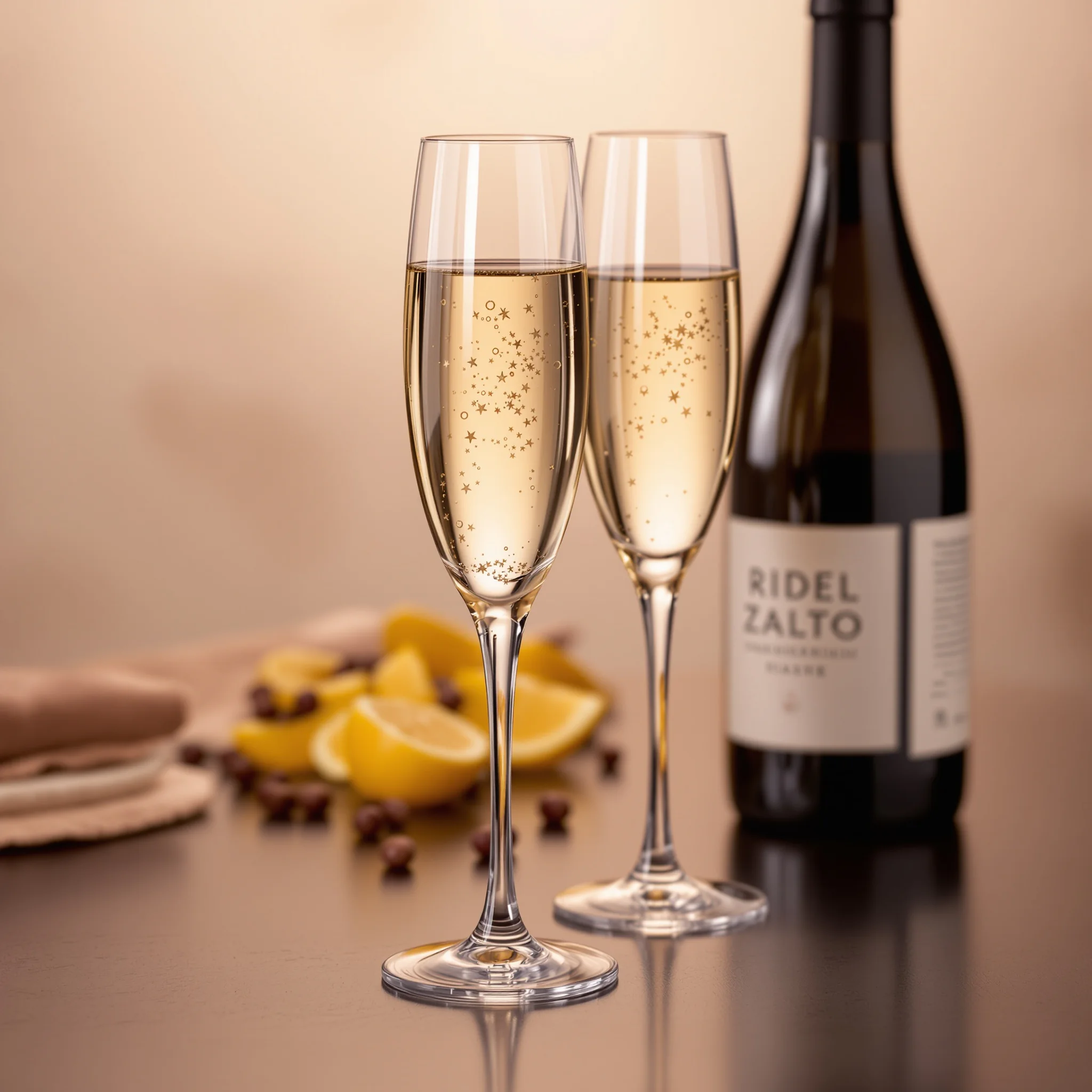

At a glance. These label terms describe the grapes used. Blanc de blancs, “white from whites”, uses white grapes only, almost always Chardonnay: fine, fresh, citrus and chalk. Blanc de noirs, “white from blacks”, is white Champagne from red Pinot Noir and Pinot Meunier, fuller with red berries. Rosé is pink, made by adding a little Champagne red wine or keeping juice on skins. “Brut” only describes sweetness, a dry style. Blanc de blancs suits oysters and apéritifs; blanc de noirs poultry; rosé duck, salmon and berries.
Champagne's three grapes
To understand the terms, know the main grapes:
| Grape | Berry colour | Contribution | Main area |
|---|---|---|---|
| Chardonnay | White | Freshness, citrus, white flowers, minerality, longevity | Côte des Blancs |
| Pinot Noir | Red | Body, structure, red berries | Montagne de Reims, Côte des Bar |
| Pinot Meunier | Red | Fruit, softness, roundness | Vallée de la Marne |
Ordinary Champagne without these terms blends all three. Blanc de blancs, blanc de noirs and rosé are particular styles.
How do red grapes make white wine? Pinot Noir and Meunier have colourless flesh, colour only in skins. Quick, gentle pressing keeps juice almost white.
Blanc de blancs: white from whites
Grapes: almost always 100% Chardonnay. Rules also permit rare Pinot Blanc, Arbane and Petit Meslier, seldom seen.
Origin: the best come from the Côte des Blancs south of Épernay, chalk soils around Avize, Cramant, Le Mesnil-sur-Oger and Oger. Chalk gives freshness and a saline impression.
Flavour: lemon, green apple, white flowers, chalk; age brings brioche, hazelnut and butter. Fine bubbles, light texture.
Pairings:
- Oysters, scallops, shrimp and sushi;
- Goat's cheese and Chaource;
- Steamed fish or creamy fish dishes;
- Apéritifs, better suited than other styles.
Ageing: good-village examples age beautifully. Austere when young, they develop nuts and brioche five to ten years after harvest.
Blanc de noirs: white from blacks
Grapes: Pinot Noir, Pinot Meunier or both, no white grapes.
Origin: Montagne de Reims, Aÿ, Bouzy, Ambonnay and Verzenay, Vallée de la Marne, and southern Côte des Bar, dominated by Pinot Noir.
Flavour: red apple, pear, raspberry, cherry and sometimes gentle spice. Fuller than blanc de blancs, more “wine-like”. Golden, sometimes faintly coppery.
Pairings:
- Poultry, chicken, guinea fowl and turkey;
- Mushrooms, pâtés and ham;
- Aged cheese, Comté and Gruyère;
- Truffle dishes.
A dinner Champagne, beyond the apéritif.
Making rosé Champagne
Champagne is Europe's only appellation allowing rosé by blending white and red wine. Elsewhere, rosé uses red grapes with brief skin contact.
Two methods:
| Method | Process | Style |
|---|---|---|
| Rosé d'assemblage | Add 5–20% still red Champagne wine, often from Bouzy, to white base wine | Fresh, elegant, red berries, pale pink to salmon |
| Rosé de saignée | Leave red-grape juice on skins for hours or days until it takes on colour | Deeper colour, denser, more intense, closer to red wine |
Blending is much more common, allowing control of colour and style. Saignée is rare, made by few houses and growers.
Flavour: strawberry, raspberry, cherry, redcurrant, sometimes orange peel and spice. Age brings dried berries, mushrooms and leather.
Pairings:
- Duck and salmon, classics;
- Ham and cured meats;
- Low-sugar berry desserts, strawberry or raspberry tarts;
- Tuna and red-fish tartare;
- Reims pink biscuits.
Rosé usually costs more than the same house's white: less production, more work.
Rosé history
The first records appear in Ruinart's 1764 books, called œil de perdrix, “partridge's eye”, for the pale pink colour. In 1818, widow Clicquot pioneered rosé blending with red wine, which became standard. Rosé now represents around one-tenth of Champagne, with growing popularity.
Label terms
| Label | Meaning |
|---|---|
| Blanc de Blancs | White grapes only, usually Chardonnay |
| Blanc de Noirs | Red grapes only, white wine |
| Rosé | Pink wine |
| Brut, Extra Brut, Demi-Sec | Sweetness, not colour or grape |
| Grand Cru, Premier Cru | Grapes from the best villages |
| Millésime | Single harvest |
Blanc de blancs brut therefore means dry Chardonnay Champagne; rosé demi-sec means semi-sweet pink Champagne.
Blanc de blancs also appears on Crémants and Spanish, Italian and Russian sparkling wines. It indicates grapes, not quality. Genuine Champagne must say Champagne. Read “How to choose Champagne”.
Comparing three styles
| Blanc de blancs | Blanc de noirs | Rosé | |
|---|---|---|---|
| Grapes | Chardonnay | Pinot Noir, Pinot Meunier | Red-wine blend or red grapes |
| Colour | Pale gold, green tinge | Gold | Pale pink to salmon |
| Flavour | Lemon, apple, chalk, brioche | Red berries, pear, body | Strawberry, raspberry, cherry |
| Best with | Apéritifs, oysters | Dinner, poultry | Duck, salmon, berries |
| French price | €35–80 | €35–70 | €40–90 |
Choosing for a celebration
- Apéritifs and seafood: blanc de blancs.
- Poultry or mushroom dinner: blanc de noirs.
- Romantic dinner, Valentine's Day, wedding: rosé.
- One bottle all evening: classic brut without special terms, the most versatile.
Read “Food with Champagne”.
Serving
- Blanc de blancs: 7–9 °C, tulip glass.
- Blanc de noirs: 8–10 °C, white-wine glass for space.
- Rosé: 8–10 °C; too cold loses berry aroma.
For quiet opening, read “How to open Champagne”.
Taste in Champagne
See the differences in person: morning blanc de blancs with a grower in Le Mesnil or Avize, afternoon blanc de noirs in Montagne de Reims, evening rosé in Reims cellars. One day shows how grapes and villages change wine more clearly than labels. Read “Reims and Épernay”.
Blanc de blancs beyond Champagne
A style description rather than an appellation, it appears widely:
- Crémants: Chardonnay in Burgundy, Pinot Blanc, Riesling and Auxerrois in Alsace, often Chenin in the Loire. Good alternatives for €10–18 in France.
- Cava: local Spanish white grapes, fresh and simple.
- Franciacorta: Italian Chardonnay sparkling, often Satèn, softer with lower pressure.
- Russian and other sparkling wines: white grapes only; check back labels for variety, method and region.
For less expense, try Crémant de Bourgogne blanc de blancs: same grape and method, limestone soils, half or a third of the price. Read “What is Crémant?”.
Choosing rosé Champagne
- Colour: pale pink or onion skin usually means light and fresh; deep pink means fuller and more berry-flavoured.
- Saignée: rare skin-contact style, closer to red wine, for meat and duck.
- Sweetness: usually brut; choose demi-sec for dessert.
- Vintage: ten-plus years of ageing brings mushroom and spice notes.
- Growers: small estates can offer more interest and better prices than big houses.
Good rosé starts around €40 in France; below that, consider rosé Crémant.
Rosé for weddings and celebrations
Its festive colour suits weddings, anniversaries and Valentine's Day. For many guests, choose magnums, keeping wine fresher and looking impressive. Serve with salmon, ham and tartare; pair wedding cake with rosé demi-sec or classic demi-sec, as dry rosé tastes acidic with sweet cream.
How long to keep it
Drink non-vintage versions within two to three years of purchase. Vintage wines can age 10–15 years, the finest Côte des Blancs blanc de blancs longer. Store horizontally, dark, at 10–14 °C, away from radiators.
Common mistakes
- Thinking blanc de blancs is a brand. A white-grape style.
- Assuming rosé is sweet. Usually brut.
- Confusing brut with colour or grape. It describes sweetness only.
- Calling every blanc de blancs Champagne. Look for Champagne.
- Serving rosé too cold. Berries disappear.
Frequently asked questions
What does blanc de blancs mean?
“White from whites”: Champagne or sparkling wine using only white grapes, usually Chardonnay.
What is blanc de noirs?
“White from blacks”: white Champagne from red Pinot Noir and Pinot Meunier.
How does blanc de blancs differ from regular Champagne?
Regular Champagne blends three grapes; blanc de blancs is Chardonnay only, lighter, fresher and finer.
How is rosé made?
Usually by adding 5–20% still red Champagne wine; less often by red-grape skin contact, saignée.
Is rosé sweet?
Usually not: most is brut. Brut, Demi-Sec and other terms indicate sweetness.
What suits blanc de blancs?
Oysters, seafood, sushi, goat's cheese and apéritifs.
What suits rosé?
Duck, salmon, ham, tartare and berry desserts.
Why does rosé cost more?
Smaller production and extra work: separate red winemaking and precise colour blending.
Champagne with a guide
Compare blanc de blancs vintages at a grower's estate, Pinot Noir blanc de noirs, rosé in Reims cellars and Côte des Blancs villages. → Champagne wine tour · Brut: dry or sweet? · Choosing Champagne