
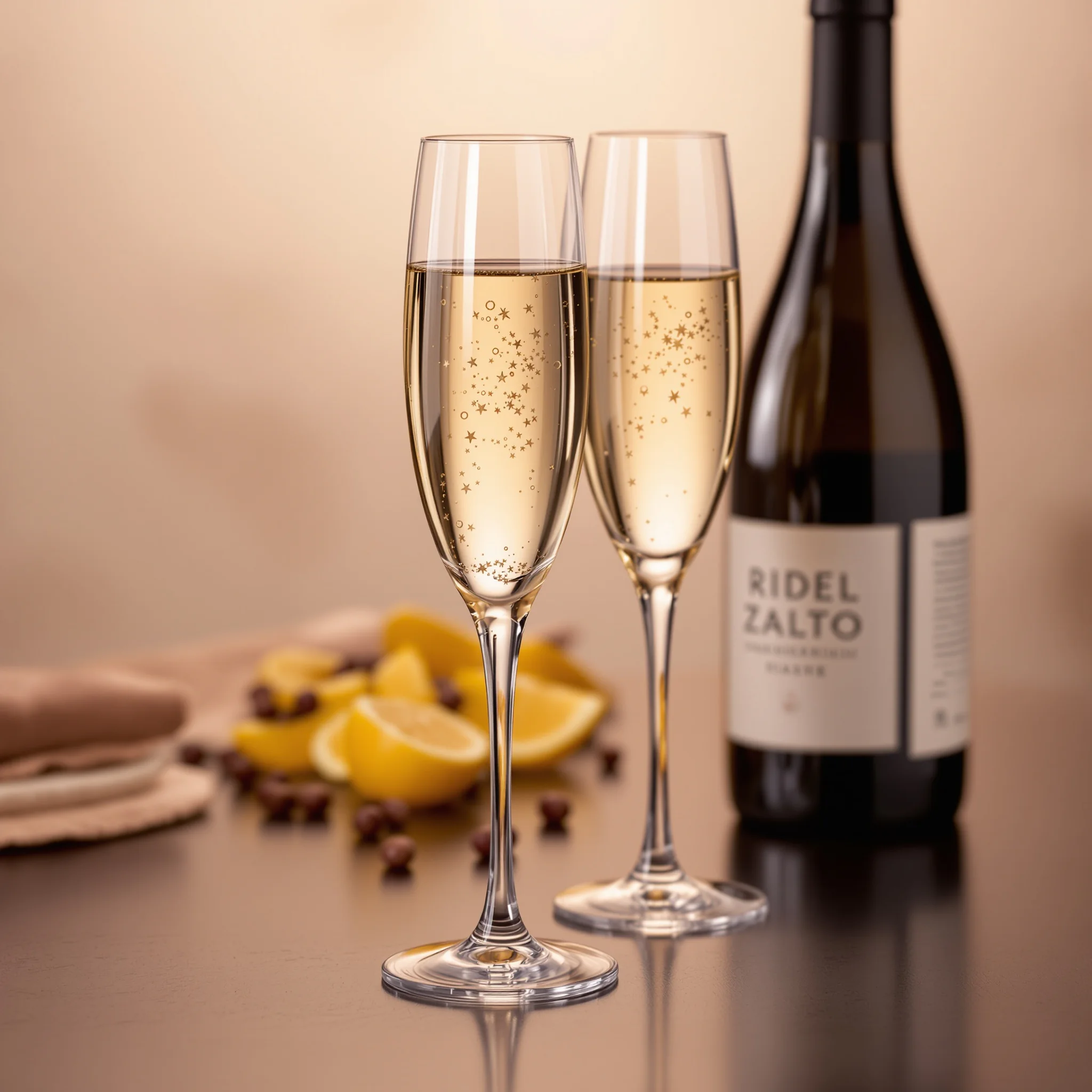

At a glance. Chill the bottle thoroughly to 8–10°C. Remove the foil, cover the cork with your palm or a napkin and loosen the wire cage, usually six half-turns. Tilt the bottle to about 45°, grip the cork firmly and turn the bottle, not the cork. The cork will emerge slowly with a quiet sigh rather than a bang.
Why does Champagne pop?
A bottle holds around six atmospheres of pressure, two to three times that of a car tyre. If warm, the gas pushes out more strongly: the cork flies, the wine foams and spills. The cork can reach a speed capable of easily injuring an eye.
Rule number one is therefore cold.
Step by step
- Chill. Ideally to 8–10°C. Allow about 20–30 minutes in a bucket of ice and water, or several hours in the fridge. The freezer is a poor idea: it is easy to leave it too long.
- Do not shake. Avoid carrying the bottle around just before opening or setting it down sharply.
- Remove the foil. There is usually a pull tab.
- Hold the cork. Put your thumb or napkin-covered palm over it and keep it there until the end. From now on, the cork could come out by itself.
- Loosen the cage. Turn the wire loop about six half-turns. You can leave the cage on; it actually improves your grip.
- Tilt the bottle to around 45°, pointing away from people, lamps and windows. Tilting increases the wine’s surface area so the gas escapes more calmly.
- Turn the bottle, not the cork. Hold the cork with one hand and slowly turn the bottle by its base with the other. As soon as the cork moves, restrain it and ease it out smoothly.
- Wait a few seconds without straightening the bottle, then pour.
A quiet sigh rather than a pop is good manners. This is how sommeliers open it.
Pouring without overflowing foam
- Pour in two stages: a little first, let the foam settle, then fill halfway or two-thirds.
- Tilt the glass slightly.
- Choose a tulip or ordinary wine glass rather than a broad, saucer-shaped coupe, which quickly loses bubbles and aroma.
Plastic corks and wooden tops
Simpler sparkling wines sometimes use plastic corks, while some wines have wooden-topped corks. The principle is unchanged: chill, hold the cork and turn the bottle. Plastic generally comes out more easily. A wooden top can separate from the cork beneath; see the next section.
If the cork sticks or breaks
- A tight cork: wrap it in a towel for a better grip and keep turning the bottle. Do not warm the neck: heat only increases pressure.
- A broken top: carefully remove the remaining cork with a corkscrew, keeping the bottle pointed away from people and restraining the cork with a towel. Screw in slowly: pressure may push the cork out.
- Do not use pliers or a knife without experience.
Sabrage: opening with a sabre or knife
Sabrage is a spectacular technique in which a sabre or the blunt side of a knife strikes along the bottle seam and breaks off the top of the neck. It is demonstrated at celebrations in Champagne. It looks impressive, but carries a risk of cuts and glass fragments. We do not recommend trying it at home without training.
If you do not finish the bottle
A special clamp-style sparkling-wine stopper preserves bubbles for a day or two in the fridge. A spoon in the neck is a myth: it does not help.
A little physics: why it is dangerous
Pressure inside is about 5–6 atmospheres, two to three times a passenger-car tyre’s. An uncontrolled cork can exceed 40 km/h. Eye specialists treat cork injuries around the holidays every year. The central rule is keep your hand on the cork whenever the cage is loose, and never point the bottle at people, lamps or windows.
A warm bottle is more dangerous than a cold one: warming increases the gas’s push against the cork. Properly chilled sparkling wine opens calmly with little foam.
Where the wire cage came from
The muselet, the wire cage over the cork, appeared in the 19th century as high-pressure bottling became widespread. Before that, corks were tied with string and often shot out in cellars. Champagne producer Adolphe Jacquesson obtained a patent in 1844. The little metal plate on top, the capsule, became collectible: many houses print designs on it, and collectors call themselves “placomusophiles”.
Chilling Champagne quickly
| Method | Time | Comment |
|---|---|---|
| Fridge | 3–4 hours | Easiest; lay the bottle down |
| Bucket of ice and water | 20–30 minutes | Water matters: ice alone chills slowly |
| Ice, water and salt | 10–15 minutes | Salt lowers the water temperature |
| Freezer | 30–40 minutes | Only with a timer: a forgotten bottle will burst |
| Wet towel in the freezer | 15–20 minutes | An old restaurant trick |
The ideal serving temperature is 6–8°C, or 8–10°C for mature Champagne.
Opening other sparkling wines
- Prosecco with string, spago: some bottles use string instead of a cage. Untie and remove it while holding the cork as you would with Champagne.
- Pét-nat, pétillant naturel, and cider: often crown-capped like beer. Open over the sink: they can contain sediment and lots of foam.
- Magnum, 1.5 litres: opens the same way, but is heavy. Keep it on the table rather than suspended.
- Plastic corks: easy to remove but can shoot out more sharply. Grip firmly.
Serving Champagne at a celebration
- An ice-and-water bucket on or beside the table.
- A napkin around the neck to catch drips and help you grip the cold bottle.
- Tulip or white-wine glasses, which do not need pre-chilling.
- Quantity: a standard 750 ml bottle holds around six 125 ml glasses. For New Year’s Eve, allow one bottle for three to four guests.
- Order: brut with the aperitif, then demi-sec with dessert if wanted.
Choosing a glass
| Glass | Shape | Advantages | Disadvantages |
|---|---|---|---|
| Coupe | Broad, shallow bowl | Attractive, retro, good for towers | Loses bubbles and aroma in minutes |
| Flute | Tall and narrow | Keeps bubbles long, shows the stream | Constrains aroma; hard to get your nose inside |
| Tulip | Wider than a flute, narrowing at the top | Preserves bubbles and concentrates aroma | You need to find one |
| White-wine glass | Ordinary wine glass | Best for mature Champagne | Bubbles escape a little faster |
Champagne growers themselves usually drink from tulips or white-wine glasses. Coupes returned for their looks and festive towers. The legend that the coupe was moulded on Marie Antoinette’s breast is fiction: these glasses appeared earlier.
Good sparkling-wine glasses have a small etched point at the bottom from which an even stream of bubbles rises. If there are almost no bubbles, the glass was probably washed with rinse aid or dried with a towel treated with fabric conditioner: a greasy film suppresses foam. Wash glasses in hot water without detergent and dry with a linen napkin.
Pouring for guests
- Hold the bottle by its base or lower part, with the label facing your guest.
- Pour in two stages: a little first so the foam rises and settles, then halfway or two-thirds full.
- Do not fill to the rim: aroma needs space, and the wine has time to warm.
- Work around the table, serving yourself last as host.
- Twist the bottle at the end to prevent a drip falling on the table.
Hold the glass by the stem, not the bowl, so your hand does not warm the wine. When clinking, touch stems or the lower bowls: thin rims break easily.
A Champagne tower
For a wedding or New Year’s Eve, stack identical coupes in tiers and pour into the top one, allowing the wine to flow down. You need a level surface and five to six bottles for a 30-glass tower. Pour slowly from a magnum or two bottles at once. It looks beautiful, but the wine goes flat quickly: drink straight away.
Using flat Champagne
Do not throw it away: use it for risotto, a sauce for fish or chicken in cream, pears poached in Champagne with vanilla, or fruit salad.
Opening at the midnight chimes
The big moment is opening exactly at midnight. To avoid being late or soaking guests:
- Ten minutes beforehand, take out the bottle and dry it.
- Five minutes beforehand, remove the foil but leave the cage untouched.
- At the first chime, put your thumb over the cork, loosen the cage, wrap the cork in a napkin and slowly turn the bottle.
- The cork emerges in 5–10 seconds with a quiet sigh. Pour small amounts first to control foam.
- Have glasses beside you beforehand so you are not searching in the noise and darkness.
If children are present, move them to the other end of the table: even an experienced hand can lose its grip.
At a restaurant: how a sommelier does it
In a good restaurant, the sommelier shows the bottle to the guest and opens it almost silently beside the table: a gentle hiss rather than a shot. In France, a loud pop suggests haste. The cork should emerge “with the sigh of a woman in love” or “like a whisper”. Try at home: with a cold bottle, it almost always works.
Accessories that help
Specialist gadgets are available too. Champagne pliers help with tight or slippery corks: grip the cork and turn the bottle. Clamp stoppers maintain pressure in open bottles and preserve bubbles for up to two days. Sabrage sabres make attractive Champagne souvenirs, but learn only outdoors under the supervision of someone experienced. For an ordinary celebration, a napkin and steady hands suffice.
Common mistakes
- Pointing the bottle at people.
- Shaking before opening. Foam will carry away half the wine.
- Opening a warm bottle.
- Twisting out the cork. Do the opposite: hold the cork and turn the bottle.
- Letting go after removing the cage.
Frequently asked questions
How can I open Champagne without a pop?
Chill to 8–10°C, hold the cork, tilt to 45° and slowly turn the bottle, not the cork. It will emerge with a quiet sigh.
How many turns loosen the cage?
Usually around six half-turns. You can leave it in place afterwards, holding it together with the cork.
Why does Champagne spill when opened?
The bottle is warm or was shaken. At around six atmospheres of pressure, warm wine foams more vigorously.
How do I open it if the cork breaks?
Carefully extract the remainder with a corkscrew, pointing the neck away from people and restraining the cork with a towel.
How long should I chill it?
Around 20–30 minutes in ice and water, or several hours in the fridge.
Does a spoon in the neck preserve bubbles?
No, that is a myth. Use a proper sparkling-wine stopper and refrigerate.
What is the pressure inside?
About 5–6 atmospheres, two to three times that of a car tyre.
How many glasses does a bottle hold?
Around six 125 ml glasses in a 750 ml bottle.
Enjoy sparkling wine to the full
Learn to choose a bottle, serve it at the right temperature and select glasses during a vineyard visit. → Explore Champagne tours
See how it is done in Champagne itself, in the cellars of Reims and Épernay. → Champagne wine tour