
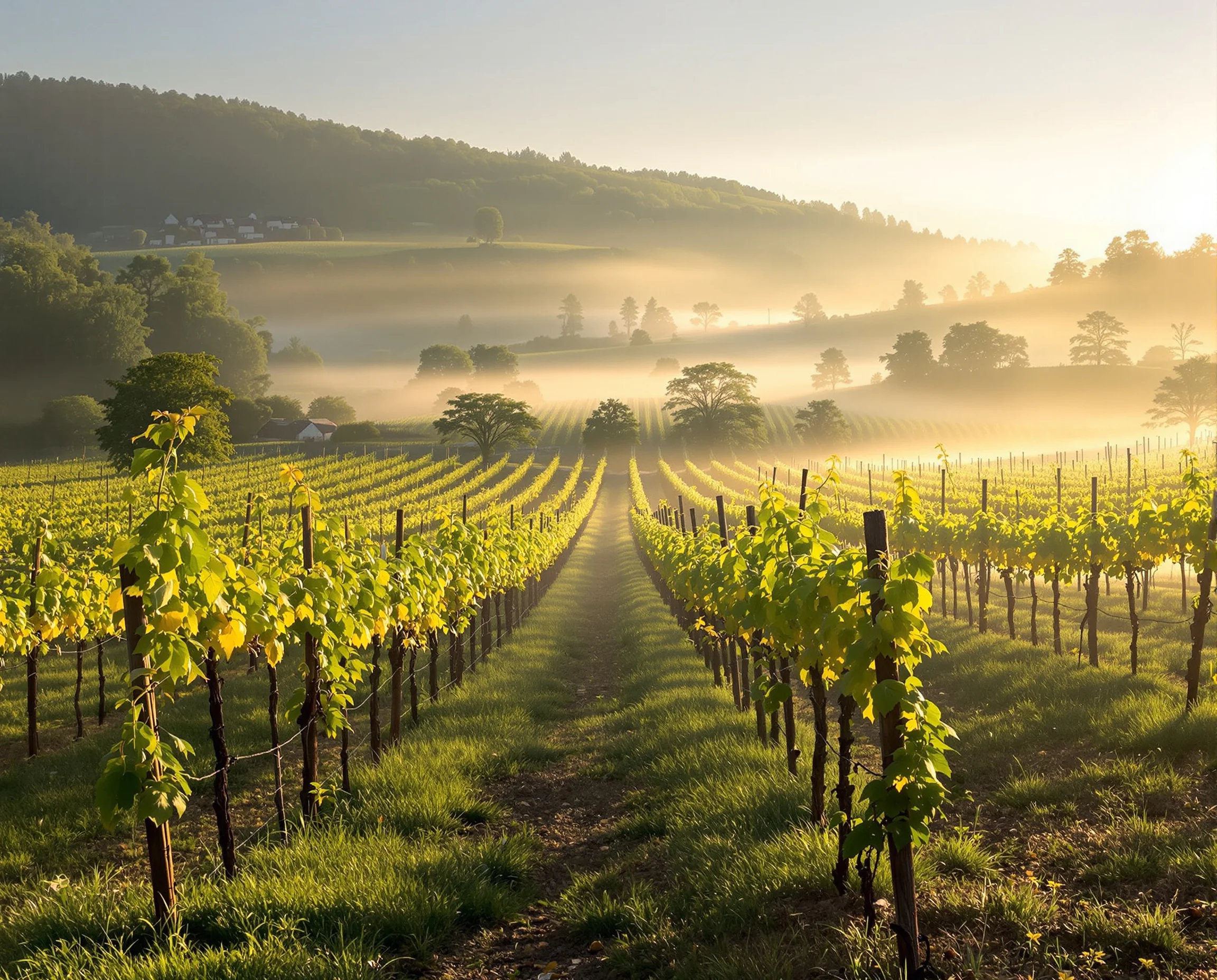

At a glance. Riesling and Gewurztraminer are Alsace's two leading grapes. Riesling, the “king of Alsace”, offers lemon, lime, white flowers and minerality; in Alsace it is usually dry and sharp. Gewurztraminer is the most aromatic grape: rose, lychee, ginger and spices, full-bodied and often slightly sweet. Riesling suits fish and choucroute, Gewurztraminer Asian food and Munster cheese. Sweet late-harvest versions, Vendanges Tardives and SGN, pair with foie gras and desserts.
Why Alsace wines are distinctive
- The grape on the label: unlike the rest of France, Alsace prints the variety prominently.
- The flute bottle: tall and slender.
- Dry and sunny: the Vosges shelter the vineyards from rain, allowing grapes to ripen while keeping their freshness.
- A mosaic of soils: granite, limestone, marl, sandstone and volcanic rocks. The same grape expresses itself differently on each.
Alsace has four “noble” grapes: Riesling, Gewurztraminer, Pinot Gris and Muscat. Only these are permitted in most Grands Crus.
Riesling
| Flavour | Lemon, lime, green apple, white flowers, “stone”; with age, honey and petrol, the term sommeliers use for mature Riesling |
| Alsace style | Usually dry, with high acidity |
| Share | Around a fifth of Alsace's vineyards, its most planted grape |
| Food pairings | Fish, seafood, choucroute, chicken, sushi |
| Temperature | 8–10 °C |
Alsace and German Riesling: the difference
The grape is the same, but styles often differ. German Riesling is often light, 8–11%, with residual sweetness; trocken indicates dry wine. Alsace Riesling is usually dry, fuller and stronger, 12–13%, with mineral character. If you enjoy dry wine, Alsace Riesling is almost always a safe choice.
Gewurztraminer
| Flavour | Rose, lychee, ginger, spices, sometimes honey |
| Style | Full, soft, low in acidity, often slightly sweet |
| Colour | Golden; the berries have pinkish skins |
| Food pairings | Asian and Indian food, curry, spicy dishes, Munster, foie gras |
| Temperature | 10–12 °C |
Gewürz means “spice” in German, hence “spicy Traminer”. The grape is believed to descend from old Traminer, associated with Tramin village in South Tyrol. Gewurztraminer is recognisable at the first sniff, one of the easiest grapes to identify blind.
Pinot Gris and Muscat: two more noble grapes
- Pinot Gris: peach, smoke and honey; full-bodied, sometimes with residual sugar. With pâtés, duck and mushrooms.
- Muscat: smells of fresh grapes and, unusually, is generally dry in Alsace. A classic aperitif and partner for asparagus.
Dry or sweet: how to tell
Alsace's main source of confusion is that the label does not always make the presence of sugar clear.
- Riesling and Muscat are more often dry.
- Gewurztraminer and Pinot Gris are often slightly sweet.
- Label clues: a sweetness scale on the back, or sec, dry, demi-sec, off-dry, moelleux, sweet, and doux, very sweet.
- Vendanges Tardives, VT: late harvest, sweet wine.
- Sélection de Grains Nobles, SGN: grapes affected by noble rot, very sweet and concentrated wine.
Alsace Grands Crus
Fifty-one sites have Alsace Grand Cru status. Their names appear on the label: Schlossberg, granite and Riesling, Rangen, volcanic soils on a steep slope above Thann, Brand, Zinnkoepflé and others. Grand Cru has lower yields and stricter rules. Read more in “Grand Cru and Premier Cru”.
Producers worth knowing
Trimbach, Zind-Humbrecht, Weinbach, Hugel, Albert Boxler, Marcel Deiss, Ostertag, and the Turckheim and Ribeauvillé cooperatives. These are useful names to start with in a shop.
Food pairing table
| Wine | Pairings |
|---|---|
| Riesling | Fish, choucroute, sushi, chicken |
| Gewurztraminer | Asian food, curry, Munster |
| Pinot Gris | Pâtés, duck, mushrooms |
| Pinot Blanc | Tarte flambée, quiche |
| VT, SGN | Foie gras, desserts, blue cheeses |
Read more in “Which Wine with Fish and Meat?”.
Choosing in a shop
- Want dry wine? Choose Alsace Riesling or Muscat and look for sec or the sweetness scale.
- Want aromatic wine for Asian food? Gewurztraminer.
- For a special occasion: Grand Cru from a well-known estate.
- With foie gras: Gewurztraminer or Pinot Gris Vendanges Tardives.
- German Riesling: look for trocken if you want dry.
Riesling in France and around the world
| Where | Style |
|---|---|
| Alsace | Dry, full-bodied, mineral |
| Germany, Mosel and Rheingau | Often light with residual sweetness; trocken means dry |
| Austria | Dry, powerful, stone fruit |
| Australia, Clare and Eden | Dry, lime, sharp |
Where else Gewurztraminer grows
Gewurztraminer grows in Alsace, Germany, Austria, South Tyrol, at Tramin, and the New World. Alsace is the benchmark: full, spicy, with rose and lychee. Read more about South Tyrol in “South Tyrol”.
How long to keep them
- Simple Riesling and Gewurztraminer: drink in the first two to four years.
- Grand Cru Riesling: five to fifteen years and longer, developing honey notes.
- Vendanges Tardives and SGN: decades.
A home tasting: compare side by side
- Alsace Riesling and German Riesling trocken: one grape, different styles.
- Riesling and Gewurztraminer from Alsace: freshness versus spice.
- Dry Gewurztraminer and Vendanges Tardives: how sweetness changes the grape.
Five Alsace estates worth knowing
| Estate | What it is known for |
|---|---|
| Trimbach, Ribeauvillé | Austere dry Riesling and legendary Clos Sainte-Hune |
| Hugel, Riquewihr | A winegrowing family since 1639, classic wines and Vendanges Tardives |
| Zind-Humbrecht, Turckheim | Biodynamics, Rangen and Brand Grands Crus, powerful concentrated wines |
| Weinbach, Kaysersberg | Clos des Capucins, Schlossberg Grand Cru, elegant style |
| Marcel Deiss, Bergheim | Site-based blends rather than varietal wines, a terroir philosophy |
These names make useful starting points: each offers accessible wines as well as Grands Crus.
Grands Crus for Riesling and Gewurztraminer
- Schlossberg, Kaysersberg: Alsace's first Grand Cru, granite, delicate and taut Riesling.
- Rangen, Thann: the southernmost Grand Cru, volcanic soils and a very steep slope; powerful smoky wines.
- Brand, Turckheim: a warm granite slope; its name means “burnt”.
- Hengst, Zinnkoepflé and Sporen: known for Gewurztraminer.
Vendanges Tardives and SGN in more detail
- Vendanges Tardives, “late harvest”: grapes are picked later, after accumulating more sugar. Wine ranges from semi-sweet to sweet, with a full texture and aromas of honey and exotic fruit.
- Sélection de Grains Nobles: noble-rotted berries are hand-selected in several passes. Very sweet and concentrated, rare and expensive, these wines can age for decades.
They may be made only from the four noble grapes, and only in years when the grapes reach the required sugar level.
Tasting Riesling and Gewurztraminer: what to look for
Riesling:
- colour: pale straw when young, golden with age;
- aromas: lemon, lime, green apple and white flowers; mature wines develop honey, dried fruit and the famous “petrol” notes;
- palate: high, vibrant, refreshing acidity; a sensation of stone and salt, called minerality;
- finish: long and clean.
Gewurztraminer:
- colour: deep gold;
- aromas: rose petals, lychee, ginger, sometimes honey and Turkish delight;
- palate: soft, full, oily, low in acidity and often noticeably sweet;
- finish: spicy with a bitter edge.
A simple test: rose and lychee at the first sniff almost certainly mean Gewurztraminer.
Alsace and Crémant
Alsace is one of France's leading Crémant producers, making sparkling wine by the same traditional method as Champagne. Crémant d'Alsace uses Pinot Blanc, Riesling, Pinot Gris, Chardonnay and Pinot Noir; rosé uses only Pinot Noir. It costs noticeably less than Champagne and makes an excellent aperitif before a Riesling dinner. Read more in “What Is Crémant?”.
Wine and Alsatian food
| Dish | Wine |
|---|---|
| Choucroute, sauerkraut with sausages and meat | Riesling or Sylvaner |
| Tarte flambée, thin flatbread with cream, onions and bacon | Pinot Blanc, Crémant |
| Baeckeoffe, meat and potatoes slow-cooked in white wine | Riesling or Pinot Gris |
| Munster cheese | Gewurztraminer |
| Foie gras | Pinot Gris or Gewurztraminer Vendanges Tardives |
| Kougelhopf, fruit tarts | Vendanges Tardives |
Riesling and Gewurztraminer with Asian food
Alsace wines are among the best matches for Asian cuisines:
- sushi and sashimi: dry Riesling, its acidity and minerality echoing rice and fish;
- Thai and Vietnamese dishes with lime and coriander: Riesling;
- Indian curry and spicy dishes: slightly sweet Gewurztraminer, whose sweetness softens the heat;
- Peking duck: Pinot Gris or Gewurztraminer.
Reading an Alsace wine label
An Alsace bottle usually shows five things:
- Alsace or Alsace Grand Cru: the appellation.
- Grape: Riesling, Gewurztraminer, Pinot Gris or Muscat; if no grape appears, it is a blend, Edelzwicker or Gentil.
- Site name: compulsory for Grand Cru, such as Schlossberg or Rangen; other wines sometimes show a lieu-dit, a named site.
- Producer: estate or cooperative.
- Sweetness scale on the back, used by many estates from dry to sweet, or sec, demi-sec and moelleux.
Vendanges Tardives or Sélection de Grains Nobles indicate sweet wine. A Grand Cru name means wine from one of the region's 51 finest sites. Read more in “How to Read a Wine Label”.
All Alsace wines are bottled in Alsace in a tall flute bottle, making them easy to spot among other French wines on the shelf.
Common mistakes
- Thinking Alsace wine is German wine. Its style is more often dry and fuller.
- Expecting dry Gewurztraminer without checking. It often has sweetness; look at the scale.
- Serving Riesling ice-cold. 8–10 °C is enough, otherwise aromas disappear.
- Pairing Gewurztraminer with delicate fish. It overwhelms it; it needs spicy dishes.
- Confusing Vendanges Tardives with ordinary wine. It is sweet wine for foie gras and desserts.
Alsace wines for a festive table
- Crémant d'Alsace: aperitif;
- Riesling: fish and seafood;
- Pinot Gris: pâté and poultry;
- Gewurztraminer: cheese and spicy appetisers;
- Vendanges Tardives: foie gras and dessert.
One bottle of each style is enough for a little Alsace tasting over dinner.
Frequently asked questions
Is Gewurztraminer dry or sweet?
More often off-dry or slightly sweet, but dry versions exist. Check the sweetness scale or sec, demi-sec and moelleux on the label.
What does Gewurztraminer taste like?
Rose, lychee, ginger and spices. It is one of the most aromatic grapes.
What food goes with Gewurztraminer?
Asian and Indian food, curry, spicy dishes, Munster and foie gras.
How does Alsace Riesling differ from German Riesling?
Alsace Riesling is usually dry and stronger; German Riesling is often lighter and sometimes sweet. Trocken indicates dry German wine.
What food goes with Riesling?
Fish, seafood, sushi, chicken and choucroute.
What does Vendanges Tardives mean?
Late harvest: grapes are picked later, contain more sugar and produce sweet wine.
What are the serving temperatures?
Riesling at 8–10 °C, Gewurztraminer at 10–12 °C.
What other grapes grow in Alsace?
Pinot Gris, Muscat, Pinot Blanc, Sylvaner and Pinot Noir.
How do you pronounce Gewurztraminer?
“Guh-VURTS-trah-mee-ner.” In Alsace it is often written without an umlaut: Gewurztraminer.
Can you drink Gewurztraminer with dessert?
Sweet versions, Vendanges Tardives and SGN, yes. Dry and off-dry versions are better with spicy dishes and cheese.
Which Alsace wine goes with sushi?
Dry Riesling: its acidity and minerality complement rice and fish.
How does Crémant d'Alsace differ from Champagne?
The method is the same, but the region and grapes differ; Crémant costs noticeably less.
How do you know whether an Alsace wine is sweet?
Check the back-label sweetness scale or demi-sec, moelleux and doux. Vendanges Tardives and Sélection de Grains Nobles always mean sweet wine.
What is Edelzwicker?
A blend of several Alsace grapes, a simple, inexpensive everyday wine that suits local food.
How much does Alsace Riesling cost?
At the producer's, simple wines start at a few euros a bottle; Grands Crus and famous estates cost considerably more. Many wines are cheaper on the wine route than in shops abroad.
Taste Riesling and Gewurztraminer where they grow
The Alsace tour includes a Riesling vertical at Hugel in Riquewihr, Schlossberg Grand Cru at Weinbach and a comparative tasting of seven Gewurztraminer terroirs at Zind-Humbrecht. → Alsace food and wine tour · Alsace Wine Route. Discover the grapes on location on an Alsace tour.