
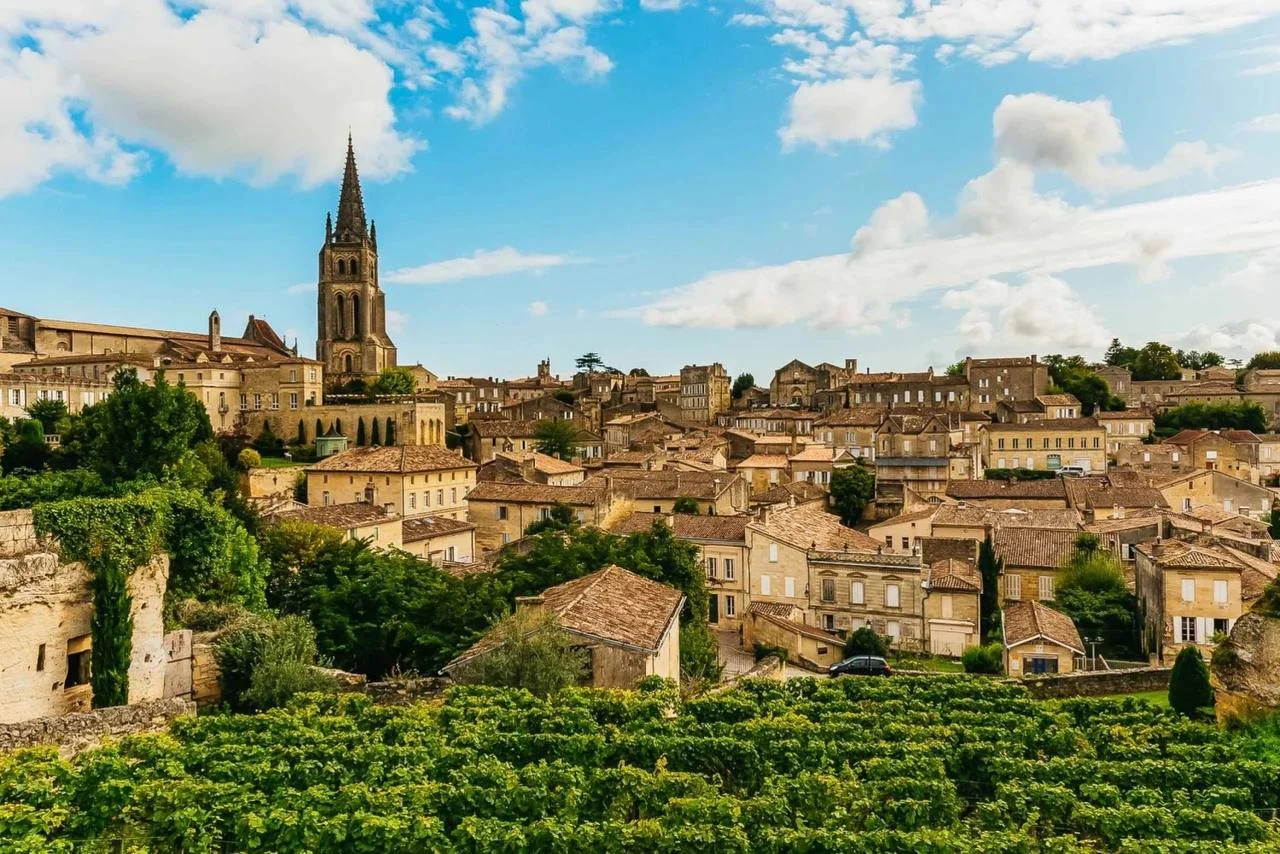

At a glance. Cabernet Sauvignon and Merlot, the world's two best-known red grapes, both come from Bordeaux. Cabernet is powerful and austere: blackcurrant, cedar, graphite, high tannin and long life. Merlot is soft and juicy: plum, cherry, chocolate, velvety tannin, ready sooner. Related Cabernet Franc is fresh, raspberry, violet and green pepper, the Loire's main red. Bordeaux nearly always blends them: Left Bank, Médoc, more Cabernet Sauvignon; Right Bank, Saint-Émilion and Pomerol, more Merlot. Choose Merlot for soft fruit, Cabernet for dense aged styles.
A Bordeaux family
The three are related:
- Cabernet Franc, oldest, probably from the Basque Country, long grown in Bordeaux and Loire.
- Cabernet Sauvignon, natural Cabernet Franc–Sauvignon Blanc cross, identified by geneticists at the University of California in 1997. It happened spontaneously, probably in the 17th century.
- Merlot, another Cabernet Franc child, with an almost-vanished Charente grape. Its name may derive from merle, blackbird, fond of ripe berries.
They share berry and leaf notes, and green pepper when underripe.
Cabernet Sauvignon flavour
Small berries, thick skins and large seeds mean colour and tannins. Late-ripening, warmth-loving, it stays green in cool years.
Aromas: signature blackcurrant, blackberry and cherry; cedar, graphite, pencil shavings, tobacco, mint and eucalyptus; green pepper in cool years.
Palate: dense, astringent and acidic. Often hard young, tannins soften with age, adding leather, cigar box and truffle.
France: Médoc, Pauillac, Saint-Julien, Margaux and Saint-Estèphe, and Graves, on Left Bank gravel. Famous 1855 First Growths are Cabernet-dominant blends.
Merlot flavour
Larger berries, thinner skins, ripening two weeks earlier. It likes water-retaining clay.
Aromas: plum, cherry, raspberry, blackcurrant; chocolate, cocoa, coffee and sometimes truffle; oak adds vanilla.
Palate: soft, rounded, velvety, less acidic and tannic. Enjoyable after two to three years; the best live decades.
France: Bordeaux's most planted red, covering over half its red vineyards. Main sites are Right Bank Saint-Émilion and Pomerol. Famous near-pure Pomerol Merlots are among the world's most expensive. Also grown in the Southwest and Languedoc.
Cabernet Franc: the third grape
Cabernet Franc often remains in the shadows, although demand is substantial: 6,469 Russian-language searches per month.
Flavour: raspberry, redcurrant, violet, graphite, green pepper and leaves; softer tannins than Cabernet Sauvignon, fresh acidity, lighter and more fragrant.
France:
- Bordeaux, third blend component, especially Saint-Émilion, where some great châteaux use more than Merlot.
- Loire, the main red in Chinon, Bourgueil and Saumur-Champigny. Light to medium, good chilled to 14–15 °C.
Read “Sancerre and Vouvray”.
Comparing the three
| Cabernet Sauvignon | Merlot | Cabernet Franc | |
|---|---|---|---|
| Aroma | Blackcurrant, cedar, graphite, mint | Plum, cherry, chocolate | Raspberry, violet, pepper |
| Tannin | High | Soft | Medium |
| Acidity | High | Medium | Medium to high |
| Body | Full | Medium to full | Light to medium |
| Drink after | 5–20 years | 2–15 years | 2–10 years |
| French sites | Médoc, Graves | Saint-Émilion, Pomerol | Saint-Émilion, Loire |
Why Bordeaux blends
Single-grape wines are rare, for three reasons:
- Weather insurance: changeable ocean climate, early Merlot helping cool years, Cabernet warm dry ones.
- Balance: Cabernet the skeleton, tannin, acidity and longevity; Merlot the flesh, soft fruit; Franc aroma and freshness.
- Different soils: Cabernet on gravel, Merlot on clay, each château with varied plots.
Small amounts of Petit Verdot, colour and spice, Malbec, body, and sometimes old Bordeaux Carmenère, now known through Chile, complete blends.
Left and Right Banks
| Left | Right | |
|---|---|---|
| Areas | Médoc, Graves, Pessac-Léognan | Saint-Émilion, Pomerol, Fronsac |
| Soils | Gravel | Clay, limestone |
| Main grape | Cabernet Sauvignon | Merlot |
| Style | Austere, tannic, long-lived | Soft, fruity, velvety |
| Classification | 1855, Médoc | Saint-Émilion's own; none in Pomerol |
| Drink after | 8–20 years | 5–15 years |
Read “Choosing Bordeaux wine”.
Merlot or Cabernet: which is better?
This is one of the questions people ask most often. There is no single correct answer: it depends on your own taste and on the occasion for which you are choosing a bottle:
- Merlot for soft fruity reds without sharp astringency, dinner tonight, or guests unused to dry red.
- Cabernet Sauvignon for rich, dense serious wine, steak or lamb, or ageing.
- Blend for both, as in most Bordeaux.
Food pairings
| Wine | Food |
|---|---|
| Cabernet Sauvignon, Left Bank | Steak, ribs, lamb, roast meat, aged hard cheese |
| Merlot, Right Bank | Duck, beef in sauce, mushrooms, truffle, meat pasta |
| Cabernet Franc, Loire | Pork, chicken, rillettes, charcuterie, goat's cheese |
| Simple Merlot | Pizza, burger, pasta, everyday meals |
Serving
- Temperature: 16–18 °C; Loire Franc 14–15 °C. A warm room's 22–24 °C is too hot.
- Decanter: young Cabernet and aged Bordeaux benefit from one to two hours' air, softening tannin.
- Glass: large, tall, broad Bordeaux glass.
Choosing in a shop
- French labels name place: Médoc, Pauillac, Margaux for Cabernet; Saint-Émilion, Pomerol for Merlot; Chinon, Bourgueil for Franc.
- Southern and New World wines name the grape.
- Age: simple Merlot two to four years; Left Bank Cabernet older, or wait at home.
- Price: basic Bordeaux €8–15; good Médoc and Saint-Émilion €20–50; classified châteaux from €50.
Around the world
Both spread from Bordeaux to almost every wine country:
| Country | Cabernet Sauvignon | Merlot |
|---|---|---|
| USA, California, Napa | Ripe, powerful, oak vanilla, world-famous style | Soft, fruity |
| Chile | Blackcurrant, mint, affordable | Long confused with Carmenère |
| Australia | Coonawarra red soils, mint and eucalyptus | Less common |
| Italy, Tuscany | Super Tuscans with Sangiovese or Bordeaux-style | Also in Super Tuscans |
| Argentina, South Africa | Rich, sunny | Fruity |
France is restrained: less ripe fruit and sweet oak, more freshness, earth and evolving tannin. New World is easier on first sip; Bordeaux more interesting after ten years.
Great wines
- Left Bank: 1855 Médoc First Growths, Cabernet-dominant, benchmark cassis, cedar, graphite and endless length.
- Pomerol: famous near-pure Merlot on blue clay, costing thousands of euros, with vineyards smaller than some holiday garden plots.
- Saint-Émilion: one Premier Grand Cru Classé A blends more Cabernet Franc than Merlot, proving the third grape's greatness.
How age changes them
| Age | Cabernet Sauvignon | Merlot |
|---|---|---|
| 1–3 years | Dark, astringent, vivid cassis, oak | Juicy plum, soft, already enjoyable |
| 5–10 years | Softer tannin, cedar, tobacco, leather | Chocolate, truffle, dried fruit |
| 15–30 years | Brick colour, cigar box, forest floor, tea | Great Pomerol velvet and mushrooms; simple wines tired |
Drink everyday Bordeaux and Merlot within three to five years. Classified Médoc and top Saint-Émilion and Pomerol can keep 10–20 years at 12–14 °C, horizontal and dark.
Three-wine home tasting
To understand the difference, buy three wines and compare them at home in the same tasting:
- Médoc or Pauillac, Left Bank Cabernet.
- Saint-Émilion or Pomerol, Right Bank Merlot.
- Chinon or Bourgueil, Loire Franc.
Open the bottles an hour beforehand and pour a little of each at 16–17 °C. Serve them with a piece of steak, some mushrooms and Comté cheese. You will taste how gravel and clay, an ocean-influenced climate and the Loire valley each change the wine. Afterwards, you will be able to choose by place in a shop, rather than relying on an attractive label.
Malbec and Petit Verdot
Once important in Bordeaux, Malbec was rarely replanted after 1956 frosts. It became famous in Cahors and Argentina, dark and dense, plum and violet. Very late Petit Verdot adds a few percent for colour, spice and violet.
Cabernet and Merlot in Russian shops
Russian and other shops stock bottles from Kuban, Crimea, Moldova, Chile and Spain. Same grapes, different climates and styles. Some clues:
- Dry red: below 4 g/l sugar for genuinely dry wine.
- Cabernet-Merlot: a Bordeaux-like blend, without place indication.
- Vintage: basic young wines within two to three years.
- Price: very cheap Cabernet can be green and harsh from underripe grapes.
To understand their homeland, try Bordeaux Supérieur or Médoc: often fresher and more complex at similar prices.
Common mistakes
- Serving warm-apartment room temperature.
- Pouring young Cabernet immediately. Let it breathe.
- Pairing Cabernet with fish. Tannins give metallic flavours.
- Thinking Merlot is simple. Great Pomerol is Merlot.
- Confusing red Cabernet Sauvignon and white Sauvignon Blanc.
Frequently asked questions
How does Cabernet Sauvignon differ from Merlot?
Denser, more tannic, blackcurrant and cedar; Merlot softer and fruitier, plum, cherry and chocolate.
Which is better?
Taste-dependent: Merlot for soft fruit, Cabernet for rich aged wines.
What does Cabernet taste like?
Blackcurrant, blackberry, cedar, graphite, mint, high tannin and acidity.
What does Merlot taste like?
Plum, cherry, raspberry, chocolate, soft velvety tannin.
What is Cabernet Franc?
Parent of both, fresh raspberry, violet and pepper reds, Loire's main red.
Why blend?
Weather insurance, flavour balance and varied soils.
What are Bordeaux's banks?
Left, Médoc and Graves, Cabernet-dominant; right, Saint-Émilion and Pomerol, Merlot-dominant.
What serving temperature?
16–18 °C; decant young Cabernet for one to two hours.
Bordeaux with a guide
Taste both banks, Médoc and Saint-Émilion, comparing Cabernet and Merlot side by side. → Bordeaux wine tour · Bordeaux and ocean itinerary · Choosing Bordeaux wine