At a glance. There are hundreds of castles in the Loire Valley, but ten of them tell the whole story of France, from the medieval fortresses of Chinon and Sully to the Renaissance palaces of Chambord and Chenonceau and the classical elegance of Cheverny. Allow one to three hours per castle; two or three in a day is realistic by car. Almost every castle has its own wine, too: the Loire Valley is one of the country’s major wine regions.
Ten castles at a glance
| Castle | Period | What it is known for | Time to allow | Wine nearby |
|---|---|---|---|---|
| Chambord | 16th century, Renaissance | double-helix staircase, hunting park | 2–3 hours | Cheverny, Cour-Cheverny |
| Chenonceau | 16th century | gallery over the Cher, the “Ladies’ Château” | 1.5–2 hours | Touraine-Chenonceaux |
| Amboise | 15th–16th centuries | royal château, Leonardo’s tomb | 1–1.5 hours | Vouvray, Montlouis, Touraine-Amboise |
| Villandry | 16th century | terraced gardens | 1.5–2 hours | Touraine-Azay-le-Rideau, Chinon |
| Cheverny | 17th century | original interiors, Tintin | 1.5 hours | Cheverny |
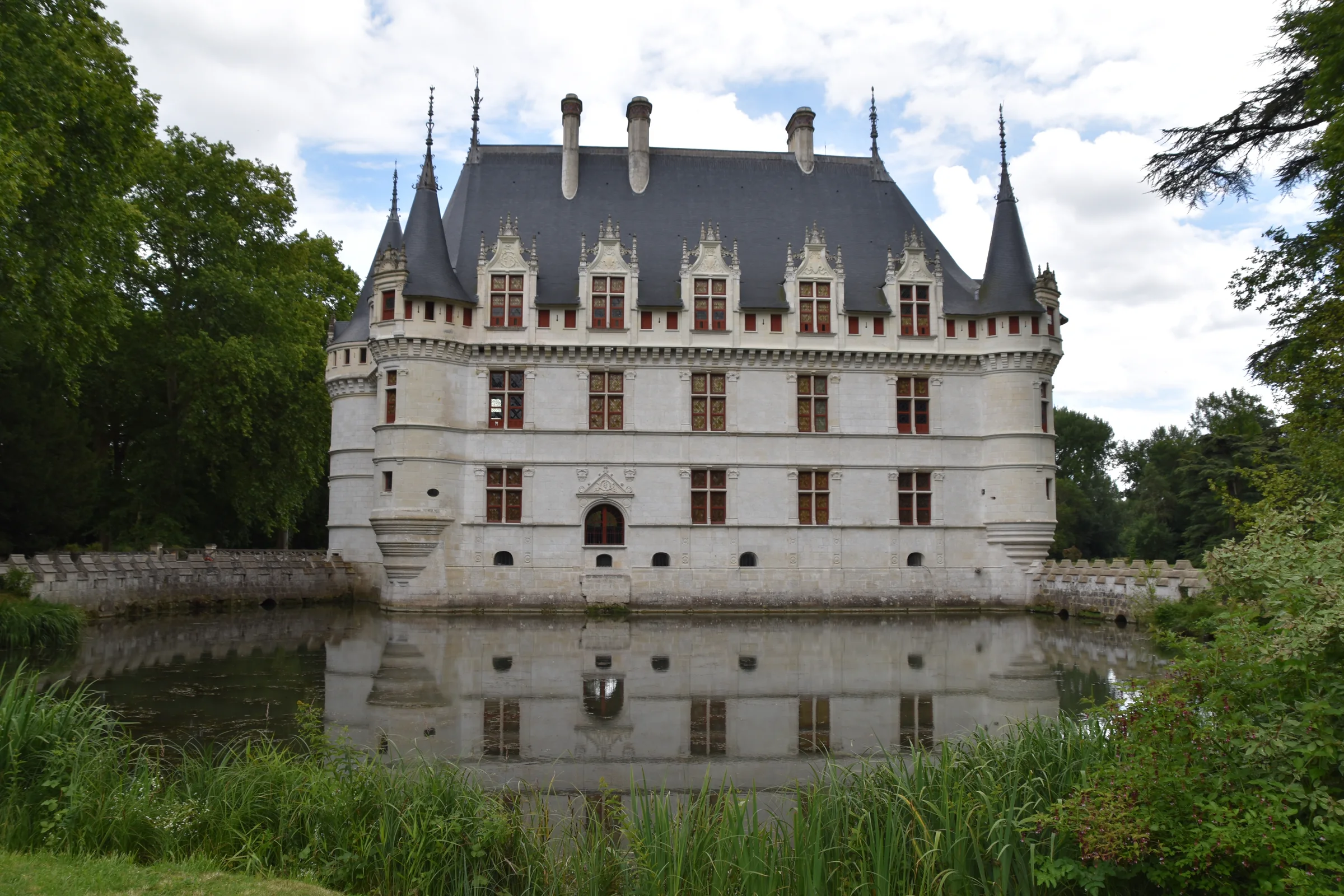
| Azay-le-Rideau | 16th century | château on the water | around an hour | Touraine-Azay-le-Rideau |
| Sully-sur-Loire | 14th century | moated fortress | around an hour | Coteaux du Giennois, Orléans |
| Saumur | 14th century | fortress on a rocky hill | around an hour | Saumur, Saumur-Champigny, crémant |
| Chinon | from the 11th century | royal fortress, Joan of Arc | 1.5 hours | Chinon |
| Brissac | 15th–17th centuries | France’s tallest château | around an hour | Anjou, Coteaux de l'Aubance |
These times allow for a leisurely visit, including the gardens. Opening hours and prices vary by season: check the castles’ websites.
1. Chambord (Château de Chambord)
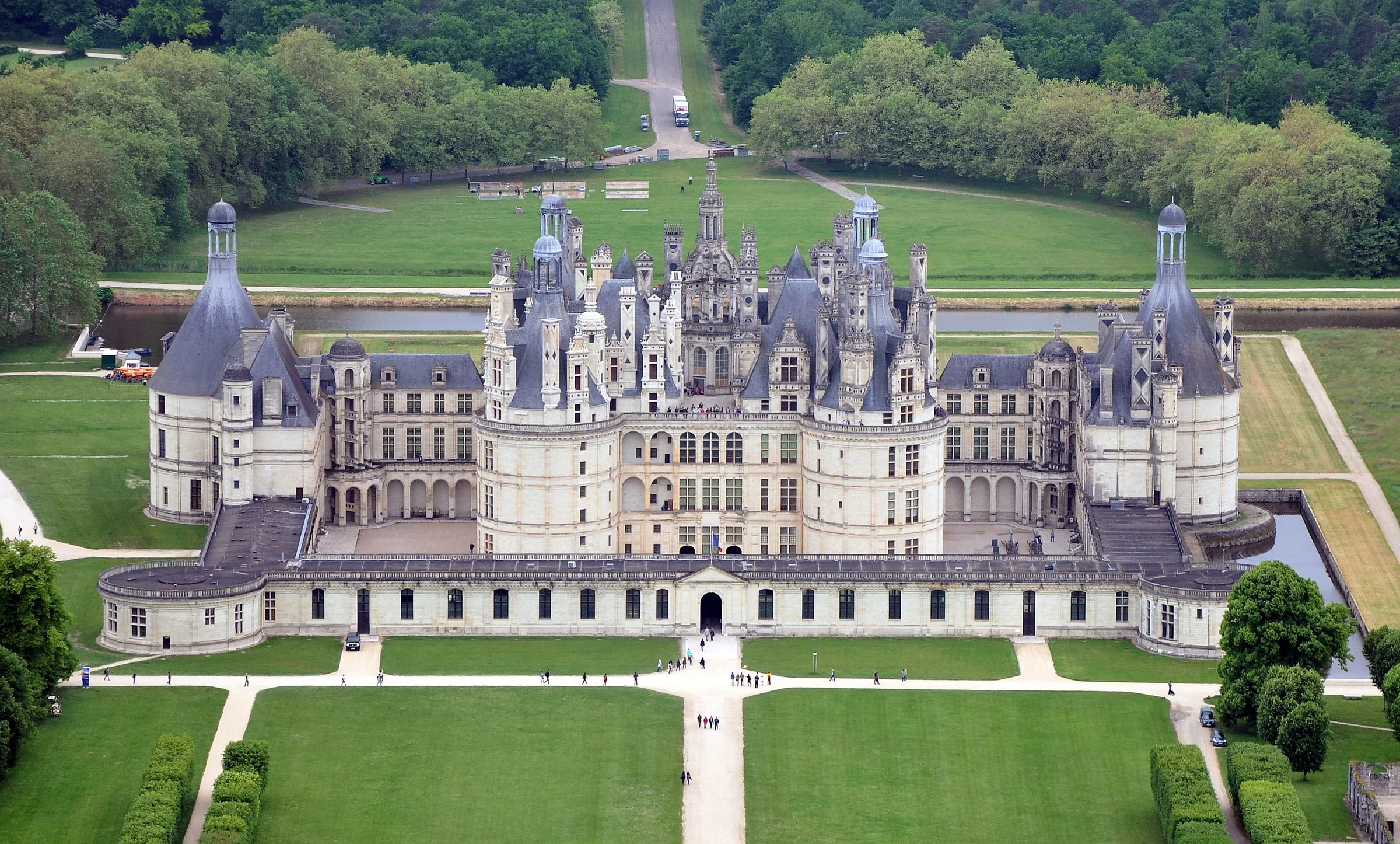
The valley’s largest château. Construction began in 1519 for Francis I, combining a medieval fortress with a Renaissance palace. Chambord’s great mystery is its double-helix staircase, attributed to Leonardo da Vinci: people can go up and down without ever meeting. There is no direct documentary evidence of Leonardo’s authorship, but the idea is very much in his spirit.
Conceived as a hunting lodge, the château became a symbol of royal power. Historians estimate that Francis I himself spent only around 72 days here. According to the château’s official figures, it has over 400 rooms, 77 staircases and 282 fireplaces. Around it lies a walled park of over 5,000 hectares: a reserve home to deer and wild boar.
- What to see: the double-helix staircase, the roof terraces with their “forest” of chimneys and turrets, and the royal apartments.
- Tip: head up to the terraces for the best views of the park. Arrive at opening time.
- Wine nearby: white Cheverny and rare Cour-Cheverny, made from Romorantin.
2. Chenonceau (Château de Chenonceau)
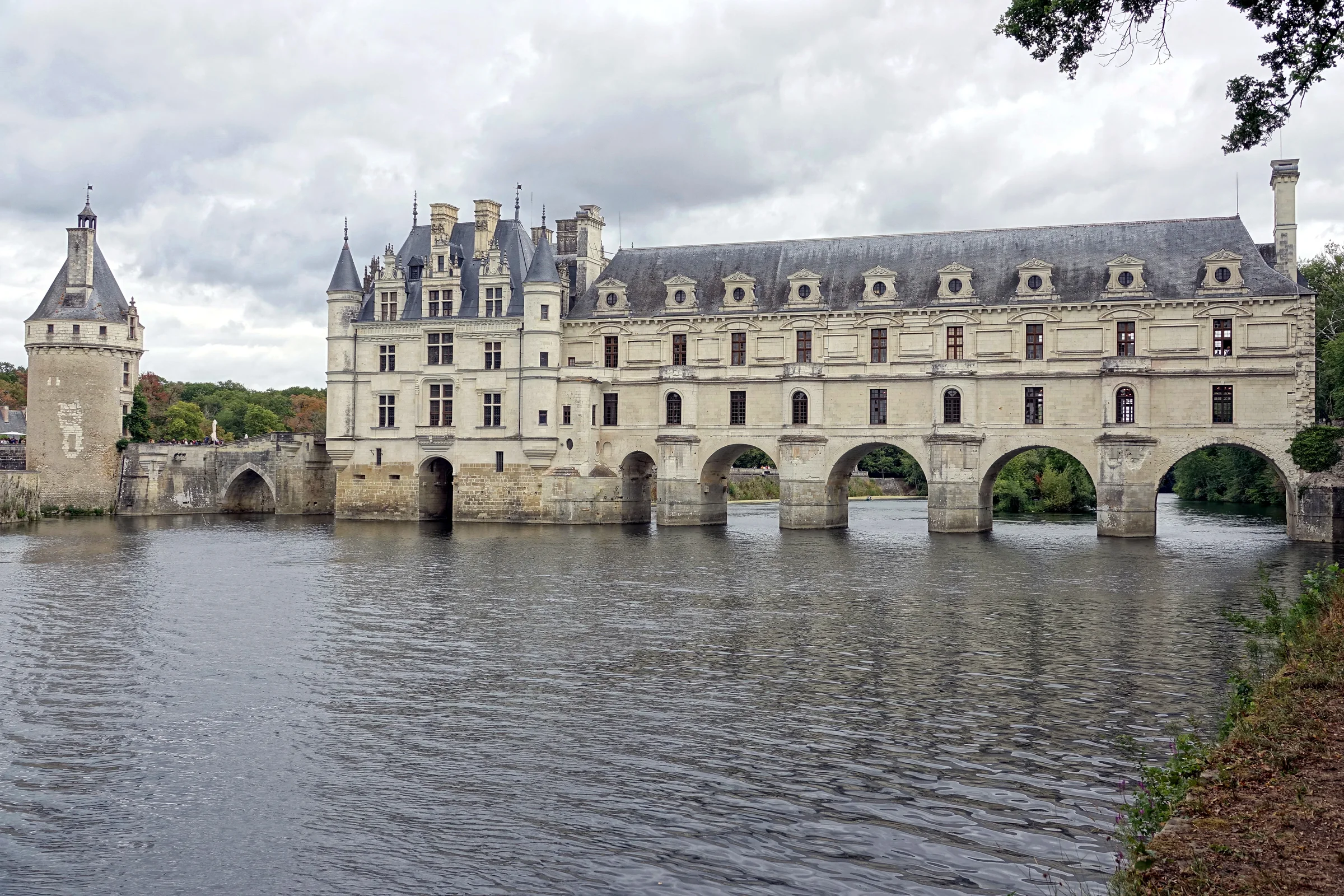
The “Ladies’ Château” stands right over the River Cher. Its story is linked to two women. Diane de Poitiers, Henry II’s favourite, laid out gardens here. Catherine de’ Medici took over the château after the king’s death in 1559, made it her residence and completed the gallery across the river.
Inside are Renaissance furniture, paintings, tapestries and historic kitchens in the bridge piers. During the Second World War, the Cher formed the boundary between the occupied and free zones, and the château’s gallery was one of the crossings between them.
- What to see: the long gallery over the river, the kitchens, and Diane’s and Catherine’s gardens.
- Tip: come at opening time: groups are most numerous in the middle of the day.
- Wine nearby: Touraine-Chenonceaux: Sauvignon Blanc and red blends with Côt, also known as Malbec.
3. Amboise (Château d’Amboise)
A royal residence on a hill above the Loire. Charles VIII and Francis I lived here, while Leonardo da Vinci spent his final years nearby at Clos Lucé, a few hundred metres from the château. Leonardo is buried in the Chapel of Saint Hubert within the château grounds. There are rooms with carved fireplaces, a furniture collection and gardens overlooking the river and town.
- What to see: the Chapel of Saint Hubert, the royal apartments and the terraced gardens.
- Tip: combine it with Clos Lucé, whose park has models of Leonardo’s inventions. Allow half a day for both.
- Wine nearby: Vouvray and Montlouis-sur-Loire: Chenin Blanc from dry to sweet, and sparkling wines.
4. Villandry (Château de Villandry)
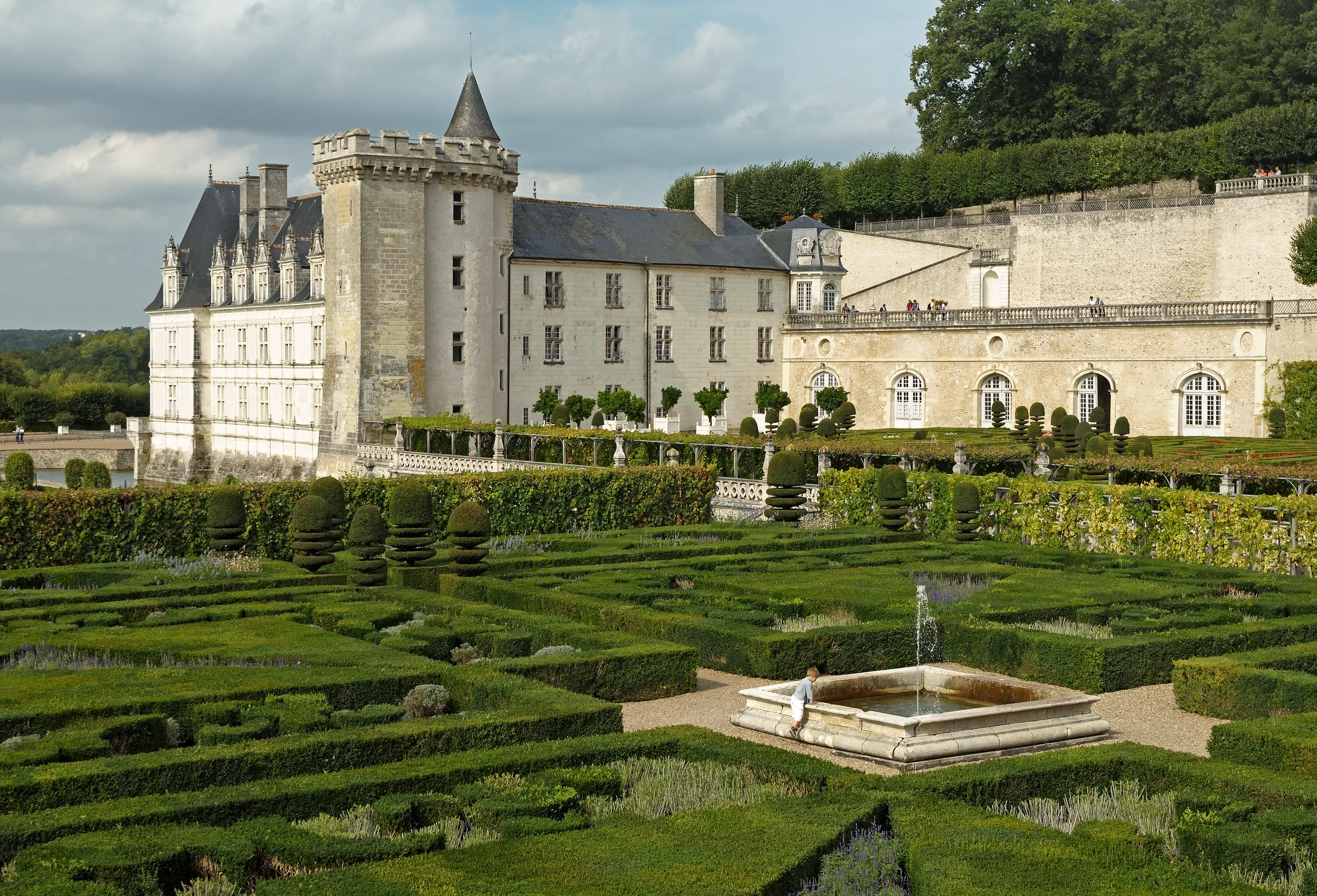
Villandry is known for its gardens. The château was built in the 16th century by Jean Le Breton, Francis I’s finance minister. The Carvallo family bought it in the early 20th century and restored the gardens in the spirit of the Renaissance.
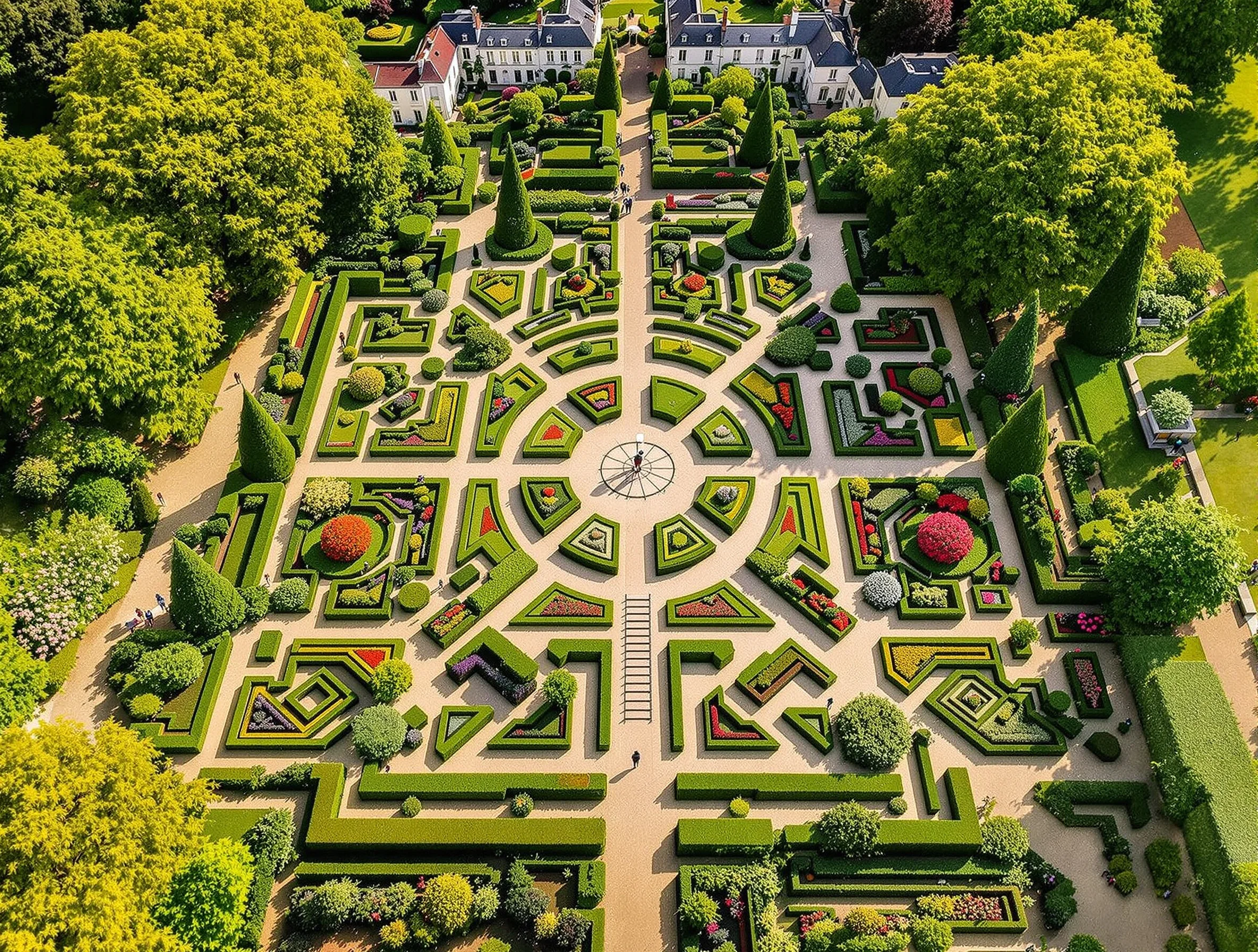
The gardens occupy several terraces: an ornamental kitchen garden where cabbages and lettuces form patterns, a water garden, a herb garden, and a “garden of love” whose flowerbeds represent different stages of a relationship. The château’s interiors are in 18th-century style.
- What to see: the kitchen garden from above, from the château terrace or the belvedere.
- Tip: late spring to autumn is best, when the kitchen garden is in full bloom.
- Wine nearby: Touraine-Azay-le-Rideau and red Chinon wines half an hour’s drive away.
5. Cheverny (Château de Cheverny)
An austere classical château from the 17th century. Cheverny has belonged to the same family for centuries, preserving its original furnishings: tapestries, paintings, gilded furniture and a dining room set for dinner. More than a hundred hunting dogs live in the kennels. The central part of the château inspired Marlinspike Hall in Hergé’s Tintin comics, and the château has an exhibition devoted to it.
- What to see: the state apartments, kennels and Tintin exhibition.
- Tip: an excellent castle to visit with children.
- Wine nearby: the Cheverny appellation: light whites made from Sauvignon Blanc and Chardonnay.
6. Azay-le-Rideau (Château d’Azay-le-Rideau)
A 16th-century château on an island in the River Indre, reflected in the water. Its architecture combines a Renaissance palace with elements of a fortress. Inside are tapestries, antique furniture and paintings.
- What to see: the façade from the river and park, and the grand staircase.
- Tip: the valley’s most photogenic château: come towards evening, when the light is soft.
- Wine nearby: Touraine-Azay-le-Rideau, including rosé made from Grolleau.
7. Sully-sur-Loire (Château de Sully-sur-Loire)
A 14th-century fortress on the banks of the Loire, surrounded by a water-filled moat. Its main owner was Maximilien de Béthune, Duke of Sully and Henry IV’s chief minister. He kept his archives and wrote his memoirs here. Today the château displays furniture, tapestries, paintings and its famous timber roof structure, with views of the surrounding area from the towers.
- What to see: the keep, roof structure and Loire views from the towers.
- Tip: the château lies east of the others, making it convenient on the way from Paris or towards Sancerre.
- Wine nearby: Coteaux du Giennois and Orléans; further upriver lies Sancerre.
8. Saumur (Château de Saumur)
A fortress on a rocky hill above the Loire. A fortification stood here from the 10th century, and the château took its present form in the 14th. Once a royal residence and a prison, it is now a museum of decorative arts, porcelain and furniture.
- What to see: the museum, and views of the Loire and town from the ramparts.
- Tip: around Saumur, cellars are cut into soft white tuffeau stone. Wine tastings take place there too.
- Wine nearby: sparkling Saumur and Crémant de Loire, and red Saumur-Champigny made from Cabernet Franc.
9. Chinon (Forteresse royale de Chinon)
A fortress on a hill above the town and the River Vienne, fortified as early as the 11th century. French and English kings fought over it. Here, in 1429, Joan of Arc first met the Dauphin Charles VII. Towers, underground chambers and living quarters survive, with exhibitions on the fortress’s history. Below is the old town, with narrow streets and cafés.
- What to see: the royal apartments, towers and views of the Vienne.
- Tip: walk down into the old town and look for its tuffeau cellars.
- Wine nearby: Chinon: the Loire’s leading Cabernet Franc red, fresh, with notes of cherry and violet.
10. Brissac (Château de Brissac)
France’s tallest château: seven storeys. A fortress stood here from the 11th century; the château was extensively rebuilt around the 15th–17th centuries and has since been called the “giant of the Loire Valley”. It has belonged to the family of the Dukes of Brissac for over five centuries. Inside are state rooms, a 19th-century theatre and wine cellars offering tastings. Legend says that the ghost of the “Green Lady” lives here.
- What to see: the state rooms, theatre and cellars.
- Tip: the château is privately owned and visits are usually guided: check the schedule.
- Wine nearby: Anjou and Coteaux de l’Aubance: red, rosé and sweet wines from Anjou.
Planning your trip
- One day: two nearby castles, Chenonceau and Amboise with Clos Lucé, or Chambord and Cheverny.
- Two or three days: the central valley, based in Tours or Amboise: Chambord, Cheverny, Chenonceau, Amboise, Villandry and Azay-le-Rideau.
- The western valley: Chinon, Saumur and Brissac can conveniently be combined in a day with a tasting.
- The eastern valley: Sully-sur-Loire on the way to Sancerre.
For detailed one- to three-day itineraries and travel from Paris, see the article “Loire Valley castles: which to visit and how to get there”.
Frequently asked questions
Which are the most beautiful Loire Valley castles?
Chambord and Chenonceau are the most famous. Azay-le-Rideau is the most photogenic, Villandry has the finest gardens, and Cheverny the finest interiors.
Which is the largest Loire Valley castle?
Chambord: over 400 rooms and a park of more than 5,000 hectares. The tallest is Brissac, at seven storeys.
How long should you allow for one castle?
From an hour for Azay-le-Rideau, Sully or Saumur to two or three hours for Chambord or Chenonceau with its gardens.
At which castle is Leonardo da Vinci buried?
In the Chapel of Saint Hubert at Château d’Amboise. He spent his final years nearby at Clos Lucé.
Which castle should you choose with children?
Cheverny for the kennels and Tintin exhibition, Clos Lucé for the models of Leonardo’s inventions, and Chambord for its huge park.
Can you combine castles and wine tastings?
Yes: every castle has its own wine. Near Amboise, Vouvray and Montlouis; by Chinon, red Chinon; around Saumur, sparkling wines and Saumur-Champigny.
Visit the Loire
Castles, with tuffeau cellars and tastings at small winegrowers’ estates between visits.
→ Wine tour of the Loire Valley castles · Loire Valley castles: choosing where to go and getting there · Loire Valley castles guide · Loire Valley wines