
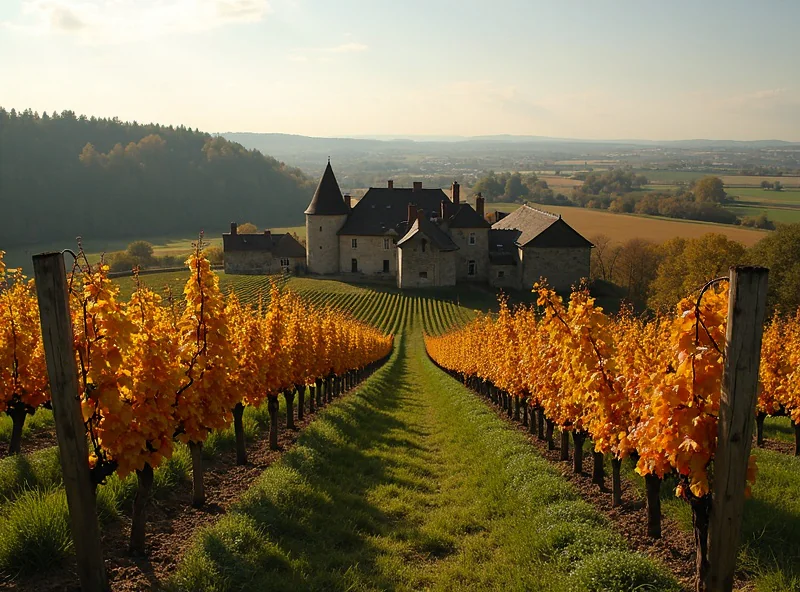

At a glance. Romanée-Conti is a Grand Cru vineyard in Vosne-Romanée, Burgundy. Its roughly 1.8 hectares belong entirely to Domaine de la Romanée-Conti, DRC. Only a few thousand bottles of Pinot Noir red wine are produced each year. Official retailers charge several thousand euros a bottle, auctions much more. Tourists cannot visit the cellar, but can approach the vineyard beside the road and its stone cross. Village and Premier Cru Vosne-Romanée offer the same grape and village at a fraction of the cost.
What is Romanée-Conti?
It is the name of one vineyard, rather than a brand or region. Burgundy's finest sites have Grand Cru status, each with its own appellation. Romanée-Conti is one, halfway up the Côte de Nuits slope where soil and sunlight produce the most consistent results.
| Feature | Detail |
|---|---|
| Village | Vosne-Romanée, Côte de Nuits, Burgundy |
| Category | Grand Cru, Burgundy's highest |
| Area | Around 1.8 ha |
| Owner | Domaine de la Romanée-Conti, a monopole, the entire site owned by one estate |
| Grape | Pinot Noir |
| Annual bottles | A few thousand, depending on harvest |
Where the name comes from
Known since medieval times, the vineyard was cultivated by monks from nearby Saint-Vivant Abbey. In the 18th century it was simply “La Romanée”. In 1760, the Prince de Conti, a royal relative, bought it, supposedly outbidding Madame de Pompadour. He kept the wine for his own table and his name joined the site's.
After the Revolution, the vineyard was sold as national property and changed hands several times. In the 20th century it passed to the de Villaine and Leroy families, who managed it together for many years.
Why it costs so much
- Little wine: under two hectares, small harvests and worldwide demand.
- One owner: no competitor makes wine with the same name.
- Centuries of reputation: kings and connoisseurs drank it; every Burgundy book mentions it.
- Allocations: importers receive quotas, often in mixed cases with other estate wines.
- Auctions: older vintages sell here. In 2018, a 1945 bottle fetched over half a million dollars, a wine record.
The price reflects rarity and fame as well as taste. Many professionals admit it is outstanding, but the difference from the finest neighbouring Grands Crus is smaller than the price gap.
The phylloxera story
In the late 19th century, phylloxera, a root-destroying insect, swept Europe. Almost everywhere, vines were replanted on resistant American rootstocks. Romanée-Conti kept its old ungrafted vines until 1945, fighting the pest as best it could. The plot then had to be uprooted and replanted; the first new wine was bottled only in the early 1950s. 1945, the final old-vine vintage, is therefore highly prized.
Neighbours: other Vosne-Romanée Grands Crus
A constellation of Grands Crus surrounds Romanée-Conti, some also made by DRC.
| Grand Cru | Producer | Known for |
|---|---|---|
| Romanée-Conti | DRC only | Most famous and expensive |
| La Tâche | DRC only | Monopole, more powerful and spicy |
| La Romanée | Domaine du Comte Liger-Belair only | One of France's smallest appellations |
| Richebourg | Several estates including DRC | Rich and velvety |
| Romanée-Saint-Vivant | Several estates including DRC | Delicate and floral |
| La Grande Rue | Domaine Lamarche | Monopole between Romanée-Conti and La Tâche |
DRC also makes red Échezeaux and Grands Échezeaux, Corton, and white Montrachet and Corton-Charlemagne.
What it tastes like
Romanée-Conti is not a “powerful” wine. Its Pinot Noir is transparent and pale, but extraordinarily long: red berries, rose, spices and woodland earth, then mushrooms and tea with age. Tannins are soft and acidity lively. These wines open up fifteen to thirty years after harvest, and great vintages last longer. Opening it young makes little sense.
Read more in “Pinot Noir in France”.
Can you visit the estate?
The cellar is closed to tourists. Professionals visit only by invitation. The vineyard, however, borders a quiet road behind the village:
- the stone cross at the plot's edge is the main photo spot;
- a sign asks visitors not to enter rows or pick grapes; please respect it;
- La Tâche, Richebourg and Romanée-Saint-Vivant are visible nearby, with a half-hour walk along the slope;
- village estates offer tastings of village and Premier Cru wines by appointment.
Vosne-Romanée is around twenty-five minutes by car from Beaune and thirty from Dijon.
What to taste instead
To understand the village's style without spending thousands:
| Level | Label to look for | Guide price in France |
|---|---|---|
| Regional | Bourgogne Pinot Noir from a good Vosne-Romanée estate | €20–40 |
| Village | Vosne-Romanée | €50–120 |
| Premier Cru | Vosne-Romanée 1er Cru Les Suchots, Les Beaux Monts, Aux Malconsorts | €100–300 |
| Grand Cru | Échezeaux | From €200 |
Prices vary greatly by producer and vintage. Label reading is explained in “Grand Cru and Premier Cru”.
Avoiding counterfeits
Romanée-Conti is among the most counterfeited wines. Rudy Kurniawan's notorious fake-Burgundy case involved DRC bottles too. Buy only from official sellers with a bottle history; check provenance at auctions. A “bargain” bottle is almost certainly fake.
How the estate works
The domaine belongs to two families and has long been managed by representatives of the de Villaine family. Vineyard work is manual, without chemical pesticides since the late 1980s, followed by a move to biodynamics. Some plots are ploughed by horse to avoid tractor compaction.
In the vineyard:
- very low yields, short pruning and removal of excess bunches in summer;
- hand-harvesting only, with table sorting;
- old vines replaced individually, preserving the vineyard's average age.
In the cellar:
- fermentation in wooden vats, often whole-bunch, including stems;
- ageing in new oak barrels, around eighteen months;
- no filtration.
None of this is secret: many good Burgundy growers work similarly. The difference is the site itself, producing the slope's best results for centuries.
Legendary vintages
Collectors have their lists: 1945, the final old-vine year, then 1978, 1985, 1990, 1999 and 2005 among the most famous. Even average years yield great wines: difficult years demand more work, but the site still speaks.
How such wines are tasted
Romanée-Conti is opened for special tastings rather than passed around a casual dinner. These rules suit any old Burgundy:
- stand the bottle upright the day before to settle sediment;
- open an hour before, but avoid long decanting, since mature Pinot is fragile;
- serve at 16–17 °C;
- use a broad Burgundy glass;
- pour small amounts and follow it through the evening: it changes every half-hour.
Other Côte de Nuits legends
Driving from Dijon to Vosne-Romanée takes you through other villages with world-famous Grands Crus:
| Village | Grands Crus | Style |
|---|---|---|
| Gevrey-Chambertin | Chambertin, Chambertin-Clos de Bèze | Powerful, “masculine” |
| Morey-Saint-Denis | Clos de Tart, Clos des Lambrays, Clos Saint-Denis | Between strength and elegance |
| Chambolle-Musigny | Musigny, Bonnes-Mares | The most delicate and floral |
| Vougeot | Clos de Vougeot | Large site by the château, many owners |
| Vosne-Romanée | Romanée-Conti, La Tâche, Richebourg | Velvet, spice, depth |
Château du Clos de Vougeot is one of the few places open to all, with old Cistercian presses and the famous Confrérie des Chevaliers du Tastevin wine brotherhood.
Walking the slope
Walk between vineyards from Vougeot to Vosne-Romanée in an hour, following stone clos walls and site-name plaques. September before harvest and October's red-and-gold leaves are best. Bring water and comfortable shoes: paths are gravel and shade is scarce.
Why Romanée-Conti provokes debate
Critics argue that the price has become detached from taste and buyers pay for the name. Others note that even experienced sommeliers do not always identify it blind among neighbouring Grands Crus. Others say speculation means hardly anyone drinks it: bottles spend years moving between collectors like paintings.
The domaine counters this through trusted importers, requests not to resell and no advertising. Vosne growers say the site has made the slope's finest wine for centuries and it is good that people want to try it. If offered a glass, accept without expecting a miracle: expect exceptionally delicate, long Pinot Noir, best understood after tasting a dozen modest Burgundies.
Food with great Burgundy
Avoid strong sauces and hot spices. Choose simple dishes: roast poultry, guinea fowl, pigeon or duck, veal with mushrooms, truffle risotto or pasta, mature Comté or Cîteaux, the monks' cheese from an abbey twenty kilometres from Vosne. Avoid Époisses, whose powerful aroma overwhelms the wine.
Common mistakes
- Thinking Romanée-Conti is a brand with many wines. It is one vineyard; other DRC wines have different names.
- Confusing Romanée-Conti with Vosne-Romanée. Vosne-Romanée is a village and village appellation, costing dozens of times less.
- Arriving at DRC without an invitation. The cellar is closed.
- Opening a young bottle. It needs years.
- Entering vine rows for photos. It is private land.
Frequently asked questions
How much is a bottle of Romanée-Conti?
Several thousand euros from official retailers; tens of thousands on the secondary market and at auctions, depending on vintage.
Why is it so expensive?
Under two hectares, one estate, a few thousand bottles annually and centuries of reputation.
Where is Romanée-Conti?
In Vosne-Romanée on Burgundy's Côte de Nuits, between Dijon and Beaune.
Can you visit the domaine?
The cellar is closed to tourists, but you can walk to the vineyard and stone cross.
What grape is used?
Pinot Noir.
What is La Tâche?
A neighbouring Grand Cru, also a DRC monopole, more powerful and spicy.
What should you drink instead?
Vosne-Romanée village or Premier Cru from good estates: the same grape and place at reasonable prices.
When should Romanée-Conti be drunk?
Usually fifteen to thirty years after harvest.
Vosne-Romanée with a guide
Our Burgundy wine tour follows the Côte de Nuits from Gevrey-Chambertin to Vosne-Romanée, stops by the Romanée-Conti cross and tastes village wines with growers. → Burgundy wine tour · Grand Cru and Premier Cru. Discover the wines on location on a Burgundy tour.