
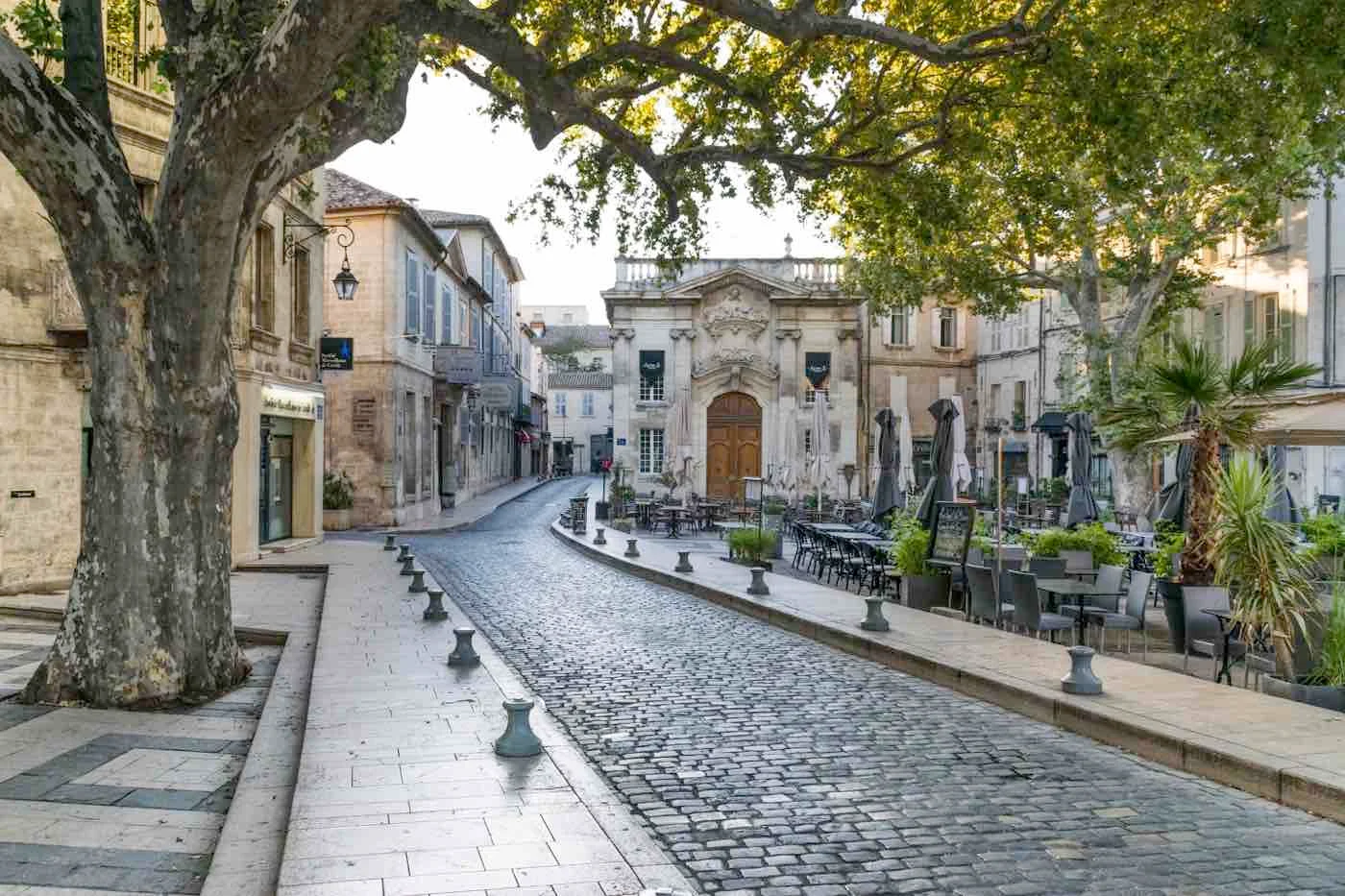

At a glance. Aix-en-Provence is an elegant city 30 minutes from Marseille, the former capital of Provence. Highlights include plane-tree-lined Cours Mirabeau and its fountains; the old town's 17th–18th-century mansions; morning markets on the squares; Cézanne's studio and views of Montagne Sainte-Victoire, which he painted dozens of times. Try calissons, Aix's almond sweets, and Coteaux d'Aix rosé. Aix makes a convenient base for the Luberon, Marseille, Cassis and wine villages.
The city in thirty seconds
The Romans founded Aix in 122 BC beside hot springs, calling it Aquae Sextiae, “the waters of Sextius”. In the Middle Ages, it became the capital of the County of Provence, later the seat of the provincial parliament. Hence its wealthy mansions, broad boulevard and university, one of France's oldest. Today it is a well-kept student city, perfect for wandering without a plan.
What to see
Cours Mirabeau
A broad boulevard shaded by two rows of plane trees. Mansions on one side; café terraces where Cézanne and Zola once sat on the other. Fountains stand at either end and in the middle, including the Mossy Fountain, fed by warm spring water. At its western end is the grand 19th-century Rotonde fountain.
The city of fountains
Aix has hundreds of fountains on squares, at crossroads and in courtyards. The loveliest include the Four Dolphins in the Mazarin quarter, and those on Place d'Albertas and by the town hall.
The old town
Narrow streets north of Cours Mirabeau, the town hall with its clock tower, and Saint-Sauveur Cathedral, combining Romanesque and Gothic styles with a 5th-century baptistery.
The Mazarin quarter
A 17th-century district south of the boulevard: straight streets, quiet squares and aristocratic mansions.
Museums
- Musée Granet: painting, including works by Cézanne.
- Hôtel de Caumont: an 18th-century mansion with exhibitions, a garden and courtyard café.
Cézanne in Aix
Paul Cézanne was born in Aix in 1839 and spent most of his life here.
| Place | What it is |
|---|---|
| Atelier des Lauves | His final studio, preserved as it was in his lifetime; booking required |
| Bibémus quarries | Ochre rocks he painted; guided visits by appointment |
| Jas de Bouffan | The Cézanne family home; check access following restoration |
| Terrain des Peintres | A viewpoint over Sainte-Victoire near the studio |
| Montagne Sainte-Victoire | Limestone ridge east of Aix, painted by Cézanne more than 80 times |
A Cézanne trail runs through the city, marked by bronze paving studs bearing a “C”.
Aix's markets
Markets are one of Aix's greatest pleasures. Place Richelme has fruit and vegetables every morning. On Tuesdays, Thursdays and Saturdays, a large market spreads through the centre: food, flowers on Place de l'Hôtel-de-Ville, and clothing and antiques on nearby squares. Local produce includes olive oil, tapenade, goat's cheese, herbs, honey and seasonal fruit.
What to taste
- Calissons d'Aix: almond paste with candied melon, topped with white icing and shaped like a little boat. Aix's symbol.
- Navettes: dry orange-blossom biscuits, more associated with Marseille.
- Tapenade, anchoïade and aïoli: Provençal sauces.
- Goat's cheeses and Banon, wrapped in chestnut leaves.
- Olive oil from the Baux valley and nearby areas.
Aix's wines
- Coteaux d'Aix-en-Provence: a large surrounding appellation, mainly fresh, dry, pale rosés.
- Palette: a tiny appellation a few kilometres from Aix, with ageworthy whites, rosés and reds.
- Côtes de Provence Sainte-Victoire: rosés from the slopes of Montagne Sainte-Victoire.
Read more in “Provence wines: rosé and lavender”.
Aix as a Provence base
| Destination | Driving time | What to see |
|---|---|---|
| Marseille | 30 min | Old Port, Notre-Dame-de-la-Garde |
| Cassis and the calanques | 45 min | Cassis white wine, coves |
| Luberon, Gordes and Roussillon | Around 1 hour | Hilltop villages, summer lavender |
| Bandol | Around 1 hour | Red and rosé wines |
| Avignon | Around 1 hour | Palace of the Popes |
Read more in “The Luberon”.
Getting there
- By air: Marseille-Provence airport, around 30 minutes from Aix.
- By train: TGV to Aix-en-Provence TGV station, around three hours from Paris, then a 15–20-minute bus ride to the centre.
- By car: the centre is pedestrianised; leave your car in underground parking.
When to visit
- Spring and autumn: warm, without crowds.
- July: the Festival d'Aix opera festival and Luberon lavender; book accommodation six months ahead.
- August: hot, with many locals away on holiday.
- December: a Christmas market and santon fair, selling Provençal clay Nativity figures.
Aix and Cézanne: walking through the painter's city
Cézanne lived almost his entire life in Aix, and traces of him are everywhere. Follow the bronze “C” studs from his birthplace on Rue de l'Opéra, past Collège Bourbon, where he studied with Émile Zola, to Les Deux Garçons café on Cours Mirabeau, which he frequented, and Saint-Sauveur Cathedral, where his funeral was held. Pick up a route map at the tourist office.
Cézanne and Zola's friendship is a story of its own. As boys, they swam in the Arc and dreamed of fame. Zola moved to Paris and became a famous writer; Cézanne went unrecognised for years. In 1886, Zola published L'Œuvre, a novel about an unsuccessful painter, and Cézanne recognised himself in the character. According to the commonly told version, they then stopped speaking.
Cézanne painted Montagne Sainte-Victoire repeatedly, from different viewpoints and in different light. Those paintings now hang in major museums worldwide, from Paris to Moscow and Philadelphia. Aix has a place where he painted the mountain in his final years: Terrain des Peintres, above the Lauves studio. The view has hardly changed.
Montagne Sainte-Victoire
With half a day, visit the mountain itself: a limestone ridge around 18 km long, 15 minutes' drive from Aix. Walking paths lead to the Croix de Provence at the summit and the priory. The climb takes two to three hours; views reach the sea. In dry, windy summer weather, access may close because of wildfire risk: check the departmental website. Around the mountain, Sainte-Victoire appellation wineries offer rosé tastings.
Aix in one day
| Time | Plan |
|---|---|
| 8:30 am | Place Richelme market, terrace coffee |
| 10 am | Old town, town hall, Saint-Sauveur Cathedral |
| 11:30 am | Cours Mirabeau, Mazarin quarter, Four Dolphins fountain |
| 1 pm | Lunch on an old-town square |
| 3 pm | Cézanne's studio and Terrain des Peintres, booking required |
| 5 pm | Musée Granet or Hôtel de Caumont |
| 7 pm | Rosé apéritif on Cours Mirabeau, dinner |
Where to stay
- Old town and Mazarin: beautiful and walkable; parking is difficult.
- Near Cours Mirabeau: central, noisier at night.
- Country bastides: old Provençal houses among vineyards, 10–20 minutes from the centre, with swimming pools. Convenient with a car and for onward travel through Provence.
Aix with children
Children enjoy the fountains, market, carousel on Place de la Rotonde and Parc Jourdan. Cézanne's studio is more for adults, but Bibémus's red rocks interest everyone. In hot weather, take an ice-cream break beneath the plane trees on Cours Mirabeau.
How calissons are made
The calisson is Aix's signature souvenir. Almonds, traditionally from Provence or the Mediterranean, are ground with candied melon and a little orange peel into a paste. This is placed on a thin wafer, covered with royal icing made from egg white and sugar, then cut into boat or eye shapes. The flavour is delicate, almondy and fruity, without being cloying.
Their origins remain uncertain. One legend says they were served at King René of Anjou's 15th-century wedding to cheer up his sad bride; another links them to a vow during the plague. Whatever the truth, Aix has made them for centuries. Production became industrial in the 19th century, with almonds from local orchards and melons from Cavaillon.
Today they come in diamond-shaped boxes. The best are from confectioners making their own, with no added flavourings listed among the ingredients. Some producers offer tours showing the process. Calissons keep for several weeks, making a good gift. Alongside the classic recipe, there are lavender, lemon, chocolate and pistachio versions.
Wines around Aix: where to taste
Dozens of wineries surround Aix, many in old bastides and châteaux where you can taste wine and have lunch. Try:
- Coteaux d'Aix-en-Provence: fresh rosé from Grenache, Cinsault and Syrah; reds and whites too.
- Palette: one of Provence's smallest appellations, on Aix's outskirts; ageworthy wines, especially whites.
- Sainte-Victoire: fuller rosés from the mountain slopes.
- Bandol: Mourvèdre reds, an hour south.
- Cassis: seaside whites, 45 minutes away.
Many estates combine wine with art: sculptures by well-known artists stand in gardens, with exhibitions in cellars. A good half-day excursion from town.
Aix or Marseille: which should you choose?
Many guests ask whether to stay in Aix or Marseille. It depends on what you want. Aix is small, well-kept, calm and safe, with cafés, fountains and markets; a city for walking and a useful base for the Luberon and wineries. Marseille is big, noisy, maritime and full of life, with the sea, fish, calanques and colourful neighbourhoods. A good compromise is staying in Aix and spending a day in Marseille: Old Port, Notre-Dame-de-la-Garde, Le Panier and bouillabaisse for lunch. The journey takes 30–40 minutes by car or bus, with buses every few minutes.
Aix in the evening
Aix comes alive in the evening: students sit on fountain steps, bars open their square-side terraces and the plane trees along Cours Mirabeau are illuminated. Summer brings outdoor concerts; July's opera festival draws music lovers worldwide. A lovely evening plan: a rosé apéritif on Place de l'Hôtel-de-Ville, dinner in the Mazarin quarter and a fountain walk through the warm night. Aix is a safe city, comfortable for late strolls.
What it costs
Aix is expensive. Guide prices: coffee on Cours Mirabeau €3–4; two-course lunch €22–35; Cézanne's studio around €7–10; Musée Granet around €6–8; 250 g box of calissons €15–25; Coteaux d'Aix rosé at the winery €8–15. A central hotel in summer starts at €150 a night; a vineyard bastide at €200.
Common mistakes
- Driving into the heart of Aix.
- Missing the morning market.
- Not booking Cézanne's studio ahead in season.
- Buying calissons in souvenir shops. The best come from confectioners making their own.
- Staying just one night. Aix is a convenient base for three to four days.
Frequently asked questions
What should you see in Aix-en-Provence?
Cours Mirabeau, fountains, old town, Mazarin quarter, Saint-Sauveur Cathedral, Cézanne's studio, markets and Musée Granet.
How many days do you need?
One for the city; three to four if using it as your Provence base.
How do you get to Aix-en-Provence?
Fly to Marseille, 30 minutes away, or take the TGV from Paris in three hours.
What are calissons?
Aix sweets made from almond paste and candied melon, topped with white icing.
Where is Cézanne's studio?
On the Lauves hill north of central Aix; booking required.
When are Aix's markets?
Food market every morning on Place Richelme; large market Tuesday, Thursday and Saturday.
Which wines should you drink in Aix?
Coteaux d'Aix-en-Provence rosé, Palette and Sainte-Victoire wines.
When is the opera festival?
In July.
A taste of Provence
Aix-en-Provence, the Luberon, Bandol and Les Baux-de-Provence: Aix calissons, Banon cheese, olive oil, Apt market and an evening in Aix. → Provence food tour · The Luberon