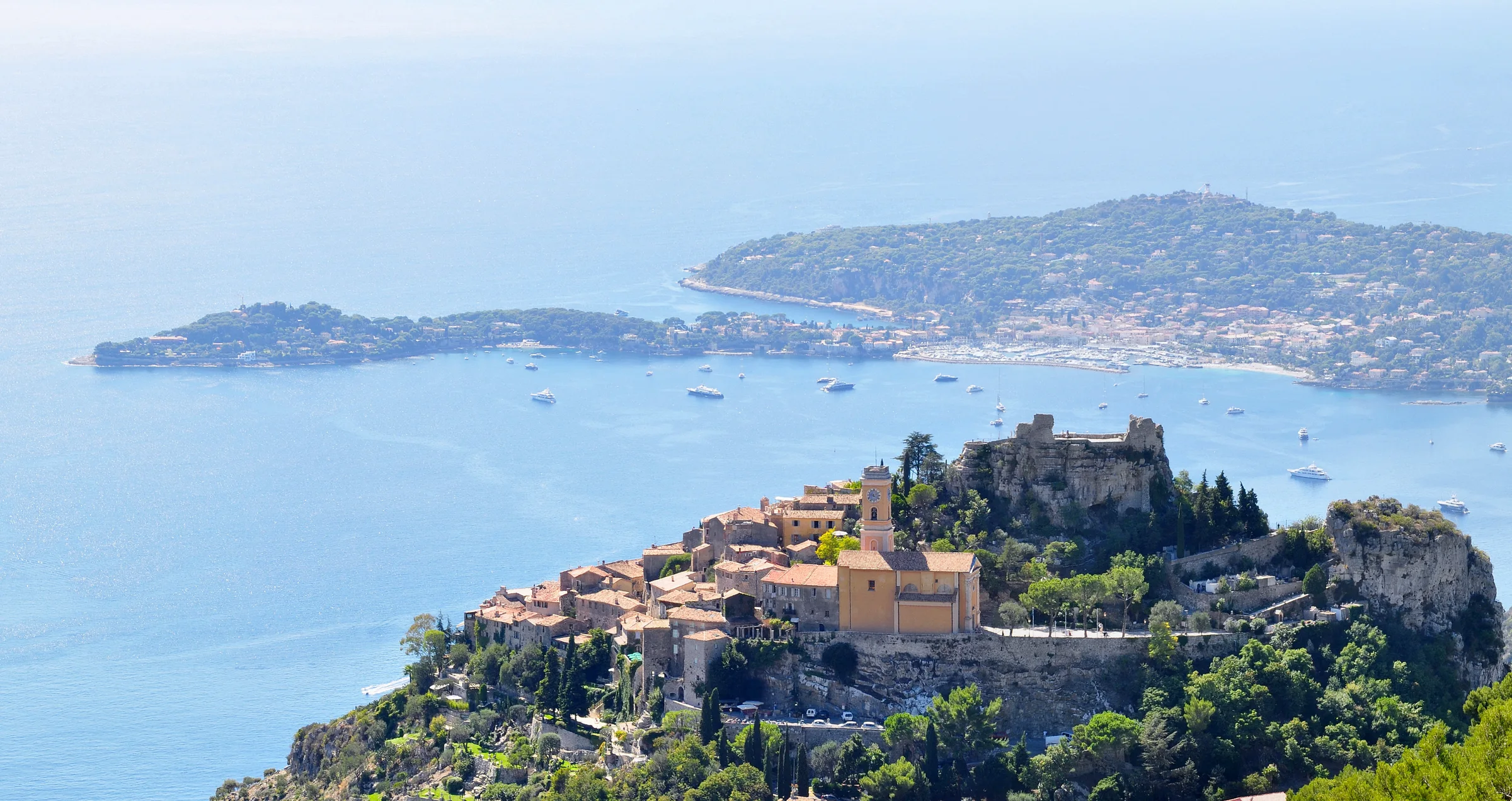
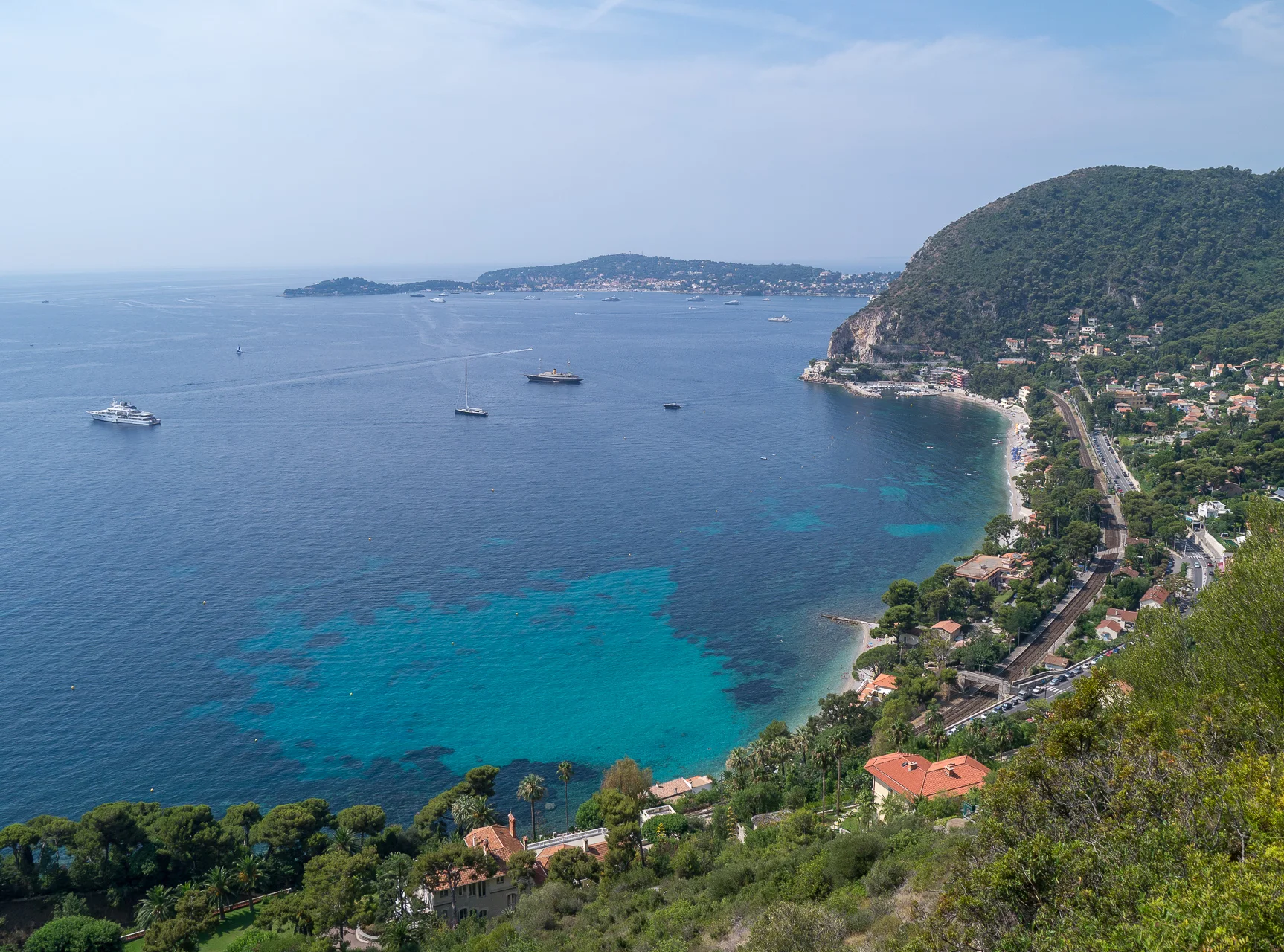

At a glance. The Nietzsche Path (Chemin de Nietzsche) connects the seaside settlement of Èze-sur-Mer with the medieval village of Èze on its rocky hilltop. It is around 2.1 km long, with roughly 400 m of ascent; the village stands at an altitude of 427 m. Allow about 1.5 hours uphill and 45–60 minutes downhill. The path is free and open year-round, but it is steep, rocky and almost without shade. It takes its name from Friedrich Nietzsche: in his own account, he composed a crucial chapter of “Thus Spoke Zarathustra” while climbing from the station to the village. The most convenient option is to take a bus up, explore Èze, then walk down to the sea and return to Nice by train.
The Nietzsche Path in figures
| Detail | Information |
|---|---|
| Lower starting point | Èze-sur-Mer, opposite the railway station, beside the coastal road |
| Upper end | At the foot of the old village of Èze (Èze Village), near the Moyenne Corniche |
| Length | around 2.1 km one way |
| Elevation gain | around 400 m (the Nice tourist office gives 350 m of ascent) |
| Village altitude | 427 m above sea level |
| Ascent | 1 hour 15 minutes – 1 hour 45 minutes at a relaxed pace |
| Descent | 45–60 minutes |
| Difficulty | moderate: steep sections, steps, stones and loose scree |
| Surface | an old paved road, concrete steps, earth and stones |
| Shade | little; most of the route is in the sun |
| Water and toilets | none on the path itself, only at the bottom and top |
| Cost | free |
The figures differ between sources: some say “1 km”, others “3.6 km”. This depends on how the bends are counted and where the starting point is measured from. Think in terms of 2 km and 400 metres uphill: the equivalent of climbing a staircase of 130 storeys.
Why the path is named after Nietzsche
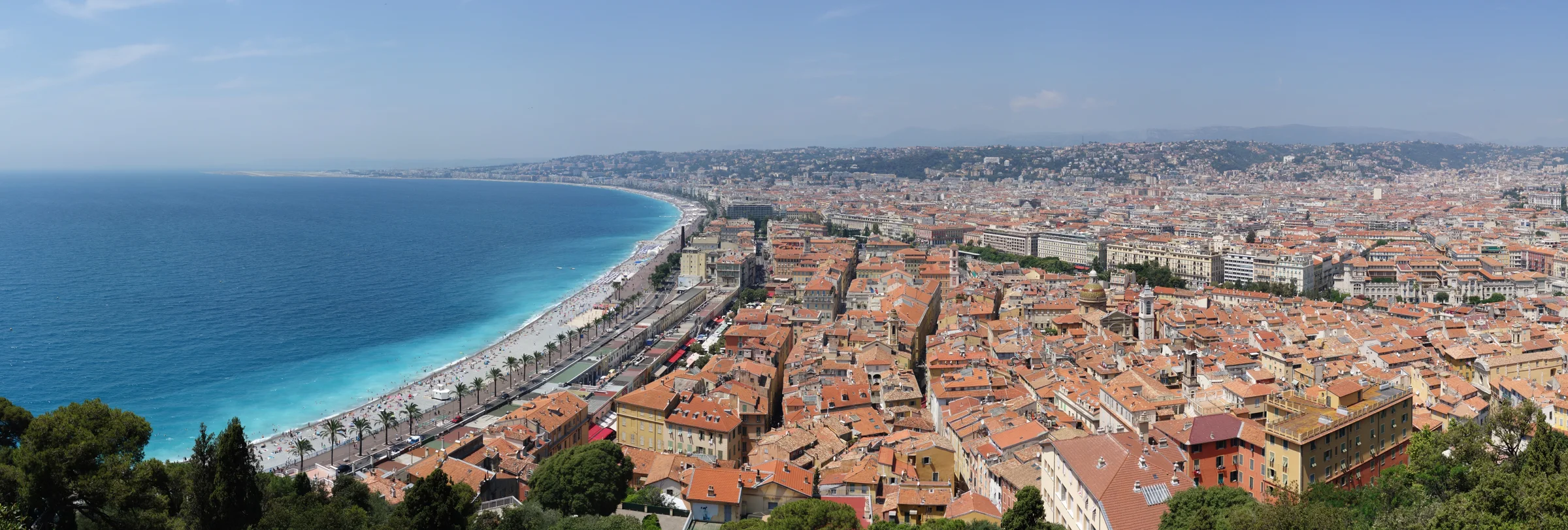
Friedrich Nietzsche spent his winters on the French Riviera from 1883 to 1888, mainly in Nice. He regarded the mild climate and bright sunshine as a remedy for his migraines and poor eyesight. He walked a great deal: walking was part of his work, and ideas came to him on the move.
In his autobiography “Ecce Homo”, Nietzsche writes that many places and peaks around Nice became sacred to him through unforgettable moments. He singles out one ascent: he composed the crucial part of the third book of “Thus Spoke Zarathustra”, the chapter “On Old and New Tablets”, during the strenuous climb from the station to a village he describes as “Moorish”, built directly into the rocks. That village is Èze, and the route up from Èze-sur-Mer station is now called the Nietzsche Path.
According to a local tradition, the philosopher lived for a while in Èze-sur-Mer, on the site of the old post office. There is no documentary evidence: it is a legend.
You will often see the phrase “Eternity is a line where the sea meets the sky”, with the claim that Nietzsche thought of it on this path. We have not been able to find it in his books, so treat it as a charming local legend rather than an authenticated quotation.
Uphill or downhill: which should you choose?
| Option | Who it suits | Advantages | Disadvantages |
|---|---|---|---|
| Downhill: from the village to the sea | Most visitors, families and anyone who dislikes a long climb | Easier on your breathing, sea views ahead of you, a beach at the bottom | Hard on the knees; it is easy to slip on loose scree |
| Uphill: from the sea to the village | Anyone who wants to follow Nietzsche’s route “as it was” and enjoys exercise | A proper workout, less risk of slipping, the village and garden as your reward | Tough in the heat, 1.5 hours without shade |
| Up and back down | Fit walkers | No transport needed | Around 3 hours, with the same views on the return journey |
Our advice for a first visit: take a bus up and walk down. If you are in good shape and set off in the morning on a cool day, climb from the bottom: you will follow the very route Nietzsche described.
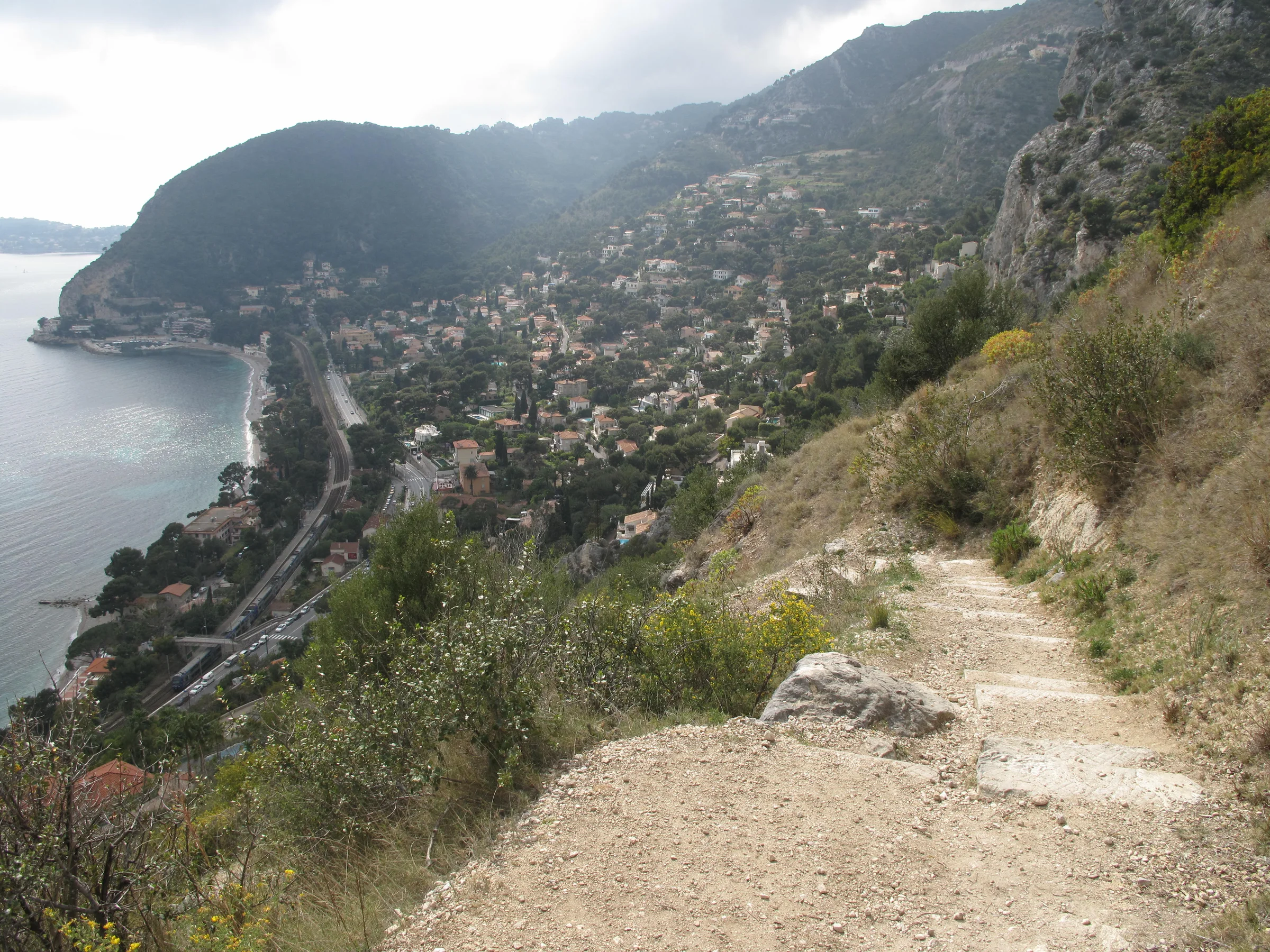
The route step by step, from bottom to top
1. Start at Èze-sur-Mer station. Leave the train, cross the coastal road (Basse Corniche) and look for the “Chemin de Nietzsche” sign directly opposite the station. There is a car park nearby if you arrive by car.
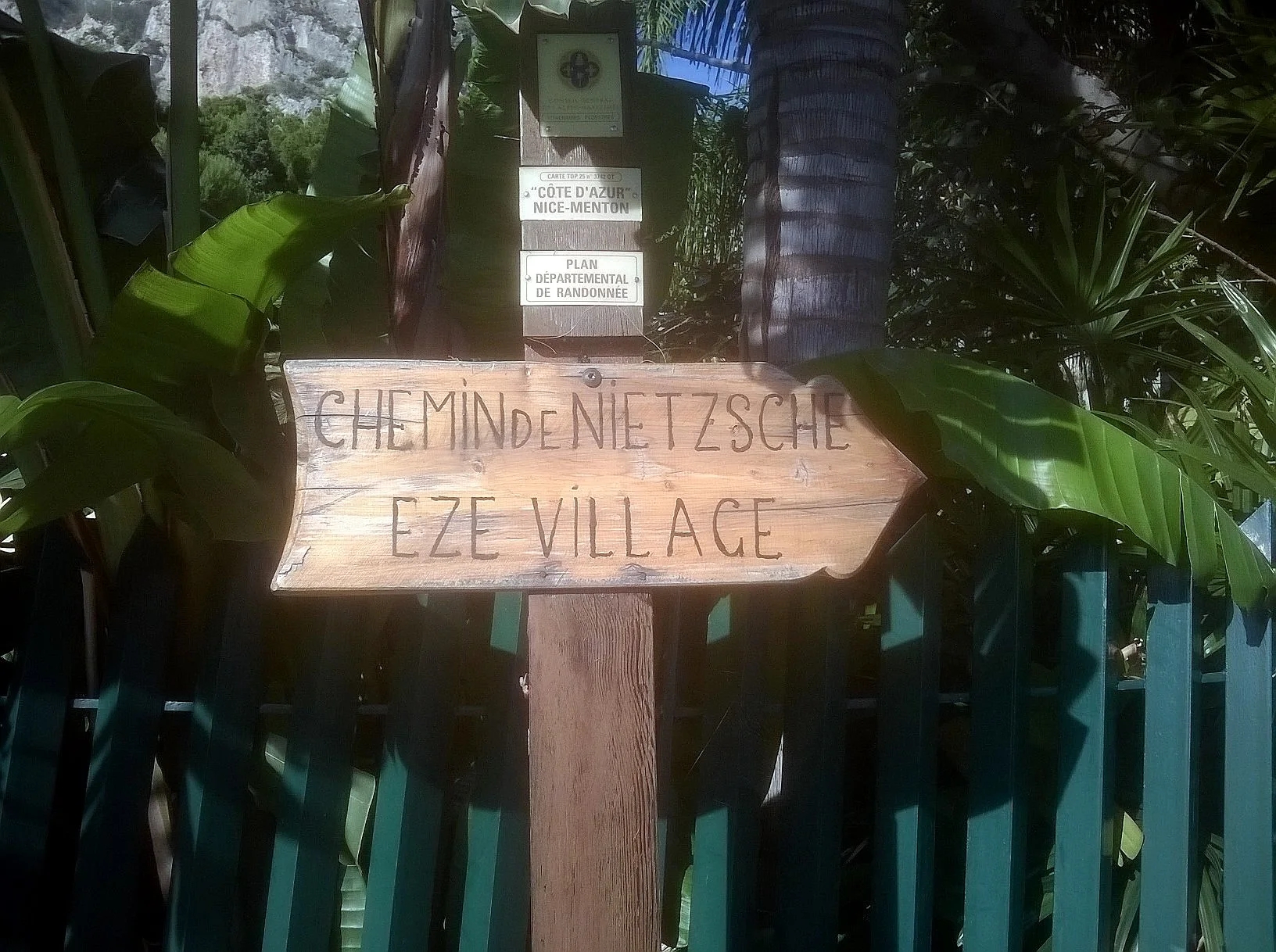
2. Vallon du Duc. The first section follows a gorge and a dry streambed, along the remains of an old paved road. There is plenty of fine gravel here: this is the slipperiest part, especially on the way down.
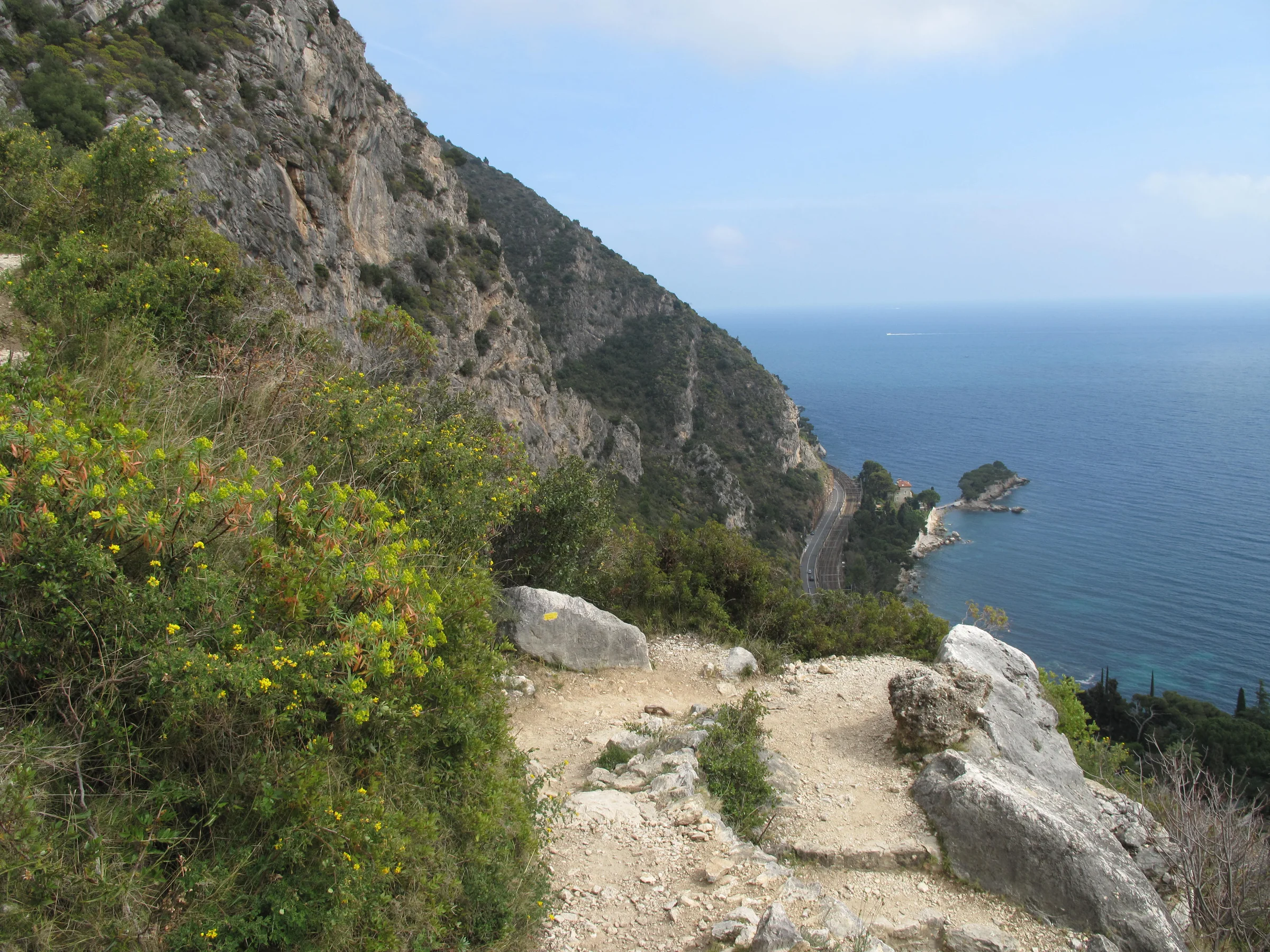
3. Steps and bends. The path then becomes steeper, with concrete and stone steps, turns and rocks underfoot. Mediterranean scrub surrounds you: rosemary, myrtle, olive trees and pines. This is where the first views of Cap-Ferrat and the bay open up.
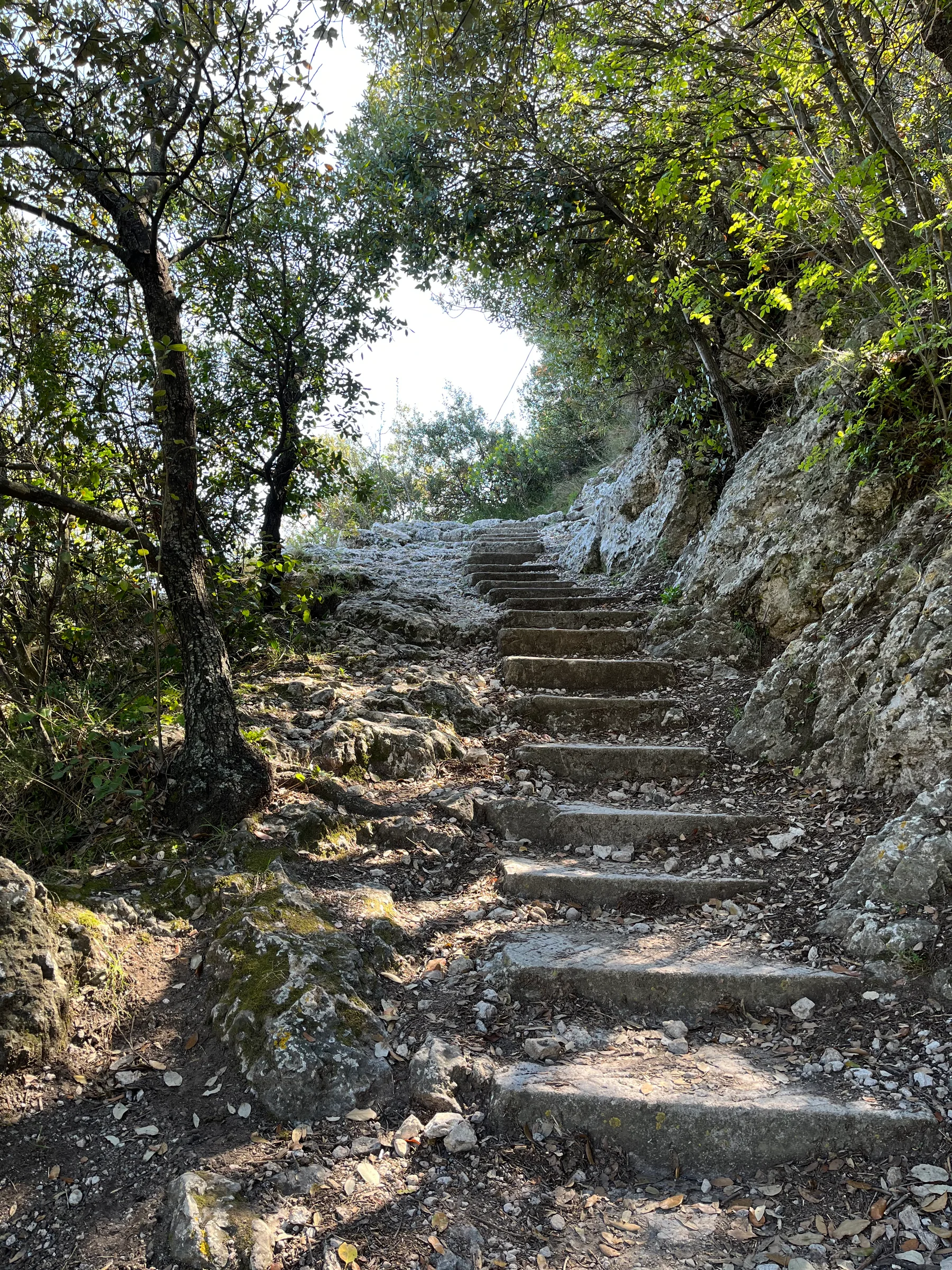
4. The rock walls. In the second half, the path passes beneath sheer limestone cliffs. The bell tower of Notre-Dame-de-l’Assomption is already visible above and helps you judge how much farther you have to go.
5. Finish at the village. The path reaches the foot of old Èze, beside the Moyenne Corniche. From here it is a few more minutes uphill on foot to the gates of the old village.
Signs are scarce, but getting lost is difficult: there is only one path, without branches that might lead you astray. To walk down from the top, look for the “Chemin de Nietzsche” sign at the foot of the village.
How to get there from Nice
By train to Èze-sur-Mer, at the bottom of the path
The regional TER train runs along the Nice–Monaco–Menton line. The journey from Nice-Ville station to Èze-sur-Mer takes around 15 minutes. Tickets cost a few euros; buy them in the SNCF Connect app or from a ticket machine at the station. Trains run frequently, usually 2–3 times an hour.
By bus to Èze-sur-Mer
Zou! bus 600 follows the coast along the Basse Corniche from Nice towards Monaco and Menton, stopping beside Èze-sur-Mer station. It is cheaper than the train, but slower and often gets held up in traffic.
By bus to Èze village, at the top of the path
- Lignes d’Azur 82 from Nice (Vauban stop) to Èze village: around 30 minutes, roughly one departure an hour, with the first service around 6.30 am and the last around 7 pm. A standard Solo ticket costs €1.70 and is valid for 74 minutes, including connections. Services are less frequent on Sundays and public holidays.
- Zou! 602 runs from Nice to Monaco along the Moyenne Corniche, via Èze village and La Turbie. There are only a few departures a day. It is best to buy a ticket in advance: card payment is not available on board this route.
- Lignes d’Azur 83 is a short bus connection from Èze-sur-Mer station to Èze village. It is useful if you arrive by train and do not want to walk uphill. Services are infrequent.
Timetables change with the seasons. Before setting out, check them in the Lignes d’Azur and Zou! apps or on the Èze tourist office website, and photograph the timetable on your phone.
By car
In Èze-sur-Mer you can leave your car near the station and walk uphill. Èze village has paid car parks that fill up quickly in summer. Cars cannot enter the old village.
Three ready-made plans
| Plan | Route | Time needed |
|---|---|---|
| The classic | Bus 82 from Nice to Èze village → stroll and exotic garden → walk down the path → beach at Èze-sur-Mer → train to Nice | 4–5 hours |
| In Nietzsche’s footsteps | Train to Èze-sur-Mer → climb the path → village and garden → bus 82 or 602 back | 4–5 hours |
| Èze and Monaco | Bus 82 or 602 to the village in the morning → walk down the path → train from Èze-sur-Mer to Monaco (around 7 minutes) → train to Nice in the evening | a full day |
When to walk the path
- The best months: October–May. It is not too hot, there are fewer people and the views are good. On a clear winter’s day, you can see the coastline as far as Italy.
- Summer: set off early in the morning, before 10 am, or after 5 pm. Exposed sections are very hot during the day and there is almost no shade.
- After rain: it is better to postpone the walk. Stones and gravel become slippery, especially downhill.
- Strong wind: exposed bends are uncomfortable, but there is usually no danger.
- In the village in winter, some shops and restaurants close, but the path remains open and very beautiful.
What to bring
- Footwear with a good grip: trail-running shoes or lightweight walking boots. It is easy to slip on scree in sandals or flip-flops.
- Water: at least 0.5–1 litre per person. There is no water on the path.
- A hat and sunscreen.
- Swimwear, if you are walking downhill in summer: Èze-sur-Mer’s pebble beach is at the bottom.
- A ticket or an app for the return journey.
- Walking poles may help anyone with sore knees, especially on the descent.
Who the path is not suitable for
- Pushchairs: not possible, because of the many steps.
- Small children: it is tough going. Children from around 7–8 who are used to walking generally manage the descent well.
- People with knee problems: the descent is harder than the ascent; it is better to climb up and return by bus.
- Dogs are allowed, but the stones get very hot in summer.
What to see in Èze village
The old village. Èze has stood on its rocky hill since the 12th century: narrow cobbled streets, arches, stairs, stone houses, galleries and shops. There are no cars; allow 1–1.5 hours to explore on foot.
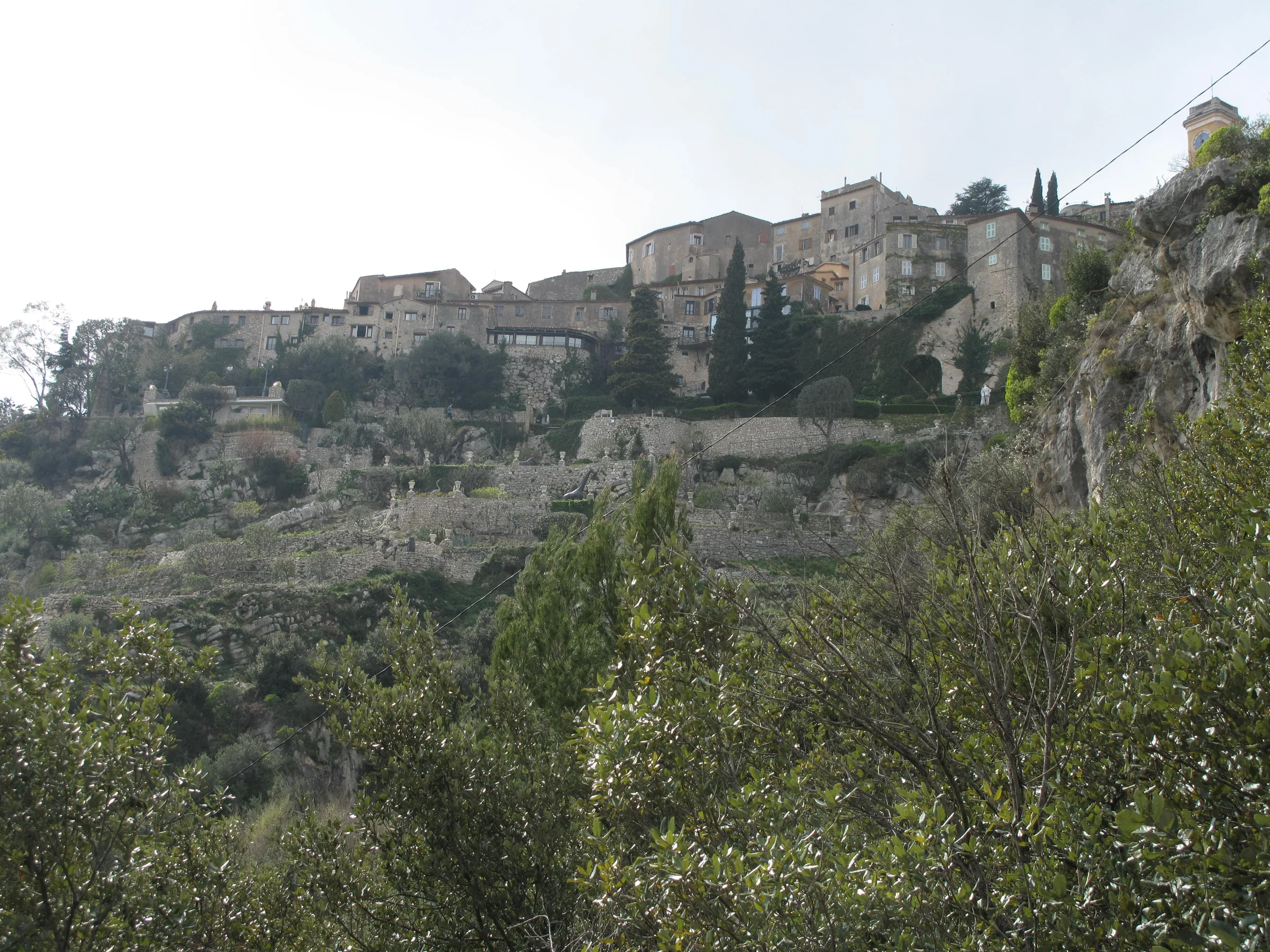
The exotic garden (Jardin d’Èze). At the very top, on the site of the castle ruins, the garden brings together cacti, succulents and sculptures of goddesses among the rocks. It offers one of the finest views of the coast, from Cap-Ferrat to Italy. In 2026, admission is €10, or €6 for teenagers and students; children under 12 enter free. In winter, it is open roughly from 9 am to 4.30 pm. Hours change with the seasons, so check the garden’s website.
Notre-Dame-de-l’Assomption church. An 18th-century Baroque church with a yellow façade and a bell tower visible from the path. Inside is rich Italian-style decoration.
The Chapel of the White Penitents (Chapelle des Pénitents Blancs). A small 14th-century chapel on one of the village squares, among Èze’s oldest buildings.
Perfume factories. At the foot of the village are factories and shops belonging to Grasse perfume houses Fragonard and Galimard. Fragonard offers free tours explaining how perfume and soap are made.
Where to eat and what to drink
- Château de la Chèvre d’Or: a hotel and restaurant with two Michelin stars (2026 guide), and a terrace above the sea. If the restaurant is beyond your budget, you can have a glass of wine or a coffee on the terrace. It closes for part of the winter season, so check the dates.
- Château Eza: once the residence of a Swedish prince, now a hotel with a restaurant and one of the village’s finest panoramic terraces.
- Village cafés and bars: simple sandwiches, ice cream and freshly squeezed juices. In summer, prices reflect the tourist setting.
- Èze-sur-Mer beach: beach cafés and restaurants right beside the sea, convenient after the descent.
What to drink after the walk. The most local wine here is Bellet, a small appellation within the city of Nice. Whites made from rolle (vermentino), rosés and reds from the rare braquet and folle noire varieties. Look for Château de Bellet, Clos Saint-Vincent and Domaine de la Source on wine lists. For a seaside classic, choose a Provence rosé: Château Minuty, Domaines Ott, Château d’Esclans.
Common mistakes
- Setting off at midday in summer. An hour and a half climbing in the sun without shade is demanding even for sporty walkers.
- Wearing shoes without tread. Gravel on the descent is the main cause of falls on this path.
- Not bringing water. There are no springs or cafés on the path.
- Not checking the return bus. The last services leave in the early evening, and taxis on the French Riviera are expensive.
- Allowing “45 minutes uphill”. Some signs give that figure, but the climb actually takes 1–1.5 hours.
- Planning the path, village and Monaco in half a day. It is better to set aside a whole day.
The Nietzsche Path and other nearby walks
- The path around Cap-Ferrat: a level coastal walk taking around 2–3 hours, with views of villas and the sea.
- The path at Cap-d’Ail and Mala beach: a short seaside walk between Èze-sur-Mer and Monaco.
- The Grande Corniche park: forest trails above Èze for anyone who wants more than one climb.
Frequently asked questions
How long does it take to walk the Nietzsche Path?
Around 1.5 hours uphill from Èze-sur-Mer to Èze village at a relaxed pace. Downhill takes 45–60 minutes. Allow about 3 hours for the return walk.
How long is the path and how much elevation does it gain?
Around 2.1 km one way, with roughly 400 m of elevation gain. Èze village stands at an altitude of 427 m.
Is the Nietzsche Path difficult?
It is moderately difficult. There is nothing technical, but the path is steep, with stones, steps and gravel. You need comfortable footwear and water.
Is it better to walk uphill or downhill?
For a first visit, it is more convenient to reach the village by bus and walk down. The climb from the sea is tougher, but it is the very route Nietzsche described.
How do you reach the start of the path from Nice?
Take a TER train to Èze-sur-Mer station, around 15 minutes from Nice-Ville. The path begins opposite the station. You can also take Zou! bus 600 along the coast.
How do you get from Nice to Èze village?
Take Lignes d’Azur 82 from the Vauban stop, around 30 minutes, or Zou! 602 along the Moyenne Corniche. Bus 83 also runs from Èze-sur-Mer station to the village.
Do you have to pay to use the path?
No, the path is free and open at any time. Only admission to the exotic garden in the village is paid.
Can children walk the path?
Yes, school-age children who are used to walking, preferably downhill. It cannot be done with a pushchair and is difficult for very young children.
When is the best time to walk the Nietzsche Path?
From October to May, or early in the morning and in the evening during summer. The path is slippery after rain.
Is it true that Nietzsche wrote “Thus Spoke Zarathustra” here?
Yes. In “Ecce Homo”, Nietzsche writes that he composed a crucial part of the third book of “Zarathustra” while climbing from the station to Èze village. He spent his winters on the French Riviera, mainly in Nice, from 1883 to 1888.
Èze, the Nietzsche Path and wine with a guide
Would you like to see Èze without bus timetables and find out what Nietzsche was thinking about on that climb? On the “Èze and Monaco from Nice” excursion, we will follow the Moyenne Corniche, explore the village and visit the exotic garden. If you wish, we can walk down the Nietzsche Path while the car waits at the bottom. Afterwards, we can also visit a Bellet winery just above Nice.