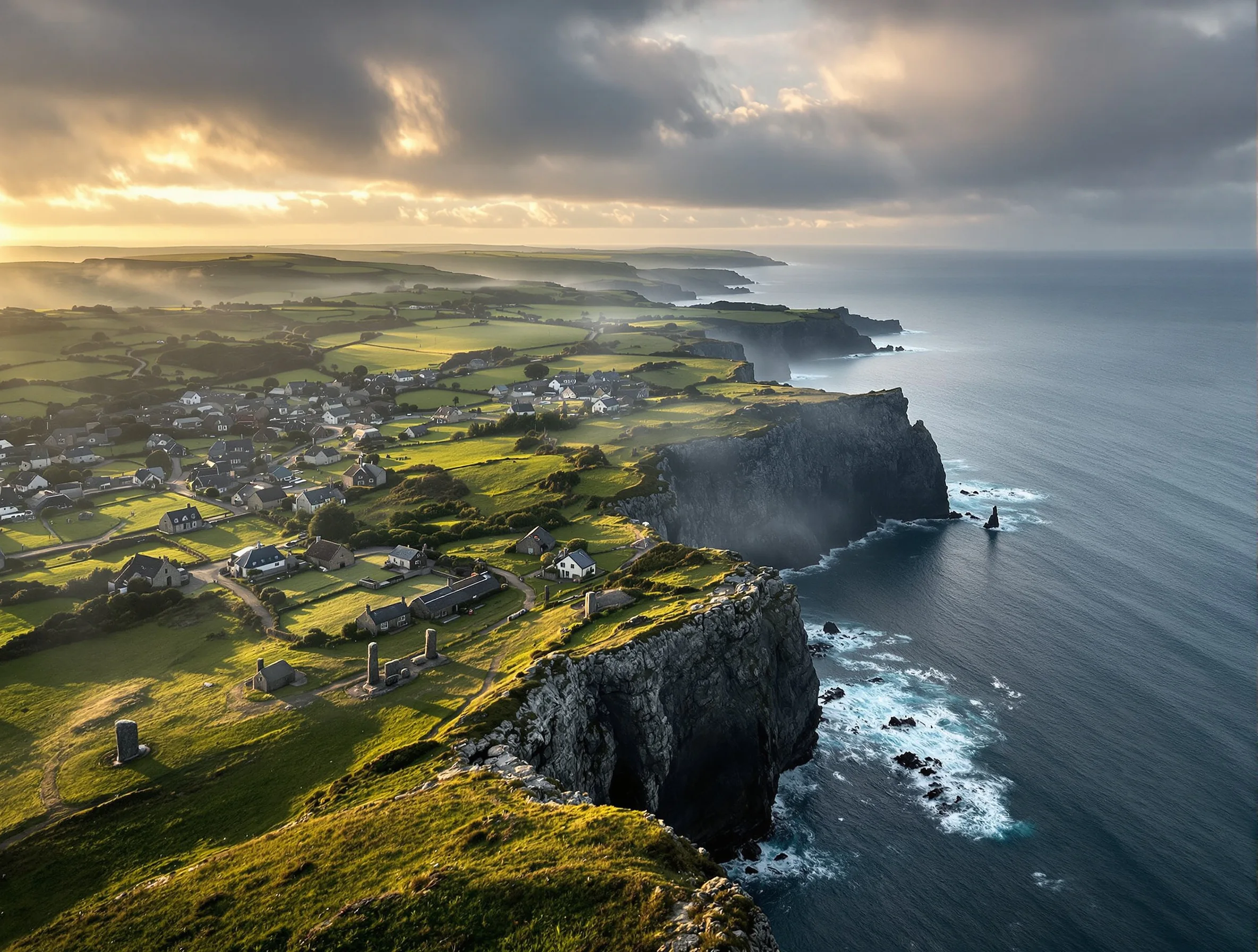
Normandy is a region of contrasts, where history meets food and the English Channel’s dramatic landscapes sit alongside cosy villages and apple orchards. Impressionism was born here, the Second World War’s course was decided here, and some of France’s finest cheeses and drinks are made here.
As an experienced Normandy guide, I have compiled ten things you must do in this remarkable region. These are more than tourist attractions — they let you feel Normandy's soul and understand why the French and travellers worldwide love it.
Your guide's tip
Normandy is a large region: allow at least 3–4 days to truly experience it. Ideally, hire a car and stay in a small town convenient for day trips. I recommend Honfleur or Bayeux as a base.
The essentials at a glance
Taste cider and Calvados
Normandy is France’s apple country. Grapes are not grown here, but apple orchards stretch for miles. Apples make the region’s two main drinks: cider (cidre) is a low-alcohol sparkling drink, and calvados — a strong apple brandy.
A cider house (cidrerie) visit is more than a tasting — it is an immersion in regional traditions. You will see historic presses, learn how production works and, of course, taste different ciders, from dry to sweet, as well as aged calvados.
What to know
- Best cider producers: Château du Breuil, Domaine Dupont, Christian Drouin
- Cost: Tastings from €10–15; tours with tasting from €20
- Tip: Try a trou normand: the traditional sip of Calvados between courses to aid digestion
Visit Honfleur — the cradle of Impressionism
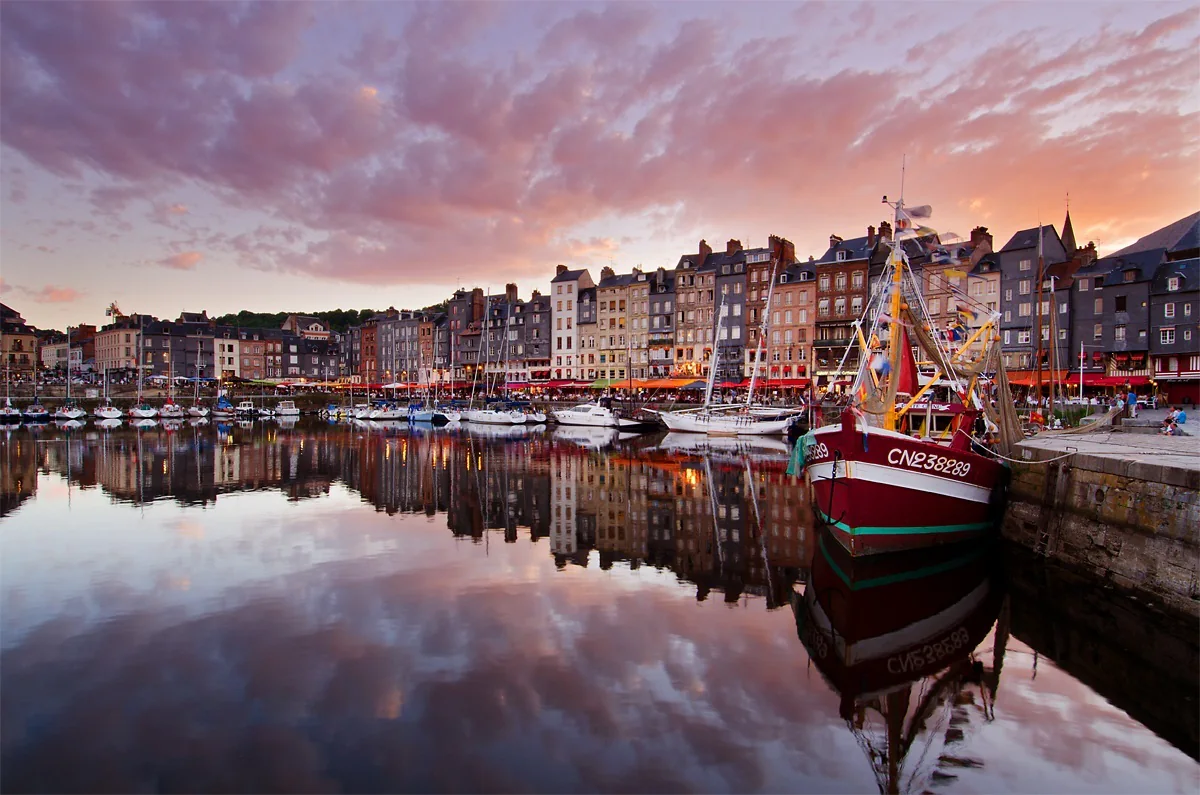
Honfleur is a small harbour town that has inspired artists for over a century. Here, Claude Monet, Eugène Boudin and other Impressionists first began painting outdoors, seeking to capture light playing on the old harbour’s water.
A walk along Vieux Bassin is a journey into the past. Narrow, colourful 16th–17th-century houses reflect in the harbour's calm water, fishing boats bob at the quays, and numerous galleries display contemporary artists' work.
Sainte-Catherine Church
France's largest wooden church, built by shipwrights in the 15th century
Eugène Boudin Museum
A collection of works by Impressionists inspired by Honfleur
Harbourside restaurants
The freshest seafood overlooking the picturesque old harbour
💡 Guide's tip: Arrive in Honfleur early or at sunset, when the light is especially beautiful, and you will understand why Impressionists loved it. Avoid summer weekends — the town is packed.
Visit Rouen and the site of Joan of Arc's execution
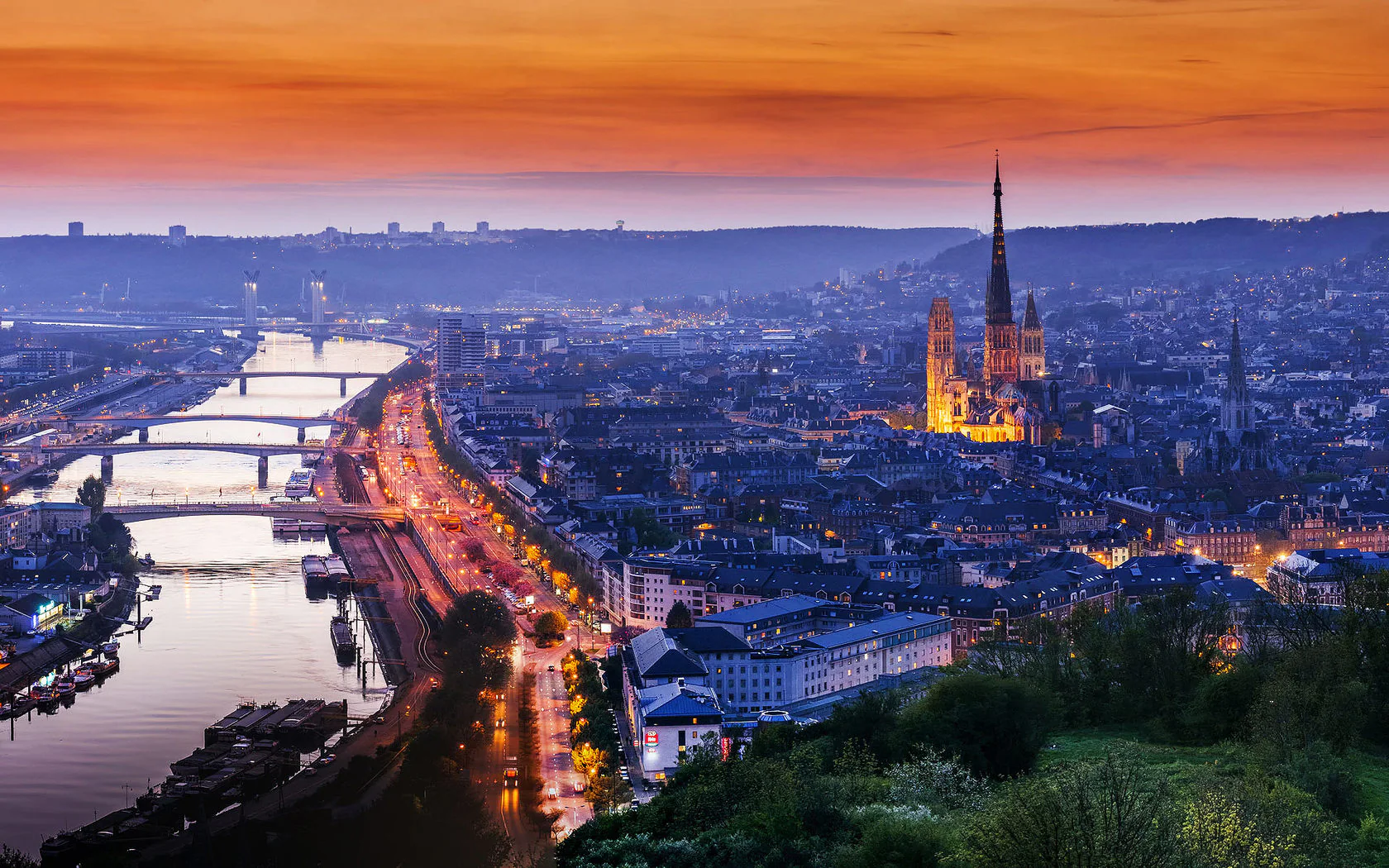
Rouen is Normandy’s capital and a city with an extraordinary history. Here, on 30 May 1431, Joan of Arc, France’s national heroine, was burned at the stake. A cross on Place du Vieux-Marché marks her execution site, beside the modern Church of Saint Joan of Arc.
But Rouen is more than Joan of Arc's story. It is a city of a hundred spires, medieval half-timbered houses and a magnificent Gothic cathedral that Claude Monet painted at different times of day in a series of 30 canvases.
What to see in Rouen
A Gothic masterpiece celebrated by Monet
A 14th-century astronomical clock on a picturesque street
Hundreds of 15th–16th-century half-timbered houses
France's second-largest collection of Impressionist works
See the water lilies in Claude Monet's garden
Giverny is a place of pilgrimage for Impressionism lovers. Claude Monet lived here for 43 years and created his most famous works, including the ‘Water Lilies’ series. His house museum and gardens welcome visitors April–November.
The garden has two parts: the flower garden before the house (Clos Normand), a riot of colours and shapes, and the water garden with its Japanese bridge and famous water-lily pond. In spring and summer, when the lilies bloom, you can compare the living flowers with those on the great master's canvases.
Best time to visit
- April–May: Tulips, irises and wisteria in bloom
- June–July: Roses and water lilies at their peak
- September: Fewer tourists and autumn colours
Practical information
- Tickets: €11; book online ahead
- Time: Allow at least two hours for the visit
- Tip: Arrive at opening, 9.30 am, or after 4 pm
🎨 Interesting fact: Monet designed the water garden himself, diverted a stream and planted water lilies. Local residents objected, fearing the exotic plants would poison the water. Today, this garden is one of France's most photographed sights.
Try Norman cheeses
Normandy is a cheese paradise. Four famous cheeses with protected designations of origin (AOC) are made here: Camembert, Livarot, Pont-l’Évêque and Neufchâtel. All are soft cheeses with bloomy white or washed rinds, rich flavours and aromas.
A cheese farm visit reveals the entire production process, from milking cows to maturing cheese in cellars. Learn what makes Norman cheeses special (the secret is rich pastures and the breed of cow), then taste different varieties.
Camembert
France's most famous cheese. Soft and creamy, with a white rind. Genuine Camembert is made only in Normandy, from raw milk.
Where to try it: Camembert village, Fromagerie Durand
Livarot
A washed-rind cheese wrapped in five strips of reed. Strong aroma and a rich flavour. Known as "the colonel" because of its stripes.
Where to try it: Livarot town, local markets
Pont-l’Évêque
One of Normandy's oldest cheeses (since the 12th century). Square, with an orange washed rind. Soft and aromatic.
Where to try it: Pont-l’Évêque town, cheese shops
Neufchâtel
The oldest Normandy cheese, dating from the 10th century. Traditionally heart-shaped. Soft, with white mould and a slightly salty flavour.
Where to try it: Pays de Bray region, farm shops
How to enjoy Norman cheeses
- Take cheese out of the fridge 30–60 minutes before serving — its full flavour emerges at room temperature
- Serve with crusty baguette, apples and walnuts
- Perfect pairing: Norman cheese + Norman cider or calvados
See Étretat's white cliffs
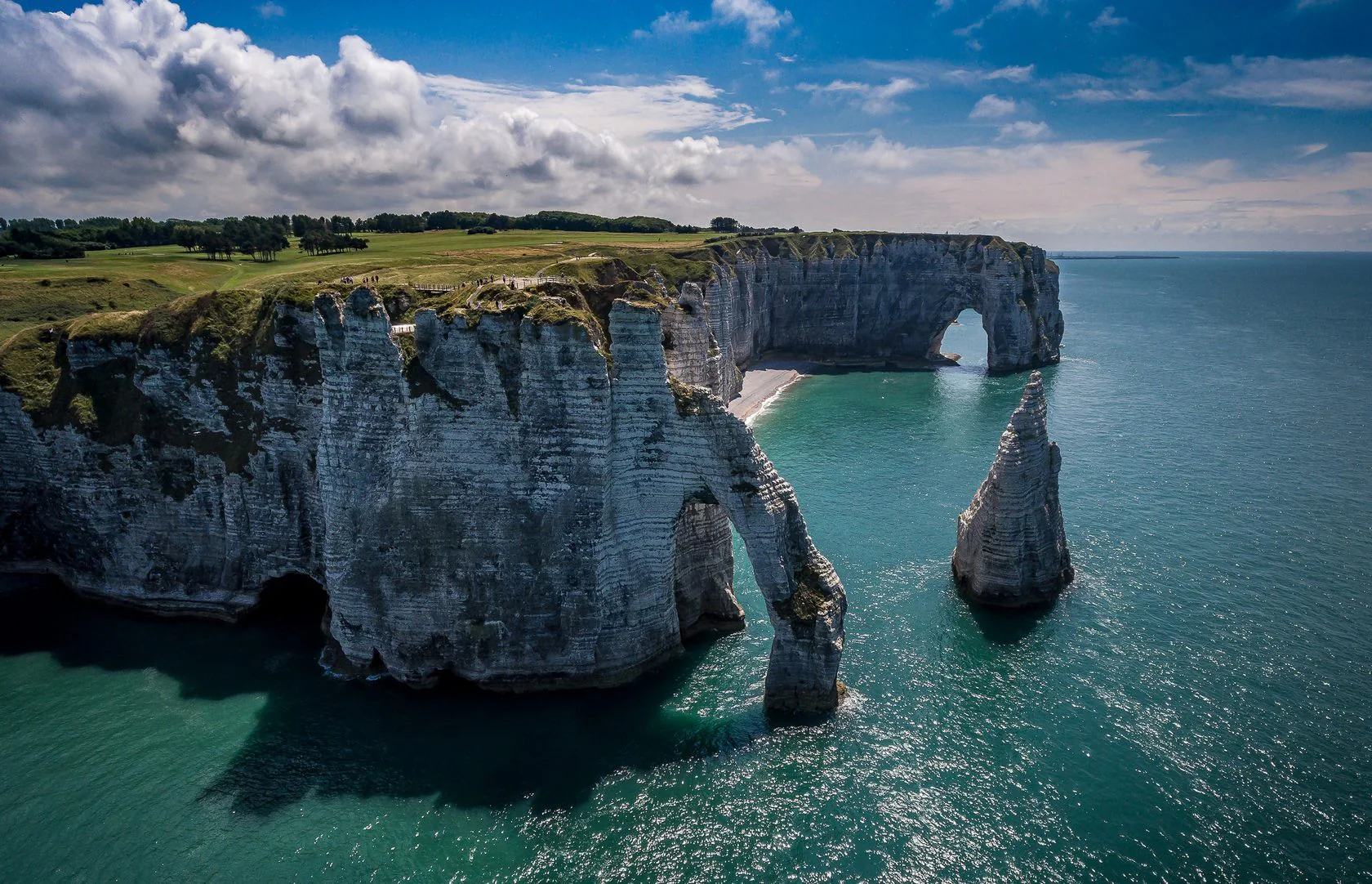
Étretat is where nature created a true work of art. Snow-white chalk cliffs up to 90 metres high, carved by wind and waves, form striking arches and needles that have become Normandy's symbol.
The most famous cliffs are Falaise d’Aval (Falaise d'Aval), with an arch and the Aiguille resembling an elephant's trunk, and Falaise d’Amont with an arch resembling a horse drinking water. Monet, Courbet and other artists came to capture this beauty.
Walking routes
- GR21 trail: A coastal path along the cliffs with panoramic views
- To the Aval arch: A 20-minute climb with breathtaking views
- To the Amont arch: 15 minutes, views of the chapel and German bunker
Photography tips
- Best time: Sunset — the cliffs turn golden
- Low tide: You can go down to the beach and photograph the arches from below
- Photo spot: The upper path offers the best view
Important to know
Do not approach cliff edges — they crumble! Check tides before visiting the beach. Étretat is crowded in summer and at weekends — arrive early or in shoulder season.
Visit the Allied landing beaches
On 6 June 1944, Operation Overlord began on Normandy's beaches: the largest amphibious operation in history, marking the start of Europe's liberation from Nazism. More than 150,000 soldiers landed on five beaches: Utah, Omaha, Gold, Juno and Sword.
Today these places are memorials. The American cemetery at Colleville-sur-Mer, with 9,387 white crosses, museums, bunkers and the remains of Arromanches’ artificial harbour remind us of the price of freedom.
Main places to visit
The bloodiest fighting. The American Cemetery overlooking the sea
Peace memorial devoted to the Second World War
Remains of the artificial Mulberry harbour and the D-Day museum
Cliffs captured by US Rangers, with bomb craters
💡 Guide's tip: Allow a full day for the D-Day beaches. Start at Caen’s museum for context, then visit Arromanches, Omaha Beach and the American cemetery. An emotionally demanding but important journey into history.
Walk along Deauville beach
Deauville is the French Miami, an elegant resort on the English Channel. In 1913, Coco Chanel opened her first boutique here and revolutionised fashion by introducing swimsuits and suntans, previously considered improper.
Deauville's famous beach with colourful umbrellas and changing cabins, the Les Planches boardwalk bearing film stars' names, a casino, racecourse and luxury hotels all create a Belle Époque atmosphere of glamour.
Les Planches
A 643-metre wooden promenade with beach cabins named after film stars
Casino
A luxurious Art Deco casino built in 1912
Racecourse
Horse racing April–October, with a high-society atmosphere
Events in Deauville
Create a royal seafood platter
Normandy is a seafood lover's paradise. The English Channel coast abounds in oysters, mussels, scallops, prawns, crabs and langoustines. Trouville has one of the region's largest seafood markets, where you can buy everything incredibly fresh and assemble your own "royal platter".
Plateau de fruits de mer — a traditional French dish: a tiered platter filled with different seafood on ice. More than a meal, it is a ritual lasting several hours, accompanied by white wine or champagne.
What goes on a royal platter
Different sizes and types: flat (plates) and cupped (creuses)
Large and juicy, with a vivid sea flavour
Eaten with a special little fork and dipped in mayonnaise
A delicacy with a delicate iodine-rich flavour
Pink, grey and tiger prawns in different sizes
Norway lobsters, with sweet, tender meat
Tourteau and étrille — local crab species
Coquilles Saint-Jacques — a symbol of pilgrimage
Where to buy
- Trouville market: Wednesday and Sunday, a huge selection
- Honfleur harbour: Fresh catches straight from the boats
- Cancale: Brittany's oyster capital (nearby)
Where to try it
- Les Vapeurs in Trouville: a legendary brasserie
- La Marine (Honfleur) — harbour views
- Le Bouche à Oreille (Honfleur) — a local favourite
See Mont-Saint-Michel at sunset
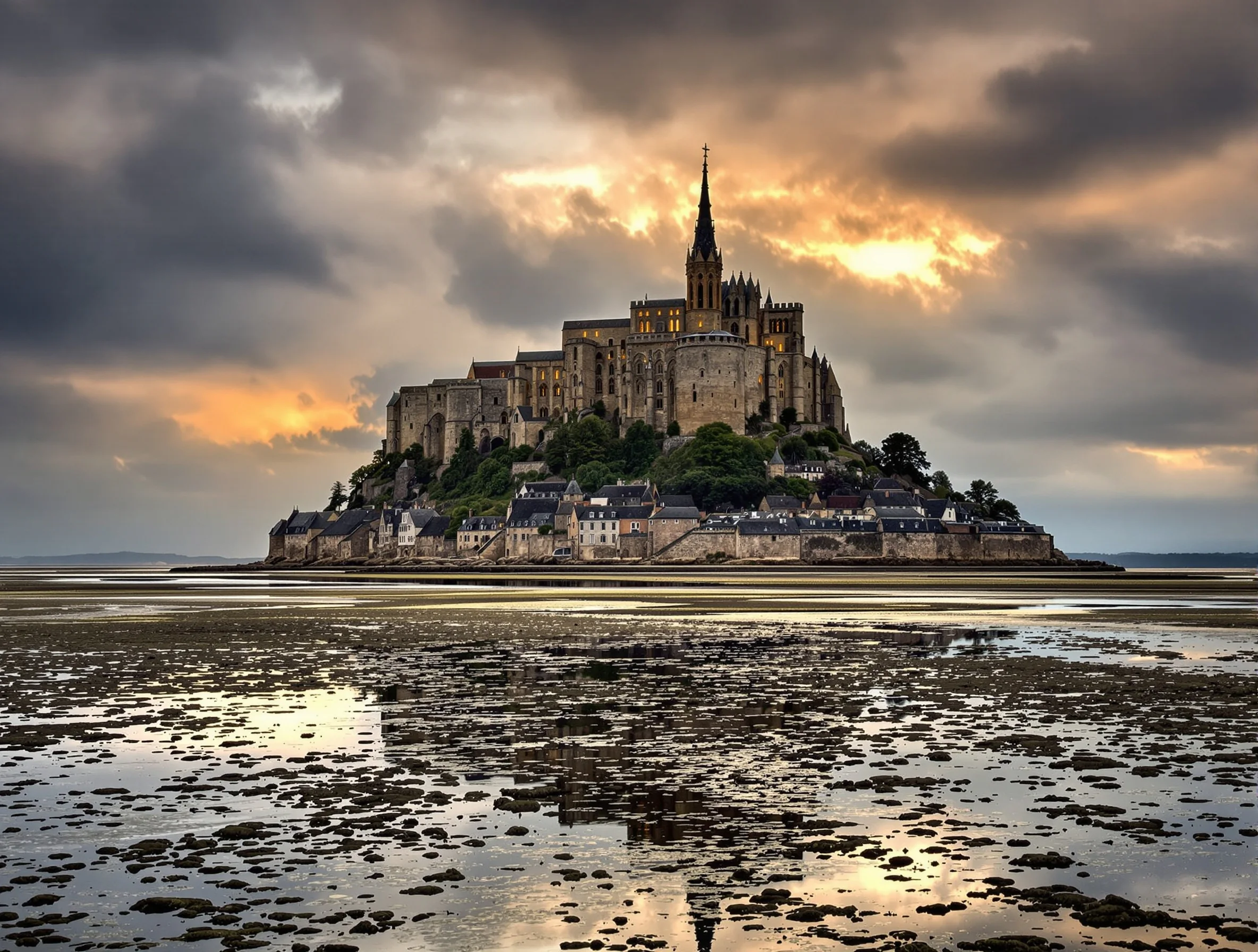
Mont-Saint-Michel is a wonder of architecture and nature, and one of France's most recognisable sights. The medieval abbey on a rocky island, surrounded by the sea at high tide, looks like a fairy-tale castle.
Technically, Mont-Saint-Michel is on the Normandy–Brittany border (currently in Normandy), but a visit is an absolute must on any trip to the region. It is especially magical at sunset, when the last rays turn the abbey walls gold.
What to know about Mont-Saint-Michel
Europe’s strongest tides — up to 15 metres! At high tide, the island is completely surrounded by water
Allow at least 3–4 hours: village walk, abbey visit and lunch
A steep street with steps — wear comfortable shoes
Village entry is free; the abbey costs €11. Book online
The famous fluffy omelette — a tourist trap, but worth trying
In summer, the abbey opens until midnight with lighting and music
Best photo spots
- Causeway: The classic view on the approach to the island
- At low tide: You can walk around the island
- Sunset: From the mainland, with the sun behind the abbey
Guide's tips
- Arrive at opening (9 am) or after 4 pm
- Avoid weekends and July–August
- Check tide times on the website
✨ Interesting fact: Mont-Saint-Michel receives more than three million visitors a year, making it France's third-most visited attraction after the Eiffel Tower and Versailles. In the Middle Ages, it was one of Europe's main pilgrimage sites.
Practical tips for a Normandy trip
Transport
- Hiring a car is essential — many places are difficult to reach by public transport
- Hire a car at a Paris airport or railway station
- Distances are short: Rouen–Honfleur 70 km, Honfleur–Étretat 50 km
- Parking costs €2–5/hour in tourist areas
When to go
- May–June: Ideal weather, Monet’s gardens in bloom
- September: Fewer tourists, warm sea and apple harvest
- Avoid: July–August (crowds) and November–February (rain)
- Weather is changeable: bring a jacket even in summer
Where to stay
- Honfleur: An ideal base, a beautiful town and many restaurants
- Bayeux: Convenient for the landing beaches and Mont-Saint-Michel
- Rouen: If you prefer a city atmosphere
- Book ahead, especially for weekends and summer
Budget
- Hotel: €80–150/night, mid-range
- Food: Lunch €15–25, dinner €30–50 per person
- Tastings: €10–30 (cider, cheese, calvados)
- Museums: €8–15 admission
Gastronomy tips
- Eat lunch in local bistros rather than tourist restaurants
- Try the daily menu (menu du jour) — good value and delicious
- Buy cheese and cider at farms — cheaper and fresher
- Oysters are best eaten from September to April
- Book ahead at popular restaurants
- Do not hesitate to ask locals for recommendations
Frequently asked questions
How many days do I need for Normandy?
Allow at least 3–4 days for the main sights. A week is ideal for enjoying the region without rushing. In three days, you can visit Rouen, Honfleur, Étretat, Monet's garden and the landing beaches. With a week, add Mont-Saint-Michel, Deauville, cheese farms and cider farms.
When is the best time to visit Normandy?
The best time is May–June and September. In May–June, Monet's gardens bloom and the weather is warm but not hot. September means fewer visitors, warm seas and the apple harvest. Avoid July–August (crowds) and November–February (rain and cold).
Do I need a car in Normandy?
Yes, a hire car is almost essential. Many interesting places (cheese farms, cider makers, small villages and Étretat’s cliffs) are difficult to reach by public transport. Distances are short, roads are good and parking is available everywhere.
Where is the best place to stay in Normandy?
Honfleur is the ideal base: beautiful, with many restaurants and a convenient location between Rouen, Étretat and Caen. Bayeux suits visits to the D-Day beaches and Mont-Saint-Michel. Choose Rouen for a city atmosphere or Deauville for a beach holiday.
What should I try in Normandy?
Cider and Calvados; four famous cheeses, Camembert, Livarot, Pont-l'Évêque and Neufchâtel; oysters and seafood; galettes, or buckwheat pancakes; trou normand, Calvados between courses; and apple tarte Tatin. Best tasted on farms and in local bistros.
Can I visit Mont-Saint-Michel in one day?
Yes, but it will be a full day. Honfleur to Mont-Saint-Michel is around 2.5 hours by car. Allow at least three or four hours there for the village, abbey and lunch. Arrive at opening (9 am) or stay for sunset.
How much does a trip to Normandy cost?
Average daily budget per person: hotel €80–150, food €45–75 for lunch and dinner, tastings €10–30, museums €8–15 and petrol €20–30. Total: €160–300 per person per day. Save by choosing B&Bs rather than hotels and eating in local bistros.
Do I need a guide in Normandy?
Not essential, but strongly recommended, especially on a first visit. A guide shows places missing from guidebooks, arranges tastings at the best farms, tells stories and legends, and helps avoid tourist traps. This matters especially for food tours and D-Day beaches.
Ready to discover Normandy?
I organise personalised Normandy tours with cider and cheese tastings, visits to the finest places and an immersion in regional history. Discover the Normandy you will not find in guidebooks.